

Supreme Court issues contempt notice over Delhi Metro station closures, seeks compliance report by Oct 13
The court sought an explanation from officials on why Metro stations were shut during the CJP protest, despite its October 9 order.
 Images are not validated/verified
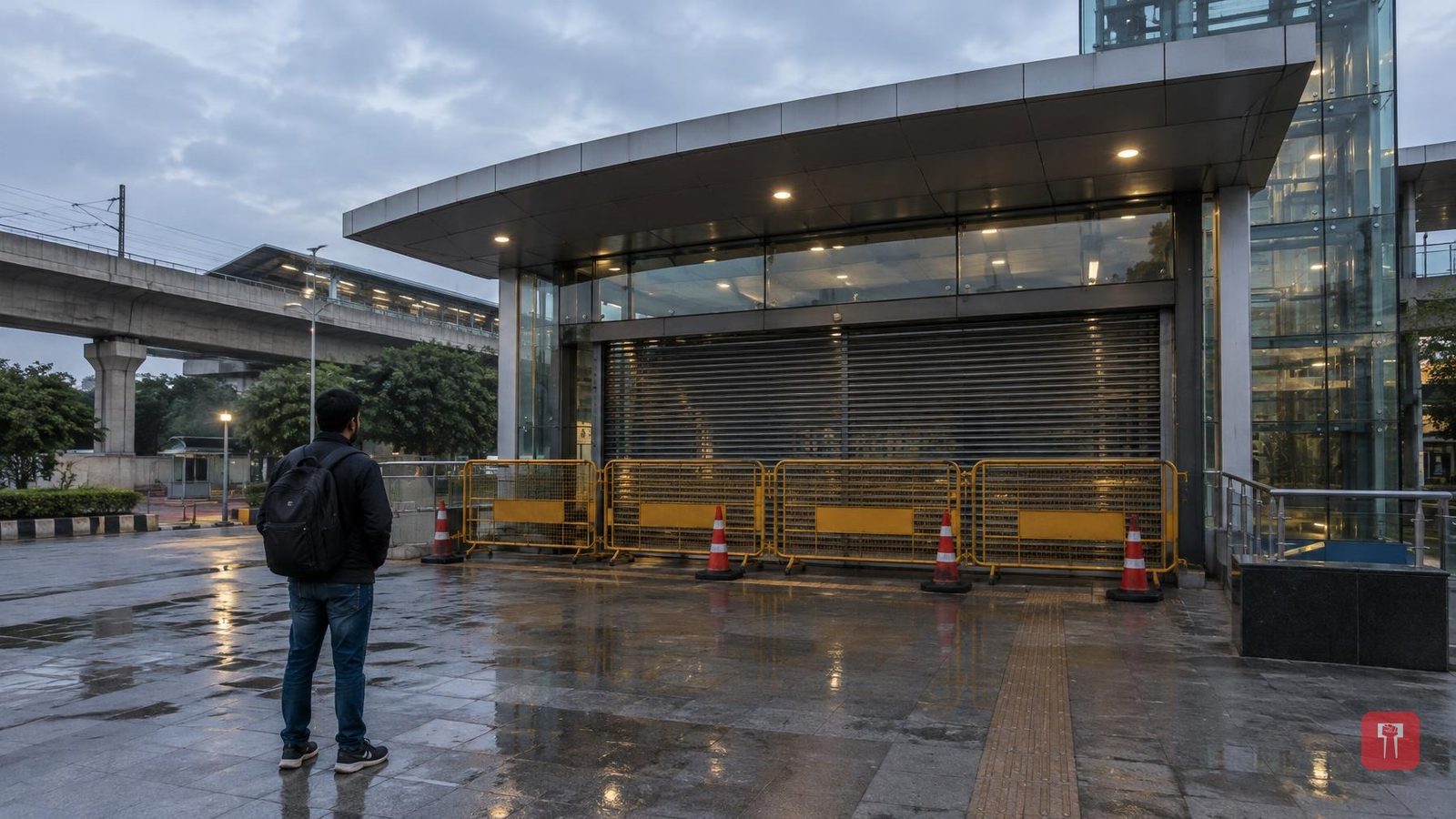
The Supreme Court has issued a contempt notice to the officials concerned over the closure of Metro stations in Delhi during the protest by the CJP. The court sought an explanation from the officials after an allegation surfaced that its order of October 9 had been violated. They have also been asked to submit a compliance report by October 13.
A bench of Justice Joymalya Bagchi and Justice V. Mohana held a special hearing in the matter on Sunday. The officials were asked to explain why Metro stations were closed on October 10 during the protest by the "Cockroach Janta Party" (CJP). The report must also detail the restrictions imposed on the Metro and the instructions issued by the railway administration.
A total of 45 Metro stations in Delhi had been closed in view of the protest at Jantar Mantar against Chief Election Commissioner Gyanesh Kumar and the SIR. Most of these stations were in central Delhi and surrounding areas. Several petitions have been filed in the Supreme Court over the station closures, as well as over the detention of key CJP leaders and members of Opposition parties.
Advocate Shailendra Mani Tripathi had filed a contempt petition against Union Home Secretary Govind Mohan, Delhi Police Commissioner Anurag Kumar and Delhi Metro Rail Corporation chairperson D. Thara. The court had ordered on October 9 that public transport should not be shut down completely ahead of the protest. The petition alleged that Metro stations were nevertheless kept closed.
Trinamool Congress MP and senior advocate Menaka Guruswamy had also filed a petition. It objected to the detention of Opposition leaders, including four former chief ministers, and other citizens as a preventive measure during the protest. During the hearing, Guruswamy claimed that more than 7,000 student leaders, journalists and political figures had been detained. She argued that preventive detention cannot be used to suppress the fundamental right to peaceful protest.
The petitioners also said the restrictions on Metro services and the internet affected people's movement and their right to reach the court. The issues of the detention of about 150 lawyers gathered outside the Supreme Court and of some police personnel not wearing name badges were also placed before the court.
Solicitor General Tushar Mehta told the court that the administration has documents and videos showing that some people were detained at around 2 pm and released by 6 pm.
During the hearing, the Supreme Court directed that Metro and rail services be kept running normally. It clarified that necessary restrictions can be imposed if public order is under threat, but people's movement should not be obstructed without reason. The need for barricades was also to be assessed immediately.
The court directed that internet services be kept running without interruption, and cautioned that no one should be unlawfully detained without following due legal process. It also ordered the removal of a board outside the Supreme Court stating that restrictions under Section 163 of the Bharatiya Nagarik Suraksha Sanhita (BNSS) were in force.
The court said lawyers should not be stopped from carrying out their professional work. Protesters were urged to keep the protest peaceful and not to provoke others. The administration assured the court that Metro and internet services would continue to run normally, which the court recorded.
This story has published but the live thread has not started. Updates appear here the moment the desk files one.
