

Birla Punya tops list of 50 key Pune housing projects with score of 93
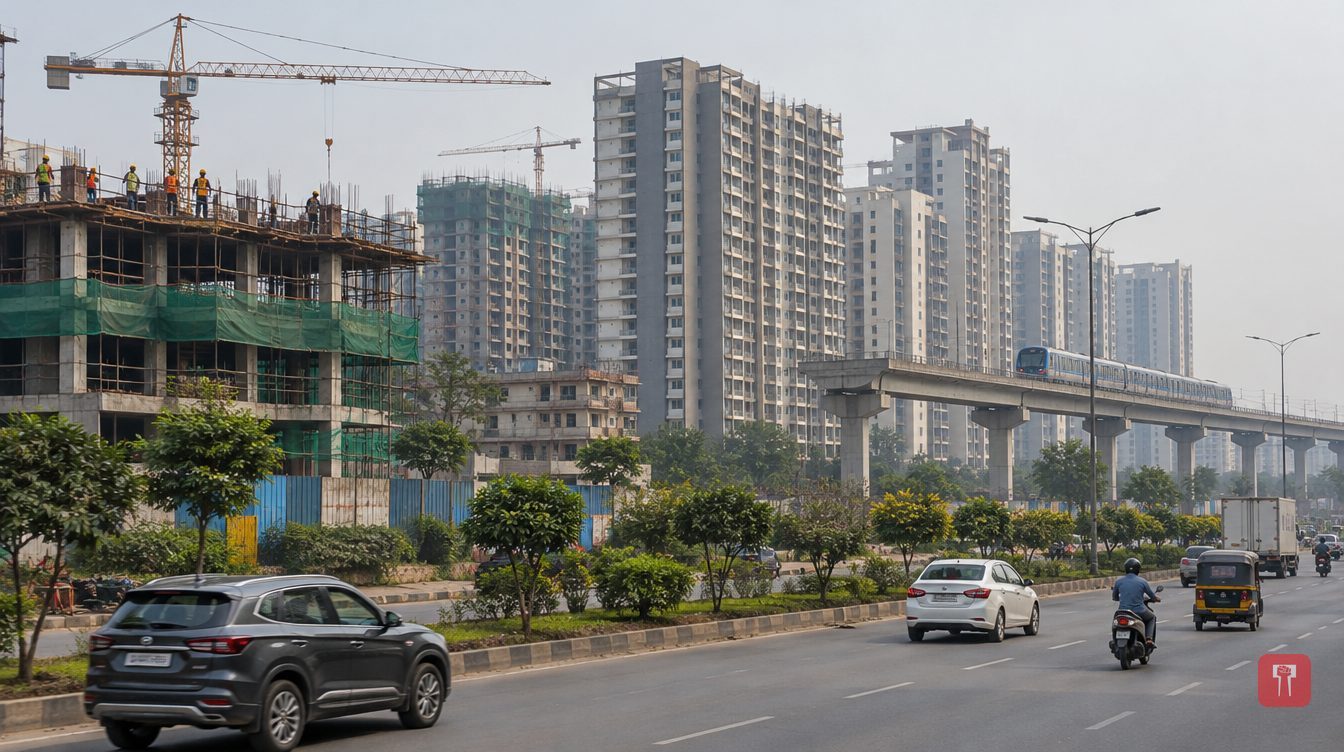 Images are not validated/verified
A 50-project list scores Pune housing on location, developer record, schools, hospitals and transport, with Birla Punya near Sangamwadi first on 93 out of 100.
Pune is no longer a single residential market. The city has split into several parts, each growing at its own pace. Kharadi has grown around jobs and technology, while Hinjewadi has expanded around the IT economy. Baner and Balewadi have become major residential and lifestyle destinations in the west. Hadapsar and Manjri are absorbing demand in the east and south, Wagholi is being reshaped by the spread of the eastern corridor, and Wakad, Tathawade, Punawale and Ravet are increasingly linked to the wider catchment of the PCMC and Hinjewadi. Central Pune remains important because it has old schools, hospitals, culture, employment and transport, and large residential plots there are scarce.
Figures show the scale of the change. In the first half of 2026, Pune recorded sales of 24,890 homes, while developers launched 31,116 new homes, a year-on-year rise of 17%. The average residential price is put at about Rs 10,063 per sq ft, up 5% year-on-year.
The buyer's question is no longer just which flat to buy. The real question is which projects are shaping the Pune in which one actually wants to live. The list of 50 residential projects has been drawn up with that aim. Some are large townships, some mark the entry of big national developers, some matter because of their location or because they sit in an employment corridor, some bring premium and luxury homes to established areas, and some show where Pune will expand next.
It is not a ranking of the cheapest, most opulent or most amenity-rich homes. Scores are out of 100: 20 for location and connectivity, 15 for the developer and its record of completing work, 10 each for schools and hospitals, 10 for project quality, planning and amenities, 10 for the surrounding area and upcoming infrastructure, 10 for fit for the buyer and practical value, 8 for shopping, dining and entertainment, and 7 for metro, rail and public transport. This is an editorial working score. It is not an investment rating, credit rating, legal opinion or guarantee of future prices. A project scoring 90 is not necessarily right for every family, and, depending on budget, office, school, age and tolerance for the daily commute, one scoring 80 may suit someone better.
At the top is Birla Punya, in central Pune near Sangamwadi, which scored 93. Next is Mahindra Citadel in Pimpri on 92. Kumar Park Residences in Hadapsar, Godrej Elaris in Mundhwa and Kolte-Patil 24K Serenо in Baner are on 91 each. 24K Altura in Baner and Amanora Park Town in Hadapsar are on 90 each.
Several broader points emerge from the list. In eastern Pune, through Kharadi, Mundhwa, Keshav Nagar, Manjri, Hadapsar, Dhanori and Wagholi, jobs, housing, education, healthcare and retail are spreading eastward. Hinjewadi and western Pune are hugely important, but there is a catch: homes may be ready before transport is. According to the PMRDA, Metro Line 3 is a 23.203 km corridor with 23 stations connecting Hinjewadi to Shivajinagar. The start of passenger service by the end of September 2026 depended on the final launch process. Buyers should therefore understand the difference: a metro being planned, a metro being nearly built, and being able to board a metro at that spot today are three entirely different things.
The third point is the growing importance of the PCMC, which can no longer be understood only within the limits of the PMC. Fourth, central Pune has not vanished from the map, because established areas with old schools, hospitals, rail and metro cannot be created overnight on the periphery. Fifth, townships are becoming a separate category in themselves, with people buying not just an apartment but an entire environment.
Buyers are advised to check at least seven things before paying a booking amount. First, check MahaRERA for the legal promoter, registration number, phase, approved plan, stated possession date, extensions and complaints. Second, visit the site more than once, because a Sunday afternoon visit says very little about the road on a Monday morning jam. Third, check the actual school route, because a school three kilometres away on paper can take 25 minutes at 8 am. Fourth, check the hospital route, meaning the road, emergency access and availability of the necessary specialities. Fifth, keep existing and proposed infrastructure separate. Sixth, look at the developer's project-level record. Seventh, add up the full cost, including stamp duty, registration, GST where applicable, parking, maintenance deposit, club charges, floor-rise charges, corpus, interiors and finance costs.
These are working editorial scores, not a guarantee of price rises or investment returns. Project phases, approvals, construction progress, possession dates and RERA registration may change, so buyers should check the latest information themselves. The list is based on research up to 30 September 2026. It should be seen as a map, a sensible first step before deciding on a destination.
Reach readers on the ward they actually live in.
Advertise with Prime Time 24
Comments
No comments yet. Be the first.