

Pune housing sales dip in 2026 as launches rise and micro-markets move at different speeds
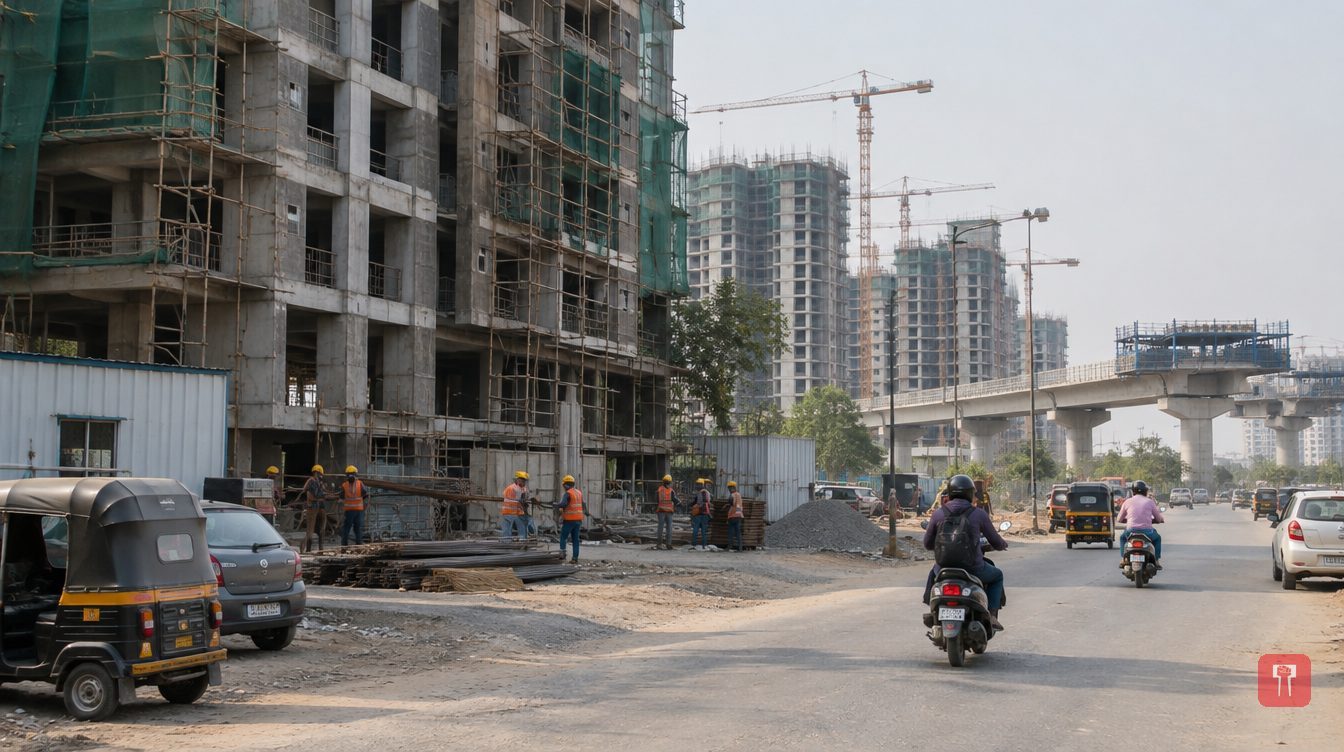 Images are not validated/verified
Pune sold 15,690 homes in Q3 2026, 6% fewer than a year earlier, while about 18,730 new homes were launched, with north and east Pune leading.
Pune's real estate market in 2026 is large and active, but its parts no longer move at the same pace. The question is no longer just whether prices are rising. It is where the city is spreading, why people are moving there, and whether roads, the metro, schools and hospitals are keeping pace with housing.
According to ANAROCK data, Pune sold 15,690 homes in Q3 2026, 6% fewer than a year earlier. About 18,730 new homes were launched in the quarter. Among the seven major cities ANAROCK tracks, Pune remained one of the largest residential markets despite the fall in sales. PropEquity's Q3 analysis showed a sharper decline: by its count, sales in Pune fell 16% year on year to 17,860 units. The two use different methods and scope, but both point the same way: the market has become more selective.
JLL's Q2 2026 report said sales were 7% higher than the previous quarter but 13% below the level a year earlier. It said North-East Pune and North Pune were the top-selling submarkets. JLL also found that, in its own categories, North Pune accounted for 45.1% of new launches. Consultants use different geographic divisions, so these percentages should not be compared directly.
The jobs picture also looks strong. According to Cushman & Wakefield, Pune recorded 5.31 million sq ft of office leasing in H1 2026, of which Q2 accounted for 3.22 million sq ft. GCCs took more than half of the quarter's leasing, while flexible workspace, IT-BPM and BFSI firms also brought large demand. The same report recorded 1.7 million sq ft of warehouse leasing in H1 2026, led by Chakan and Ranjangaon, while industrial leasing was 4.2 million sq ft, driven by engineering, manufacturing and automobile companies.
Wagholi is a good example. Twenty years ago it was considered an outlying village. Institutions such as Lexicon International School arrived early, but the area's change did not come from any single school. Jobs in Kharadi, new housing, connectivity on Nagar Road, education, retail and steady investment in east Pune are all part of it.
Infrastructure also needs watching. The official Pune Metro Line 2B runs 11.63 km from Ramwadi to Wagholi/Vitthalwadi and has 11 stations. It will link Viman Nagar, Kharadi and Wagholi to the existing metro network. For traffic and infrastructure problems in Hinjewadi, the Maharashtra government announced a Rs 426 crore package in 2026, and it also set out a larger Rs 1,400 crore plan for Chakan.
According to the official PMRDA project, Pune's Inner Ring Road is 83.12 km long, with a width of 65 metres, nine interchanges, 17 major bridges and 11 tunnels planned. The administrative approval is valued at Rs 14,200 crore. PMRDA says land acquisition and forest clearance are under way in the early phases, while proposals for later phases are being processed. An approved project is not a running project.
The share of expensive homes is rising. Knight Frank's H1 2026 analysis showed greater growth in Pune's higher-priced residential segment. In ANAROCK's Q3 data, homes priced between Rs 80 lakh and Rs 1.5 crore made up 34% of total launches across the seven major cities, and those between Rs 1.5 crore and Rs 2.5 crore made up 24%.
Overall, Pune's market is neither falling nor growing at an equal pace everywhere. It is splitting into different areas. Homebuyers should therefore check each area's jobs, existing amenities, the project's RERA registration and commuting time separately.
Reach readers on the ward they actually live in.
Advertise with Prime Time 24
Comments
No comments yet. Be the first.