

Vasu Baras on November 5: how cow and calf are worshipped across states
 Images are not validated/verified
The festival, seen as the start of Diwali, falls on Thursday, November 5, and is marked under different names and customs across the country.
Vasu Baras will be observed this year on Thursday, November 5. The day is said to mark the start of Diwali. In Maharashtra, Diwali is reckoned to begin with Vasu Baras, but in the rest of the country the day is observed under different names and with different traditions.
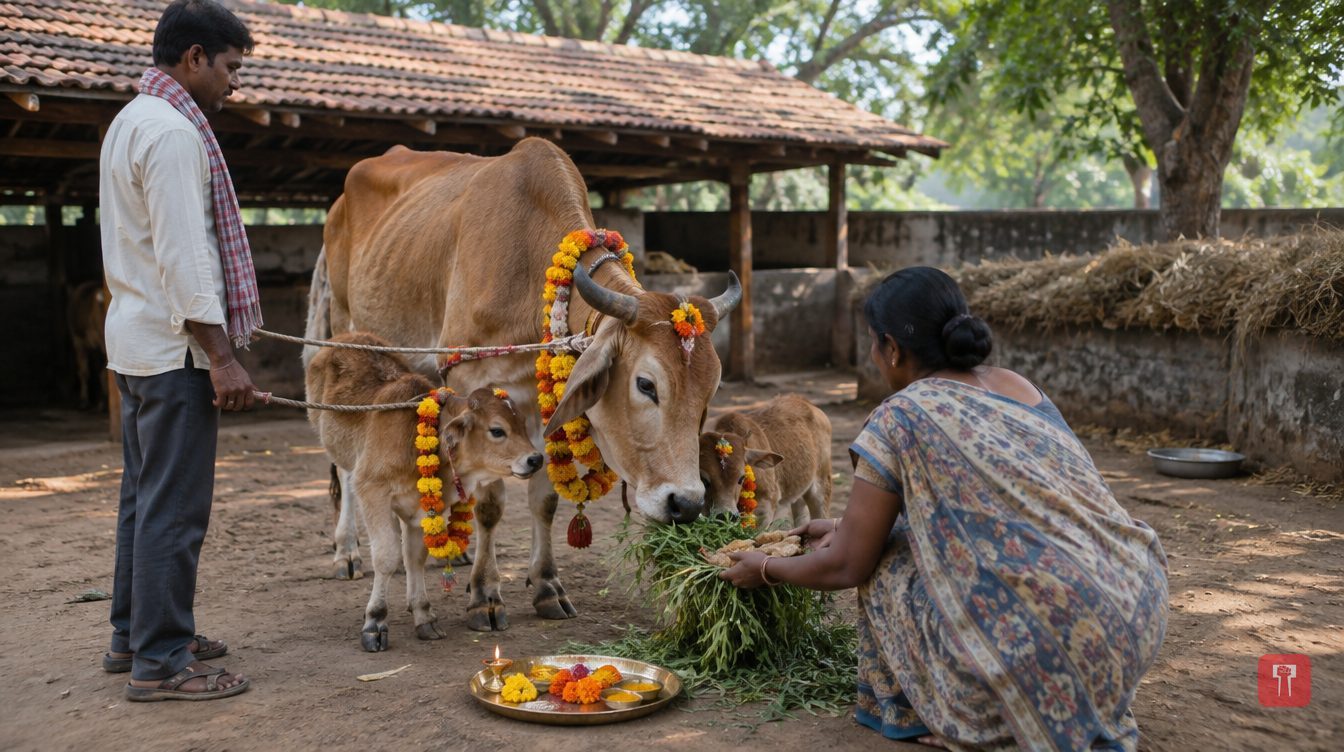
In North India, that is Uttar Pradesh, Madhya Pradesh and Rajasthan, the day is commonly called Govatsa Dwadashi. Women fast through the day for the long life and well-being of their children. In the evening the cow and calf are worshipped and fed wheat, jaggery and sprouted grain. The day also carries special devotion to Lord Krishna in his form as "Gopal", the caretaker of cows.
In Gujarat the day is known as "Vagh Baras" or "Bag Baras". The word "vagh" is linked there with money dealings. Traders and businessmen close their old account books, or ledgers, and begin fresh transactions. Prayers for happiness and prosperity are also offered by worshipping "Nandini", the divine cow, and her calf.
In South India, that is Andhra Pradesh, Karnataka and Tamil Nadu, the festival is called "Nandini Vrata". In Pithapuram in Andhra Pradesh, the "Sripada Vallabha Aradhana Utsavam" is held on this day with great fervour. In the south, women regard the cow as the form of Kamadhenu, worship her feet, garland her with flowers and make offerings.
In western India and along the Maharashtra-Gujarat border, some forest-dwelling communities observe the day as Vaghbaras. There, along with the cattle, an idol or symbol of Waghdev is worshipped so that domestic animals and farms are protected from wild animals, especially the tiger. Villagers gather, collect rice and other grain, and hold the celebration with offerings near the Waghdev temple.
In cities, where a real cow and calf cannot be found, people bring home a clay or metal figure of a cow and calf and worship it. Many visit local gaushalas (cow shelters) on this day, feed the cows fodder, green grass or jaggery and rotis, and also donate money.
Some practices are much the same everywhere. One is giving up milk and milk products. In the belief that the cow and calf have the first right to milk on this day, people in most states avoid cow's milk, curd, ghee and other milk-based foods.
The offerings, too, are similar everywhere. The cow is given sattvic fare such as bajra roti, sprouted moong, gram or puran poli.
Reach readers on the ward they actually live in.
Advertise with Prime Time 24Reach readers on the ward they actually live in.
Advertise with Prime Time 24Reach readers on the ward they actually live in.
Advertise with Prime Time 24
Comments
No comments yet. Be the first.