

Shardiya Navratri begins October 11: ghatasthapana timings and offerings for each of nine days
Ghatasthapana is on October 11, with Mahashtami and Mahanavami on October 19 and Vijayadashami on October 20; the muhurat may vary by city.
 Images are not validated/verified
Shardiya Navratri begins on October 11, 2026. The festival is dedicated to the worship of Adishakti Goddess Durga, and the nine forms of the goddess are worshipped over nine days. In many places, devotees follow the tradition of offering the goddess her favourite naivedya, special flowers and puja items. The worship begins on the first day with ghatasthapana. The nine days have a tradition of worship of the goddess's nine forms, naivedya, aarti and fasting.
The first day of Navratri is Sunday, October 11, and ghatasthapana will be performed the same day. Mahashtami and Mahanavami fall on October 19. Vijayadashami, or Dussehra, falls on Tuesday, October 20.
According to the panchang available for Mumbai, the main muhurat for ghatasthapana on October 11 is from 6:31 am to 10:27 am, a total of 3 hours 56 minutes. The Abhijit muhurat is from 12:01 pm to 12:49 pm. The muhurat may vary by city, so devotees in other cities should check the timings with their local panchang.
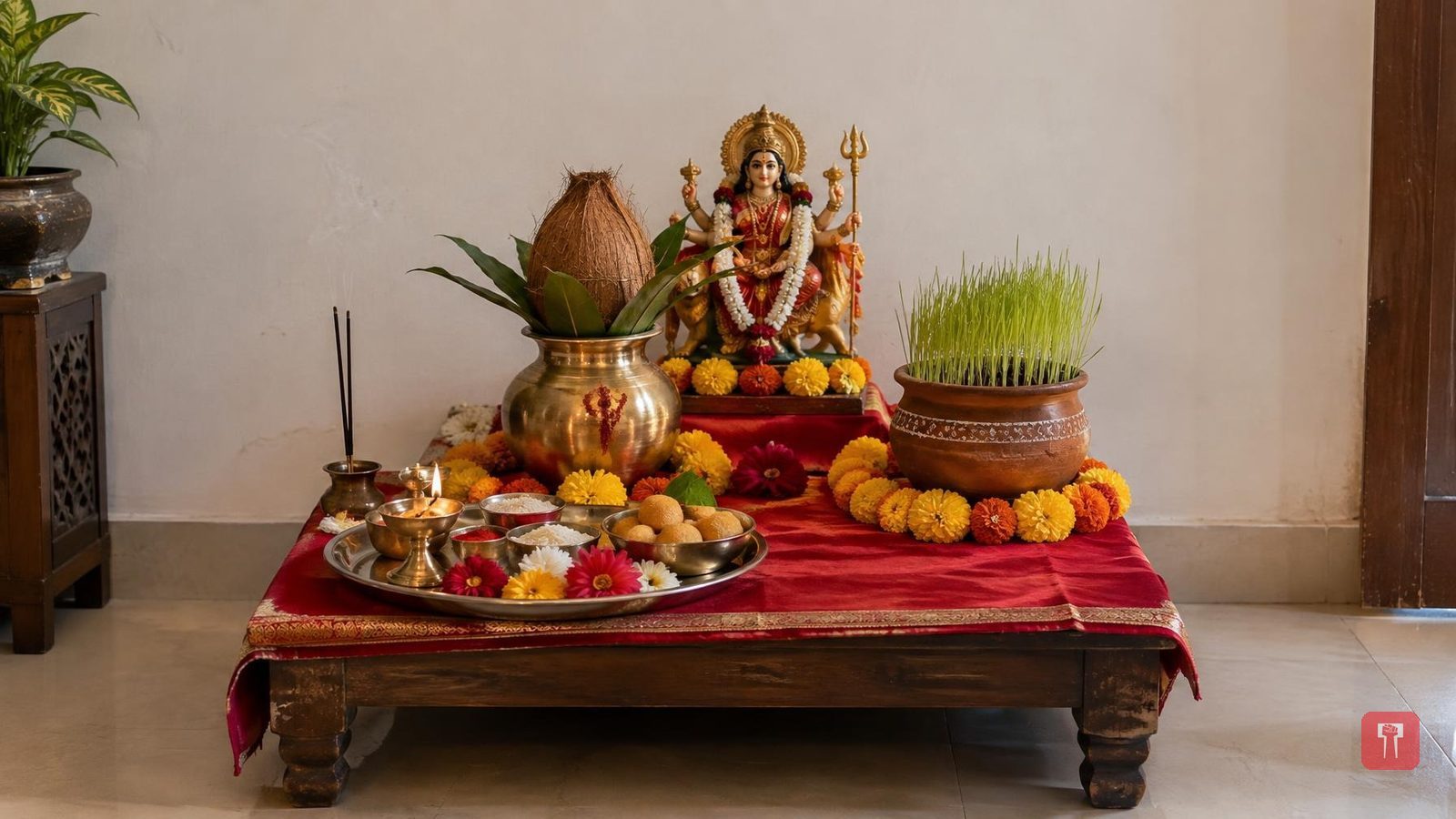
In the traditional ghatasthapana ritual, the installation of the kalash is considered important. Devotees should rise early and bathe. After cleaning the home shrine or place of worship, a red or yellow cloth is spread on a wooden stool. An idol or picture of Goddess Durga is placed on it, and a lamp and incense are lit. As per tradition, soil is filled in a clean vessel and barley is sown in it.
The kalash is filled with clean water. As per tradition, akshat, betel nut and a coin are placed in it. Mango or ashoka leaves are placed at the mouth of the kalash and a coconut is set on top. The goddess is offered kumkum, turmeric, akshat, flowers, garlands, fruit and sweets. Devotees recite the Durga Chalisa, Durga Saptashati or the goddess's mantras, and distribute prasad after the aarti.
The items needed for ghatasthapana are an earthen vessel and clean soil, barley or seven grains, a kalash and clean water, a coconut, mango or ashoka leaves, a red cloth or chunari, turmeric, kumkum, akshat, flowers, garlands, fruit, incense, a lamp, camphor, a puja thali, and sweets or homemade naivedya.
The dates and forms of the goddess for the nine days are as follows: Mata Shailputri on October 11, Brahmacharini on October 12, Chandraghanta on October 13, Kushmanda on October 14, Skandamata on October 15, Katyayani on October 16 and Kalaratri on October 17. October 18 is the day after Saptami, and devotees should consult their local panchang for it. On October 19, both Mahashtami and Mahanavami will be observed, and October 20 is Vijayadashami, or Dussehra. The count of tithis may vary according to the Udaya tithi and the local panchang.
On the first day, Goddess Shailputri is worshipped. She gets the name from being the daughter of Himalaya, king of the mountains. She symbolises stability and strength. The naivedya is pure cow ghee and sweets made with ghee, and the flowers are red or white. Kumkum, akshat, flowers and a lamp are used in the puja. Prayers are offered for health and stability in life.
On the second day, Brahmacharini is worshipped. This form is regarded as a symbol of spiritual practice, firm resolve and self-restraint. The naivedya is sugar, mishri and fruit, and the flowers are white or jasmine. Blessings are sought for peace of mind, restraint and the achievement of goals.
On the third day, Chandraghanta is worshipped. She gets the name from the bell-shaped half-moon on her forehead. This form symbolises courage and the strength to face crises. The naivedya is milk, kheer or milk sweets, and the flowers are red, or lotus if available. Prayers are offered for fear to go away and for courage and positivity.
On the fourth day, Kushmanda is worshipped. The goddess is regarded as the form of the primordial power behind the creation of the universe. She symbolises creativity and radiance. The naivedya is malpua, a dish made of pumpkin or any sweet dish, and the flowers are red or yellow. Prayers are offered for energy, enthusiasm and the brilliance of intellect.
On the fifth day, Skandamata is worshipped. She gets the name as the mother of Lord Kartikeya, or Skanda. This form reflects a mother's love, compassion and protection. The naivedya is bananas and banana sweets, and the flowers are yellow or lotus. Prayers are offered for the well-being of the family, the happiness of children and lasting love at home.
On the sixth day, Katyayani is worshipped. This is the valiant form of Goddess Durga. She is worshipped as the power that destroys injustice and protects dharma. The naivedya is honey, sweets or fruit, and the flowers are red. Blessings are sought for overcoming obstacles and for the fulfilment of wishes.
On the seventh day, Kalaratri is worshipped. This is the fierce and powerful form of Durga, regarded as a symbol of victory over fear, darkness and negative forces. The naivedya is jaggery and jaggery sweets, and the flowers are red or any fragrant flowers available. Prayers are offered for fear to go away and for the strength to fight crises.
On the eighth day, Mahagauri is worshipped. This is the calm, pure and gentle form of the goddess. In many places, there is also a tradition of kanya pujan on Ashtami. The naivedya is coconut, coconut preparations or kheer, and the flowers are white, jasmine or mogra. The puja is performed for peace of mind, happiness and prosperity, and harmony in the family.
On the ninth day, Siddhidatri is worshipped. True to the name, this form is regarded as the giver of siddhi and spiritual fulfilment. The naivedya is sesame, kheer or traditional dishes such as halwa-puri, and the flowers are lotus or any fragrant flower. Prayers are offered for knowledge, spiritual progress and success in work.
Practices of fasting, kanya pujan and offering special naivedya during Navratri may differ according to family tradition. Devotees should therefore seek the advice of their local panchang or a priest for the rituals of ghatasthapana and Ashtami-Navami.
