

Why Navratri begins right after Pitru Paksha, with Ghatasthapana on October 11
Pitru Paksha ends on October 10, and Shardiya Navratri begins the next day, Sunday, October 11, with Ghatasthapana, following the order of tithis in the Hindu calendar.
 Images are not validated/verified
Navratri begins as soon as Pitru Paksha ends. The main reason the two follow each other in this way is said to be the sequence of tithis in the Hindu almanac. Pitru Paksha is considered the time for remembering ancestors and performing shraddha and tarpan. After it, Shardiya Navratri begins on Ashwin Shukla Pratipada.
In 2026, Pitru Paksha ends on October 10. The very next day, Sunday, October 11, Shardiya Navratri will begin with Ghatasthapana. This makes it important to understand the religious and cultural tradition behind Navratri coming immediately after Pitru Paksha.
Behind every festival in Hinduism lies not just a religious rite but also a broader way of looking at life. Pitru Paksha, which begins after Bhadrapada Purnima, is regarded as a time to remember ancestors, to feel one's debt to them and to express gratitude. It concludes with tarpan, shraddha and tributes to the forefathers.
In Hindu culture, a person is considered bound by several debts from birth, and the debt to ancestors is given particular importance. Remembering the forebears from whom one received life, values, tradition, family and culture is seen as a moral responsibility. During Pitru Paksha, rites such as shraddha, tarpan, pind daan and food donation are performed in the name of both known and unknown ancestors.
The emphasis in this period is on remembrance, restraint, devotion and gratitude rather than on material comfort. For this reason, Pitru Paksha is not described merely as a time of sorrow or mourning. It is a time that makes one realise "where we have come from".
Ashwin Shukla Pratipada, which marks the start of Shardiya Navratri, comes after Pitru Paksha. While ancestors are remembered in Pitru Paksha, Navratri is a time to invoke Adishakti and embrace fresh energy. The tradition is to keep the blessings of ancestors in mind and seek strength and positivity for the life ahead.
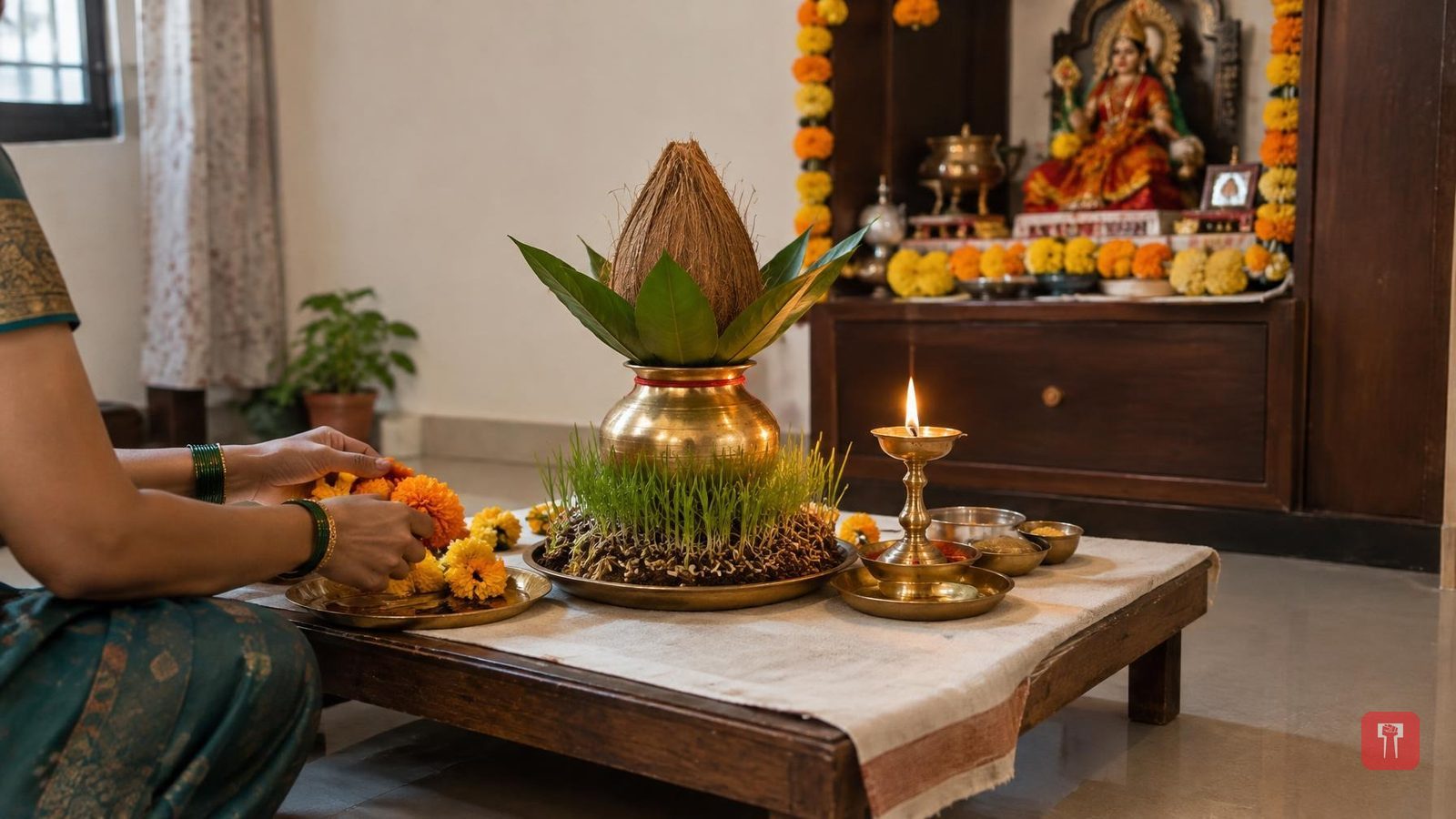
Navratri is a festival of worship of Adishakti. During these days, the goddess is worshipped in her different forms. In forms of Shakti such as Durga, Mahalakshmi, Mahasaraswati and Kali, devotees see feminine power and divine strength. Over the nine days, people observe fasts, chant, meditate, worship the goddess, recite the Saptashati, sing bhajans and kirtans and perform various religious rituals. In many places in Maharashtra, Ghatasthapana is performed and an unbroken Nandadeep lamp is lit before the goddess. Ghatasthapana is described not merely as the start of Navratri but as a symbol of welcoming divine power into the home and the mind.
Shardiya Navratri falls when the monsoon ends and autumn begins. A change is felt in nature at this time. In Indian tradition, this period is therefore linked with spiritual practice, fasting and sattvic food for the purification of body, mind and surroundings. The fasting and restraint of Navratri are tied not only to religious faith but also to dietary discipline and self-control. Keeping the mind cheerful through celebration and preparing body and mind for the new season is described as the broader thinking behind it.
Pitru Paksha is a time of looking back. Ancestors are remembered, the values they passed on are recalled, and a resolve is made to carry forward the principles drawn from their lives. Navratri is a time of worship of strength, victory, knowledge and virtue. The arrival of Navratri after Pitru Paksha is therefore more than a sequence of dates on the calendar. It can also be seen as a symbol of the outlook on life in Indian culture.
The dates are as follows. Ghatasthapana is on Sunday, October 11, 2026. Mahanavami is on October 19, 2026. Vijayadashami is on Tuesday, October 20, 2026.
The tradition is to spend every day of Navratri in worship of the goddess, chanting, meditation and sattvic conduct. Navratri ends on Navami, and Vijayadashami, or Dussehra, is celebrated after it.
