

Shardiya Navratri begins October 11; ghatasthapana muhurat 6.19 am to 10.12 am
Shardiya Navratri runs from October 11 to Dussehra on October 20, with the auspicious time for installing the ghata on day one set between 6.19 am and 10.12 am.
Shardiya Navratri is regarded as highly significant in Hinduism. It is believed that during these nine days Goddess Durga comes to earth and blesses her devotees, and nine different goddesses are worshipped over the nine days. The festival brings fasting, jagrans and garba.
According to the Panchang, Pratipada begins at 9.19 pm on October 10 and ends at 9.30 pm on October 11. The first day of Navratri falls on Sunday, October 11, 2026, and the last day, Dussehra, is on October 20. The nine days from October 11 to 20 belong to the goddess.
The ghata is installed on the first day, a ritual also called Kalash Sthapana. This year the muhurat is in the morning, from 6.19 am to 10.12 am. For those who cannot manage it in the morning, the Abhijit Muhurat falls in the afternoon, from 11.44 am to 12.31 pm. Installing the ghata in this window is considered very auspicious.
Ashtami falls on October 18, and the Maha Ashtami fast is observed that day. Navami is on October 19. Ashtami will last until 10.51 am that day, after which Navami begins. A havan is performed on Navami, and the best time for it on October 19 is from 11.44 am to 12.30 pm. It is said that performing the havan at this time brings the merit of the entire Navratri.
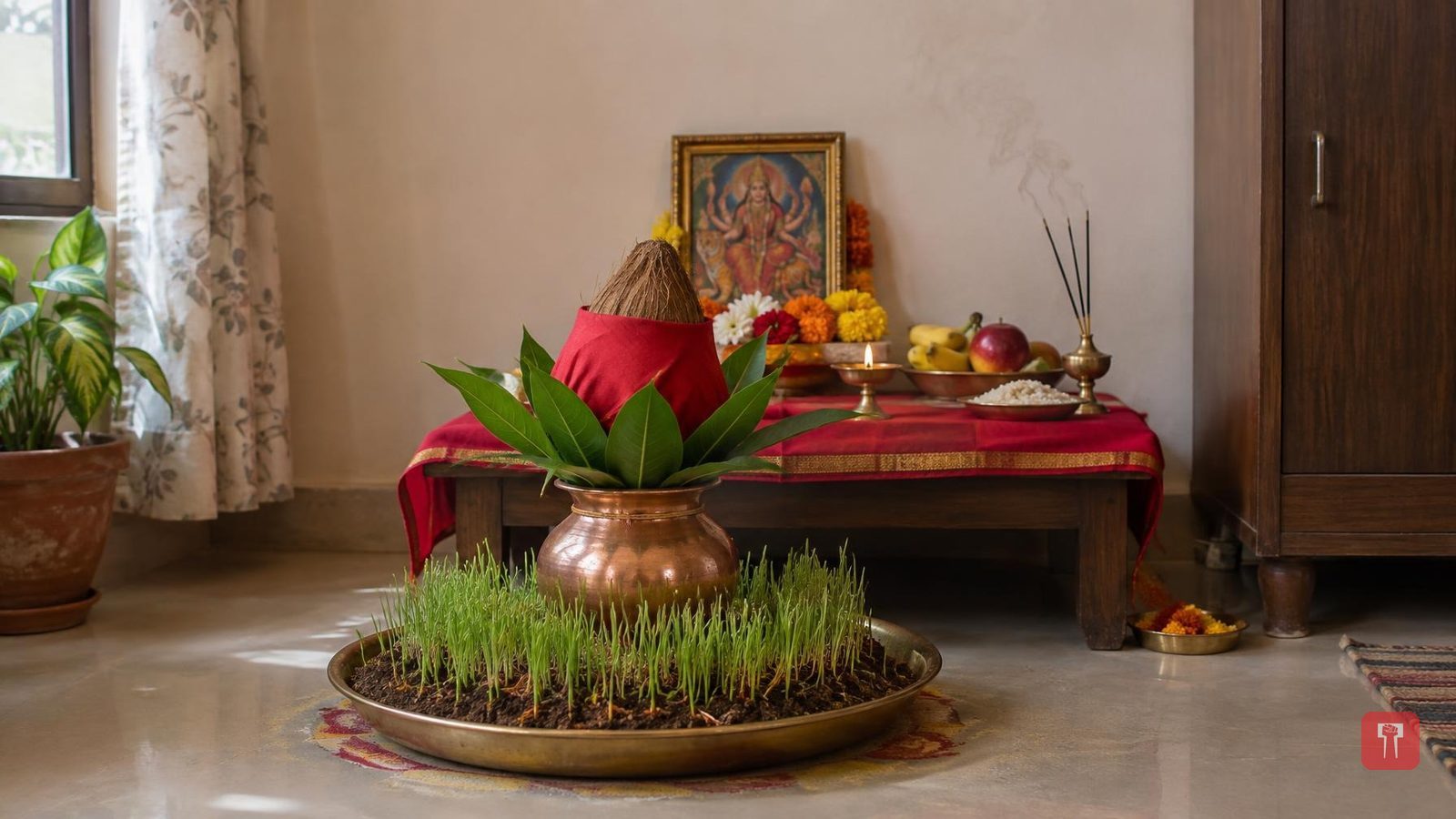
The procedure for installing the ghata at home is as follows. On the first day, clean the north-east corner of the house and sprinkle Gangajal there. Place a low wooden platform, spread a new red cloth on it and set a picture of the goddess on it. In front of the platform, place an earthen dish, put some soil in it, sprinkle barley over it, add a little more soil and sprinkle a little water. The barley sprouts well over the nine days.
Next, take a copper or brass kalash. Tie a red thread around its neck and draw a swastika on it with kumkum. Fill the kalash with clean water and mix in some Gangajal. Add a one-rupee coin, a betel nut, a little rice, durva grass and turmeric. Place five mango leaves at the mouth of the kalash. Wrap a coconut in a red cloth and place it on the kalash, with the mouth of the coconut facing you.
Place this kalash exactly in the middle of the dish of barley. Holding water and flowers in your hand, tell the goddess that you will worship her for nine days. Then light a lamp and incense sticks. Offer kumkum, rice, flowers and fruit to the goddess. On the first day, read the story of Goddess Shailputri.
The goddesses of the nine days are: Shailputri on October 11, Brahmacharini on the 12th, Chandraghanta on the 13th, Kushmanda on the 14th, Skandamata on the 15th, Katyayani on the 16th and Kalaratri on October 17. Mahagauri is worshipped on October 18, which is Ashtami, and Siddhidatri on October 19, which is Navami. October 20 is Dussehra and the day of immersion. It is said that if the goddess is worshipped wholeheartedly during these nine days, happiness, wealth and good health will come to the home.
