

Nagpur taps stay dry 72 hours after pipeline shutdown ends, residents scramble for water
Supply has not been fully restored in several parts of Nagpur after the 6 October shutdown overran, and residents say officials are giving no clear answers.
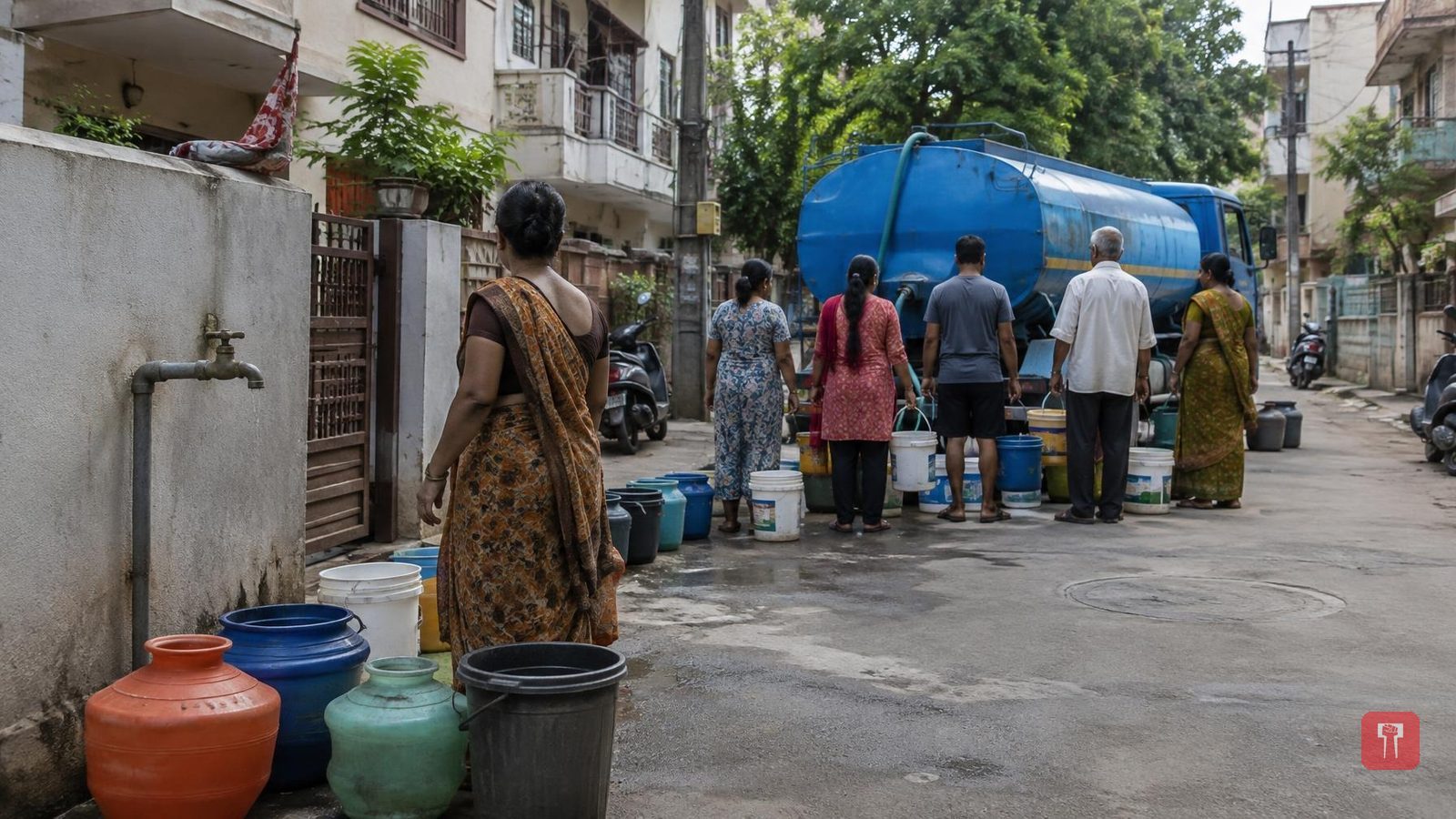 Images are not validated/verified
Repeated water supply shutdowns taken in the name of repair and maintenance are now hitting daily life in Nagpur. On 6 October, water was shut off for 36 hours in some parts of the city and for 12 hours in others. Fully 72 hours have passed since the shutdown period ended, yet taps remain dry in many areas.
As a result, people in different parts of the city are running around for water. Many families have had to arrange drinking water by other means. Residents are also not getting clear information on what steps are being taken to restore supply. The question being asked is where the municipal corporation administration is in this water crisis.
The supply was cut for work to shift a pipeline at the Patch-4 water treatment plant. Even after the stipulated 36 hours, supply could not return to normal. The work, being carried out under a World Bank project, was not completed on time, so the shutdown had to be extended. Residents of the affected areas are suffering a water shortage as a result.
The municipal corporation has said efforts to restore supply in phases will begin from Friday. Mayor Nita Thakre has directed the officials concerned to speed up the work and bring supply back to normal at the earliest. On Thursday late evening, Deputy Mayor Leela Hathibed visited the site and reviewed the ongoing work.
With the city's water distribution handed over to a private company, the question of what role the corporation's water supply department now plays has been raised again. When supply is disrupted, people should be told the reason and when water will resume. But the officials concerned are not giving satisfactory information.
Residents say that when they approach one official, they are told the authority lies with another senior woman officer. When they go to her, they are sent to the executive engineer. This clearly shows a lack of coordination among officials of the same department.
The model code of conduct is also being cited, although it places no restriction on the city's essential works. People are asking what could be more essential than providing drinking water to thousands of people. The corporation administration should take decisions on its own in emergencies instead of waiting for directions from office-bearers.
Residents also complain that officials do not step forward on their own when sudden problems arise in the city. On Thursday, people in many areas were left to depend on providence for water.
