

Energy in Motion starts Rs 500-crore electric truck plant at Talegaon near Pune
The facility at Ambi in Talegaon is the first phase of the company's planned Rs 1,000-crore investment in Maharashtra and is expected to create over 2,000 jobs.
 Images are not validated/verified
Energy in Motion (EIM) has begun operations at a new production complex for electric heavy commercial vehicles in Talegaon, Pune, in a boost for Maharashtra's electric vehicle industry. The project began on October 14, 2026.
The company plans a total investment of Rs 1,000 crore in Maharashtra. The Talegaon project is the first phase of that plan, and the company has put in about Rs 500 crore on the new facility.
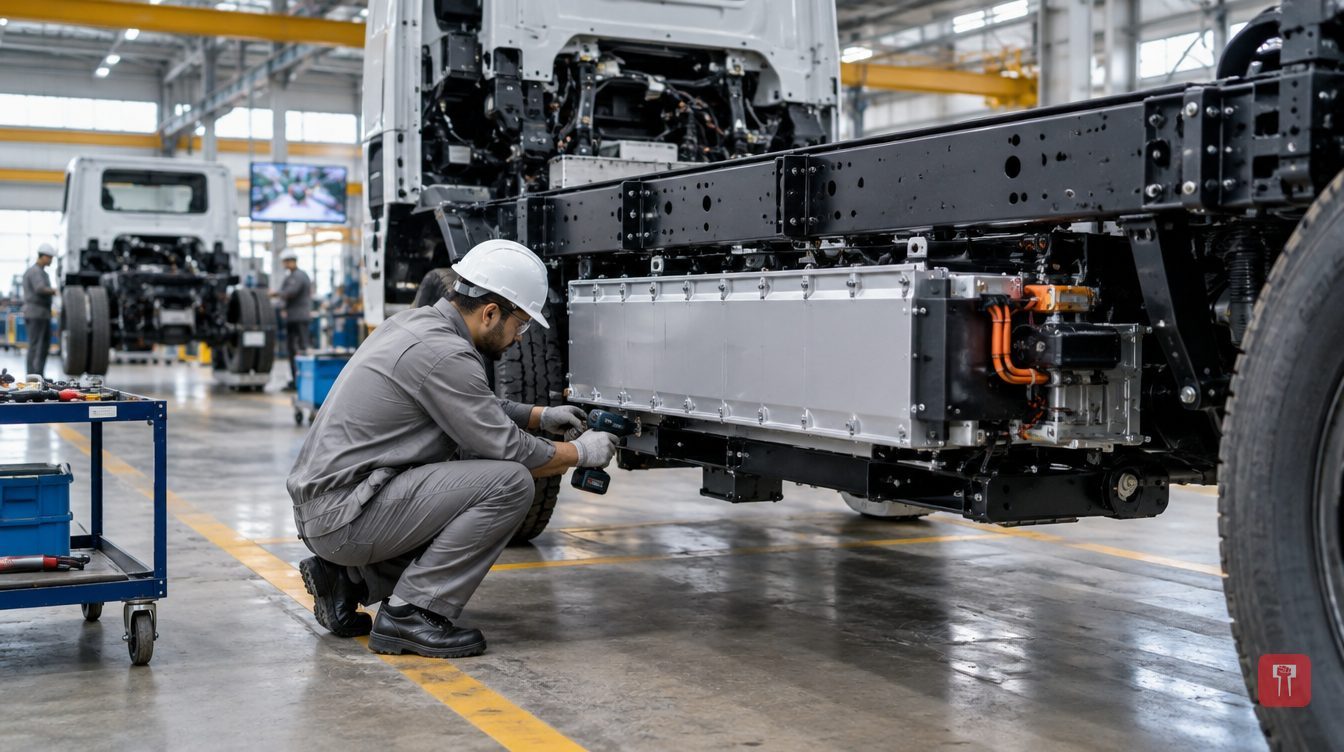
The complex at Ambi in Talegaon houses three things in one place: assembly of electric heavy vehicles, assembly of lithium-ion battery packs and a battery testing laboratory. According to the company, the facility's initial capacity is 5,000 vehicles a year per shift. It plans to build electric trucks, tractor-trailers and dumpers here. Having vehicle assembly and battery work at one site could help production and the development of technology.
On jobs, the company has expressed hope that the project will create more than 2,000 direct and indirect jobs. Along with manufacturing, opportunities could also arise in design, research and development, and the IT sector. Talegaon and the surrounding industrial area are likely to benefit from the investment.
Charging time is a major issue for electric heavy vehicles. In view of this, Energy in Motion is preparing to set up high-capacity charging and battery-swapping centres near highways, ports and industrial areas. The company says the batteries of vehicles using them can be swapped in less than seven minutes. It also plans to offer charging under the CCS-2 standard.
The company has partnered with BAIC Foton for electric heavy vehicles, CATL for battery technology and Shanghai Enneagon for robotic battery swapping. The main aim of the project is to offer an electric option to diesel-powered goods vehicles and to build the infrastructure needed for it.
