

World Spine Day: How to protect your back if you sit at a computer for hours
On World Spine Day, orthopaedic specialists and physiotherapists suggest simple changes to sitting posture, exercise, lifting and diet to keep the spine healthy.
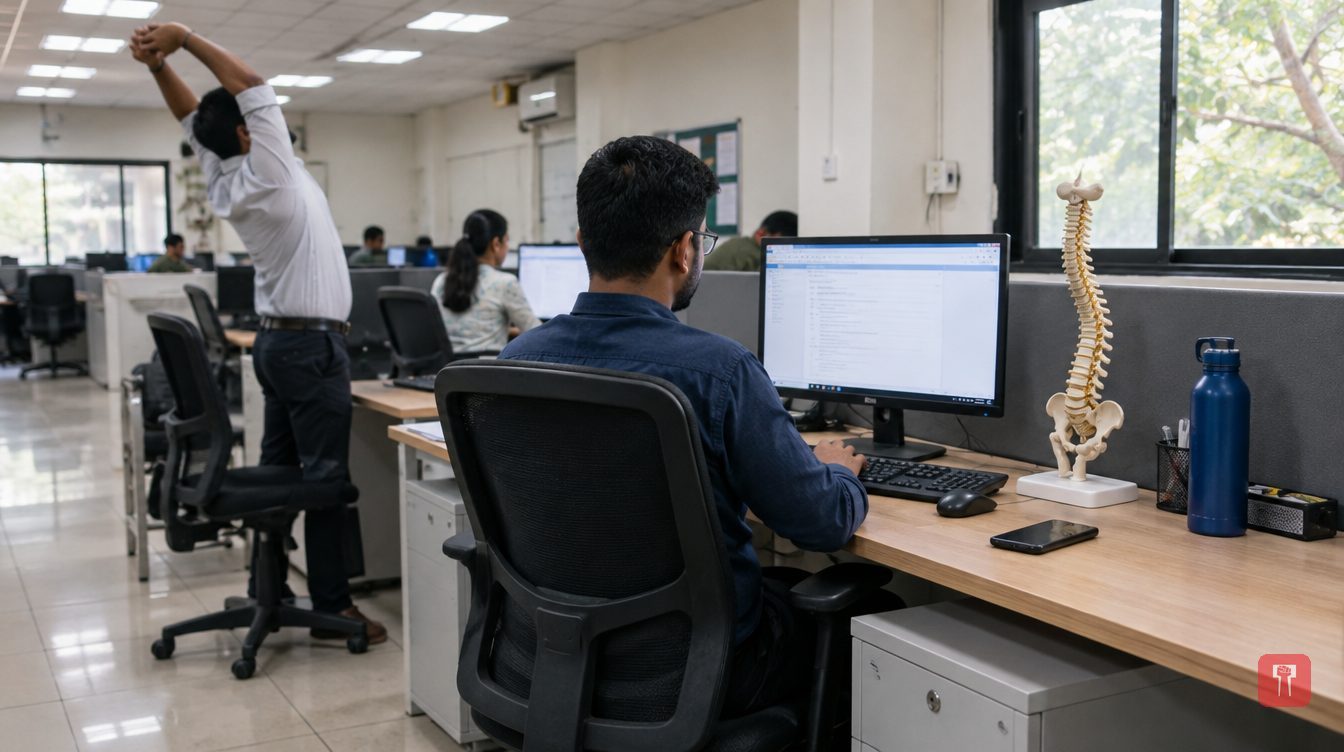 Images are not validated/verified
World Spine Day is observed across the world on October 16 every year. The spine is the body's most important and strongest support. Standing upright, walking, bending or making any movement depends on its flexibility. In today's hectic, screen-bound lives, however, it is the most neglected part of the body. As a result, people of all ages are struggling with back pain, neck pain and ailments such as spondylitis.
According to a World Health Organization (WHO) report, back pain is a major cause of disability and inability to work worldwide. For this reason, health organisations, hospitals and doctors hold health camps, yoga sessions and discussions on October 16 every year. The aim is to make people aware of spinal health and to motivate them to adopt the right lifestyle to avoid serious illness.
Everyday habits are described as the real enemies of the spine. Cases of Text Neck Syndrome and Lumbar Spine Strain have risen considerably among people working in the IT sector, employees working from home, and young people who spend hours gaming or scrolling on smartphones. When we look at a phone with the neck bent, the spine bears three times the pressure of its natural weight.
Sitting in the same position for hours in the office, slouching, sleeping on soft mattresses and not exercising at all also put unnecessary pressure on the spinal discs. Over time, this strain shows up as sciatica, a slipped disc or compressed spinal nerves. If not attended to in time, surgery may become necessary.
On World Spine Day, orthopaedic specialists and physiotherapists suggest a few simple measures for spinal health. According to them, small changes in the daily routine can help keep the spine strong and flexible.
The first measure concerns the way of sitting. While sitting on a chair, the back should be straight and supported. The computer screen should be at eye level so that the neck does not have to be bent. Every 45 to 50 minutes, one should get up from the chair and walk or stretch for two to three minutes.
The second is regular exercise and yoga. Asanas such as bhujangasana, marjaryasana (Cat-Cow pose), tadasana and navasana increase the flexibility of the spine. Along with this, brisk walking or swimming for 30 minutes a day strengthens the back muscles.
The third concerns the way heavy objects are lifted. While picking up something heavy from the ground, do not bend straight from the waist. Bend the knees and squat, hold the load close to the body and rise slowly. This avoids sudden strain on the lower spine.
The fourth is a balanced diet and sunlight. Calcium and vitamin D are essential to keep the bones of the spine strong. Milk, curd, green leafy vegetables, sesame seeds and dry fruits are advised in the daily diet. One should also sit in gentle sunlight for 10 to 15 minutes every morning.
It is said that a healthy spine means a healthy and long life. This reflects the central place of the spine in the body's structure. When the spine is healthy, the nervous system works properly, which doubles efficiency and energy.
On World Spine Day, therefore, one should resolve to pay attention to the way one sits and moves not for a single day but for a lifetime. Not compromising the body's natural structure while using technology, exercising regularly and consulting a doctor from time to time are simple habits that will help in leading a happy life free of back pain.
