

Half the world may need spectacles by 2050, AIIMS experts warn; Delhi readies eye-care action plan
Experts at AIIMS Delhi say rising screen time is driving myopia, and one in three people in the capital already needs spectacles.
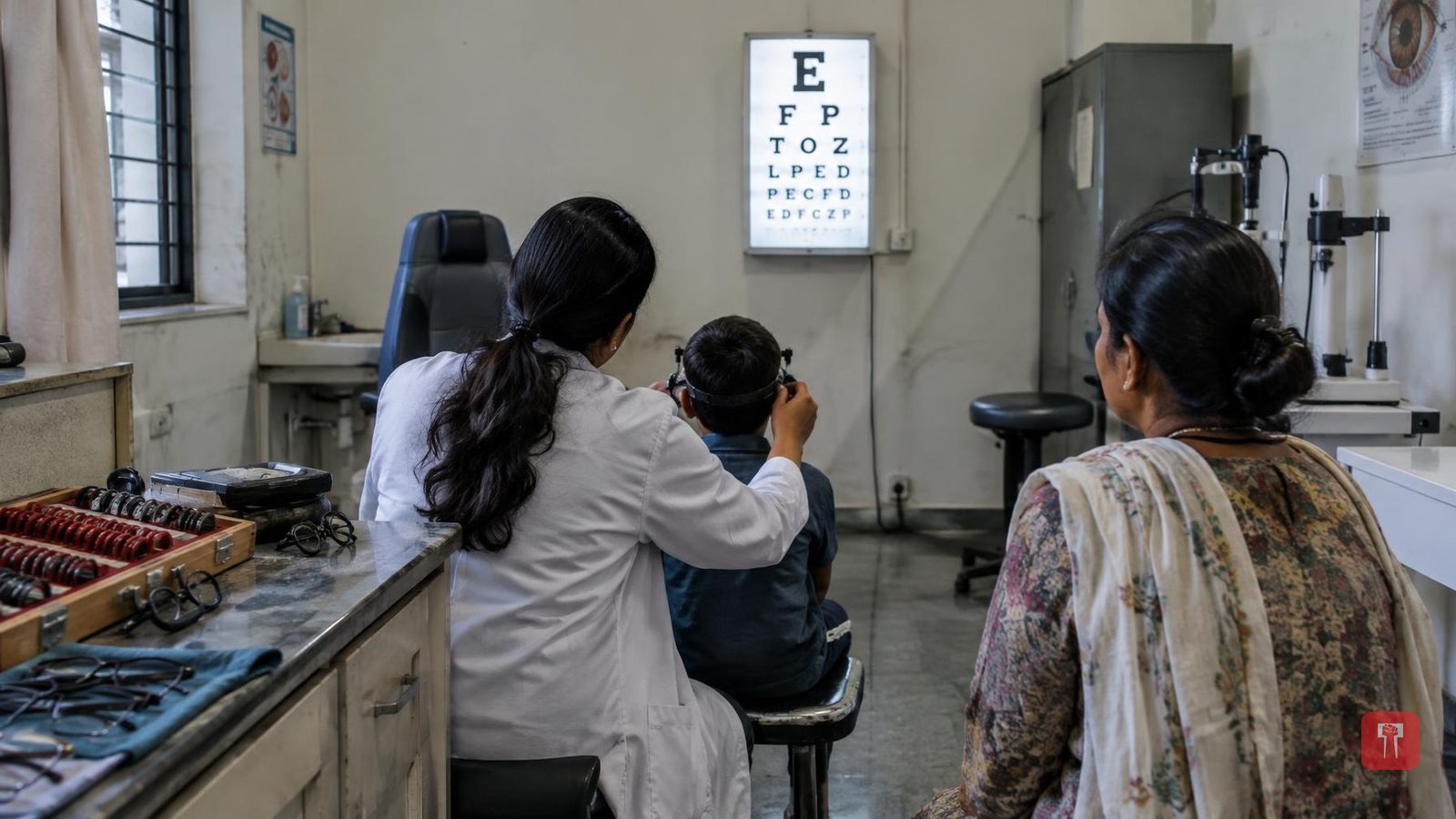 Images are not validated/verified
Rising screen time and changing lifestyles are increasing vision problems worldwide. Experts at the All India Institute of Medical Sciences (AIIMS), Delhi, have warned that by 2050 nearly 50 per cent of people in the world may need spectacles for myopia, or difficulty seeing distant objects clearly. The experts also said one in every three people in Delhi needs spectacles.
The information was given by Dr Praveen Vashist, head of the Department of Community Ophthalmology at AIIMS. According to him, a comprehensive action plan is being prepared in Delhi to identify vision problems and deliver eye tests and spectacles to those in need on time. The plan will seek to raise effective refractive error coverage (eREC).
The Geneva office of the World Health Organization (WHO) had provided an analysis tool. With its help, the status of vision problems in Delhi, gaps in services and possible remedies were studied. It was then decided to draw up an action plan for the whole of Delhi.
The initiative involves officials of the Centre and the Delhi government, AIIMS experts, programme officers from different states and representatives of non-governmental organisations working on eye health. A team of about 70 people will discuss remedies for the problem. The aim is to deliver spectacles to those in need with the help of ASHA workers and various health centres.
According to Dr Vashist, the prevalence of vision problems among children is also rising. In 2001, about seven per cent of children had a vision-related problem. An AIIMS study in 2012 found the figure to be 13 per cent, while some current studies put it at 20 to 25 per cent.
The experts said children's growing screen time is one of the main causes. Greater use of computers, laptops and mobile phones for studies, and the growing habit of playing mobile games at home instead of playing outdoors, can affect children's eye health.
A target will be set for 2030 to tackle the problem. Dr Vashist said the action plan is expected to be released in the next one or two months.
