

FDA tightens norms on spice adulteration in Maharashtra under Commissioner Tukaram Mundhe
Maharashtra's Food and Drug Administration has brought in strict rules for spice makers, sellers, wholesalers and hoteliers to curb adulteration and misleading claims.
 Images are not validated/verified
The Food and Drug Administration (FDA) has taken a tough stand to stop adulteration of food items in Maharashtra. Strict rules have reportedly been brought in, in the name of FDA Commissioner Tukaram Mundhe, for spice manufacturers, sellers, wholesalers and hoteliers. The rules aim to curb the mixing of artificial colours in spices, the use of substandard material and misleading claims made to customers.
Violators can face action under the food safety law. However, the reported blanket ban on the sale of loose spices and the specific penalty provisions need to be checked against the FDA's official order, as these claims are yet to be confirmed by a notification.
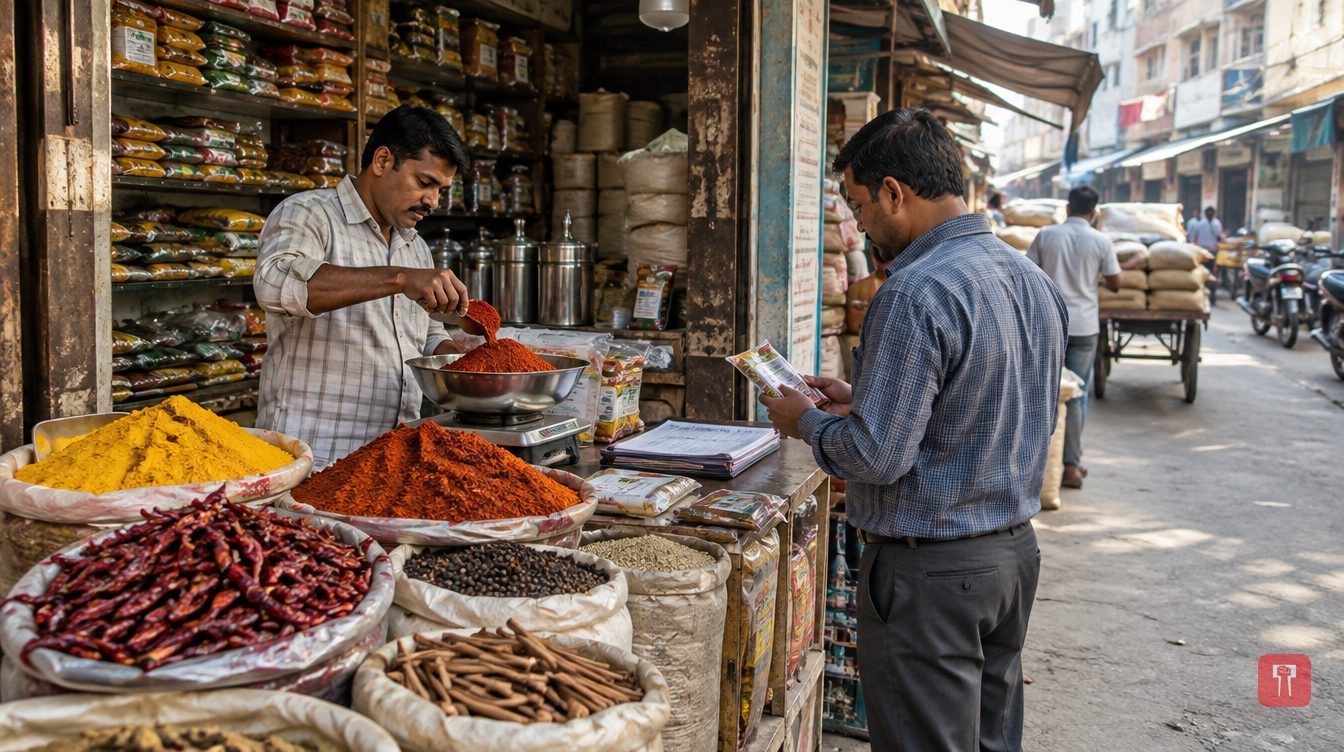
After the action against adulteration in milk and milk products, the question of the quality of spices has now come up. Emphasis is being laid on hygiene and quality at every stage from production to sale of items such as turmeric, chilli powder, chillies, cinnamon, black pepper and poppy seeds. The administration can act against those who endanger customers' health by adulterating spices. Spice manufacturers and sellers will therefore have to follow food safety norms.
A valid food licence and compliance with the applicable food safety rules are mandatory for selling spices. The claim of a complete ban on the sale of loose spices has to be verified against an authorised notification.
Certain points have been flagged for special attention on the quality of spices. Banned artificial or industrial colours cannot be used to make spices look more attractive. Using spices from which the extract has already been taken out, or which are of substandard quality, as adulterants can be a violation of the rules. Production and storage areas must be kept clean, dry and safe. Packaging must clearly carry product details, applicable dates and other required information. Misleading information or unsubstantiated claims cannot be printed on packets.
Food safety agencies are also keeping an eye on ethylene oxide, a chemical used to disinfect spices. The chemical must be used only in line with the applicable rules and standards. If it is found to be used in a banned or unsafe manner in spices, action can be taken against those concerned as per the rules.
Under the Food Safety and Standards Act, 2006, adulteration of food and violations of the rules attract fines and criminal action depending on the circumstances. Some serious offences can bring imprisonment and heavy fines. But it cannot be said outright that every case draws a jail term of 1 to 7 years and a fine of Rs 1 lakh to Rs 10 lakh. The punishment depends on the category of the offence, its seriousness and the legal provisions that apply.
Customers have been advised to check the information on the packet, the manufacturer's name, the licence details and the quality assurance while buying spices. Complaints can be made to the Food and Drug Administration if adulteration is suspected. Safe food is a customer's right, and manufacturers and sellers will have to follow the rules strictly to ensure it.
