

El Nino threat to rabi season raises concern for wheat, pulses and oilseed output
Agriculture secretary Atish Chandra says El Nino could disrupt soil moisture for rabi crops, with effects likely to vary sharply by region
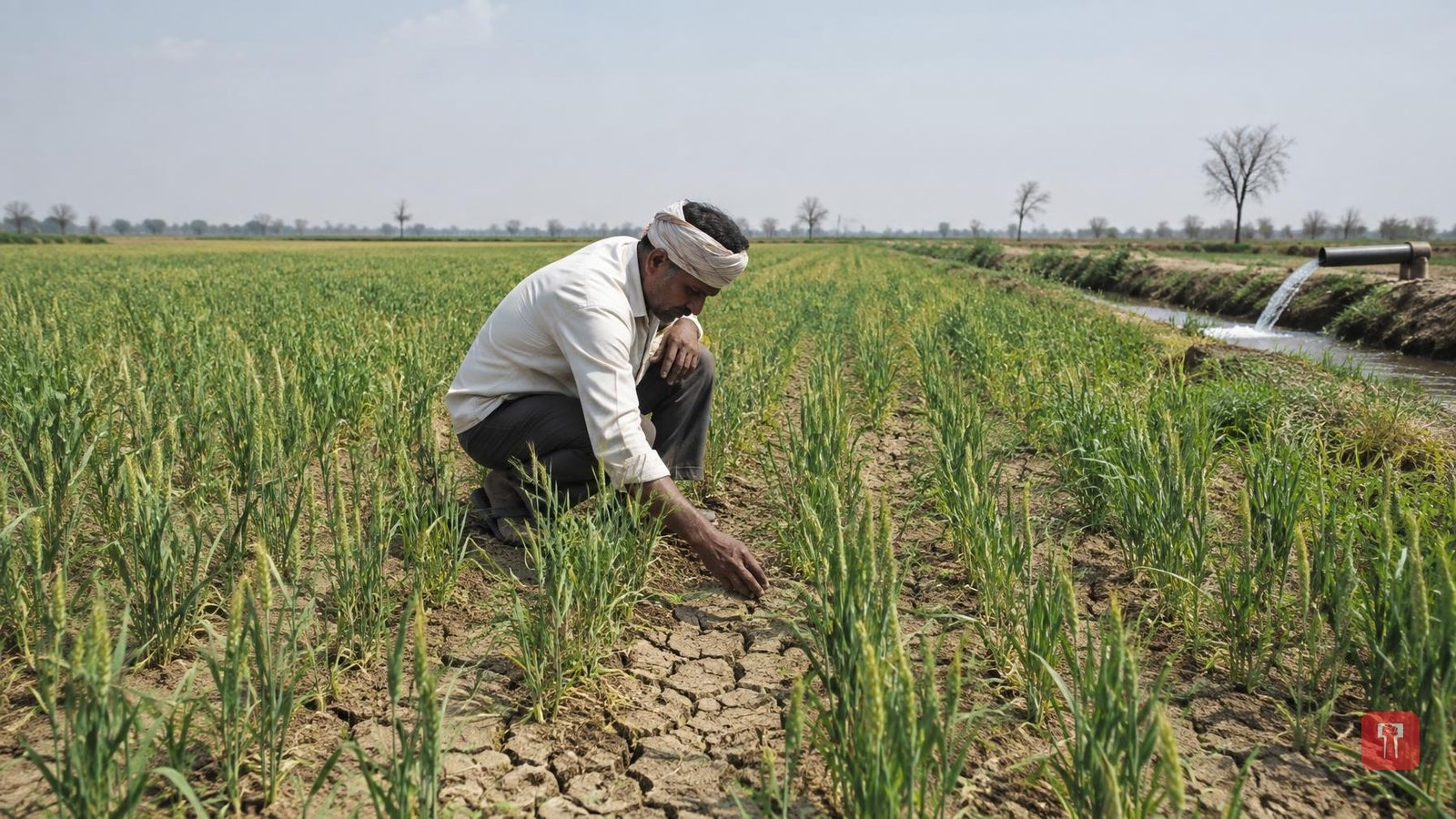
Concerns over low monsoon rainfall had already been building, and now the coming rabi season faces a fresh weather worry. Agriculture secretary Atish Chandra has said that the effects of El Nino have raised questions over whether rabi crops will get adequate moisture at the right time. This could directly affect the output of key crops such as wheat, mustard, pulses and oilseeds. The big question now is whether the impact will be limited to farmers' yields, or will also be felt in grain availability and market prices.
Sowing of wheat, mustard and other major rabi crops typically begins in October, so soil moisture before sowing and during the crops' early growth matters a great deal. This year, some areas have seen a rainfall deficit, while in other places later rain has left the soil with excess moisture, meaning both kinds of conditions exist.
According to the agriculture secretary, the coming rabi season could be especially difficult for areas that depend on rainfall. He said there is a possibility of a large-scale impact on production this season. However, this does not mean that production of all rabi crops across the country will definitely decline, since the impact could vary depending on the region, rainfall amount, soil moisture, irrigation facilities and the crop's growth stage.
The likely effects of El Nino will not produce uniform weather everywhere. Some states could see excess soil moisture persist, while areas that received less rain could face prolonged moisture deficit. Both situations could create problems for rabi crops. Excess moisture can affect sowing time, seed germination and crop growth, while insufficient moisture means crops will not get the water they need, increasing dependence on irrigation. For this reason, the agriculture secretary said that instead of a single strategy for the whole country, region-specific planning is needed.
In India, rabi crops are sown across about 63.8 million hectares, of which wheat alone accounts for more than 30 million hectares. Pulses are cultivated on about 14 million hectares, oilseeds on 8.7 million hectares, and coarse cereals on about 5.5 million hectares. A major shift in weather would affect the output of these crops, with a direct bearing on a large part of agriculture. Wheat is the country's staple grain, so changes in its production could affect overall grain availability. Pulses and oilseeds are a different matter: India has become largely self-sufficient in cereals, but the country still depends on imports for pulses, oilseeds and some horticultural products.
The biggest question right now is whether lower production will push up prices. If a crop's output falls and its market availability drops correspondingly, there is a risk of pressure on that crop's prices. This is particularly true for items the country has to import, where lower domestic production could increase import requirements. But a fall in rabi production does not mean prices will rise immediately. Market prices depend on several factors besides production, including imports, government stocks, demand, international prices and government policy. So at this stage it would not be correct to say El Nino will definitely push up prices, though it is fair to say that if production and availability are affected, some agricultural commodities could come under price pressure.
The agriculture secretary said climate change should now be treated as today's reality rather than a problem for the future. Even in areas with irrigation facilities, unseasonal and heavy rain has damaged crops in some places. This makes clear that low rainfall is no longer the only problem for farmers; the timing, intensity and distribution of rainfall have become equally important.
In this situation, farmers have been advised to adopt crop diversification, that is, to rely on a mix of crops suited to weather and local conditions rather than depending entirely on a single crop. However, implementing crop diversification is not easy; it involves challenges around agricultural research, the ability to adjust to weather, and farmers' incomes. So merely advising farmers to change crops will not be enough; they will also need the right technology, markets, irrigation and financial support.
Schemes such as "More Crop Per Drop" and those related to soil health are being run to promote efficient water use. The agriculture secretary said these schemes should not be judged only by how much subsidy was disbursed, but by how much farmers actually benefited. State governments have also been urged to focus more on outcomes that genuinely improve farmers' incomes.
Sowing for the rabi season is set to begin from October, making the coming weeks critical. How the crops get started will depend heavily on the effects of El Nino, the distribution of rainfall, soil moisture and irrigation facilities. Based on the information available so far, a weather challenge for the rabi season appears certain, but how much production will fall, or how much any particular crop will be affected, cannot yet be said with certainty. For farmers, state governments and the central government, region-specific planning, continuous weather monitoring, proper water management and crop diversification will remain important. Protecting farmers' yields on one hand and keeping grain prices in check for consumers on the other could be the twin challenge facing the coming rabi season.
This story has published but the live thread has not started. Updates appear here the moment the desk files one.
