

Devotees walk on live embers at Goa's Shirgaon fair for Lairai Devi
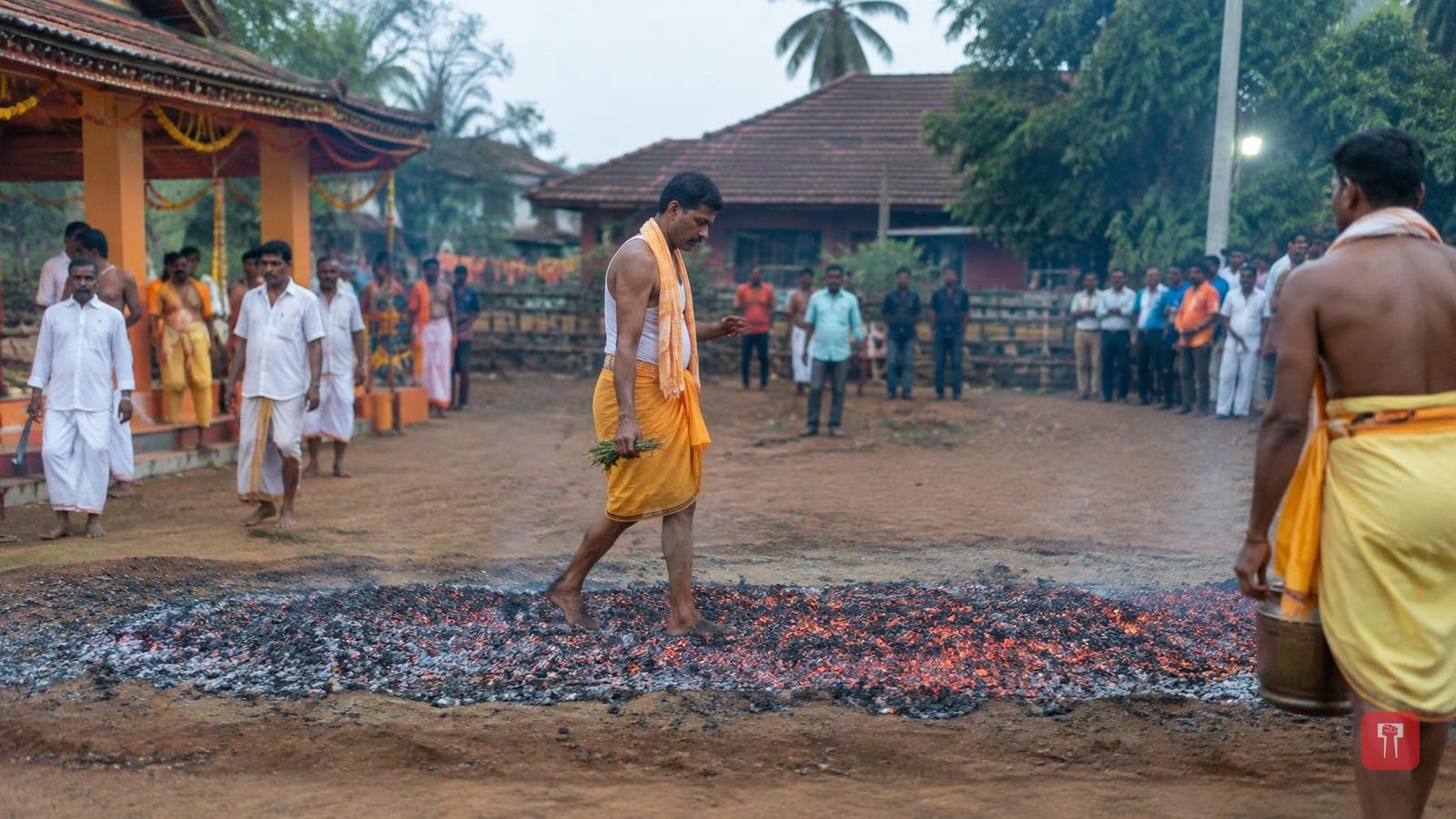
The Shri Lairai Devi temple at Shirgaon in Bicholim is known for its annual fair, where devotees walk barefoot over burning embers in a ritual called agnidivya.
 Images are not validated/verified
Goa is usually associated with beaches, scenic views and tourist spots. But worship of deities and folk traditions are just as important to its cultural life. The Shri Lairai Devi temple at Shirgaon in Bicholim is a well-known centre of such old faith and a distinctive folk tradition.
Lairai Devi is regarded as a form of Adishakti, particularly in the form of Goddess Parvati. The Shirgaon fair is held here every year in the month of Vaishakh, and the agnidivya performed during it gives the temple a distinct identity. The temple is counted among Goa's important places of religious faith.
According to local religious tradition, Lairai Devi is considered a living, awakened goddess and is revered by many devotees in Goa. Worship of the goddess reflects devotion, vows, gratitude and hope of protection from calamity. For devotees in Shirgaon and surrounding areas, she is not just the deity of a temple but a major pillar of family tradition and village faith.
The temple's fame rests chiefly on the Shirgaon fair. It is generally held in May, around Vaishakh Shuddha Panchami. Thousands of devotees come to Shirgaon from Goa, Maharashtra and other areas. The temple premises fill with devotees. The sound of traditional instruments, chants in praise of the goddess and various religious rites create a festive atmosphere across the area.
The most unusual attraction of the fair is the agnidivya, which local tradition links to a rite associated with the homakund, or sacrificial fire pit. A large quantity of wood is burned to prepare glowing embers, and devotees walk over them barefoot. It can appear startling to a first-time viewer. For the devotees who take part, however, it is part of their faith in the goddess, their vows and devotion. They believe they are able to cross the fire through her grace. In this rite, physical courage is valued alongside firm belief and devotion.
Another important part of the fair is the goddess's devotees known as "Dhond". During the fair, these devotees observe certain religious rules and traditions. They have an important role in serving and worshipping the goddess and in the fair's rituals. On the days of the fair, the participation of the Dhond devotees and the rites performed through them are considered a distinguishing feature of the Lairai Devi tradition.
The Lairai Devi fair is not merely a religious pilgrimage. It brings together folk art, music, traditional dress, collective participation and faith. Old folk traditions of Goa remain alive through this festival, and thousands of people still take part in it today. For this reason the fair is an important part of Goa's cultural heritage.
It is a distinctive place that introduces visitors to Goa's religious and folk traditions beyond its beaches. Devotees who come for the Shirgaon fair witness a rare scene of devotion to the goddess, folk tradition and collective faith.
Many folk traditions are slowly changing today. Preserving the Lairai Devi fair and its associated religious traditions across generations has been described as necessary. Devotees taking part in such rites must also follow the instructions of the temple administration, safety arrangements and medical precautions. The name of Goddess Lairai echoes across Shirgaon as thousands of devotees gather and express their faith with fire as witness.
