

Sensex falls 1,200 points, Nifty near 22,200 as oil, RBI rate hike and FII selling hit markets
Investors sold heavily on Thursday after crude prices rose, the RBI raised the repo rate and turned hawkish, and foreign funds pulled out money.
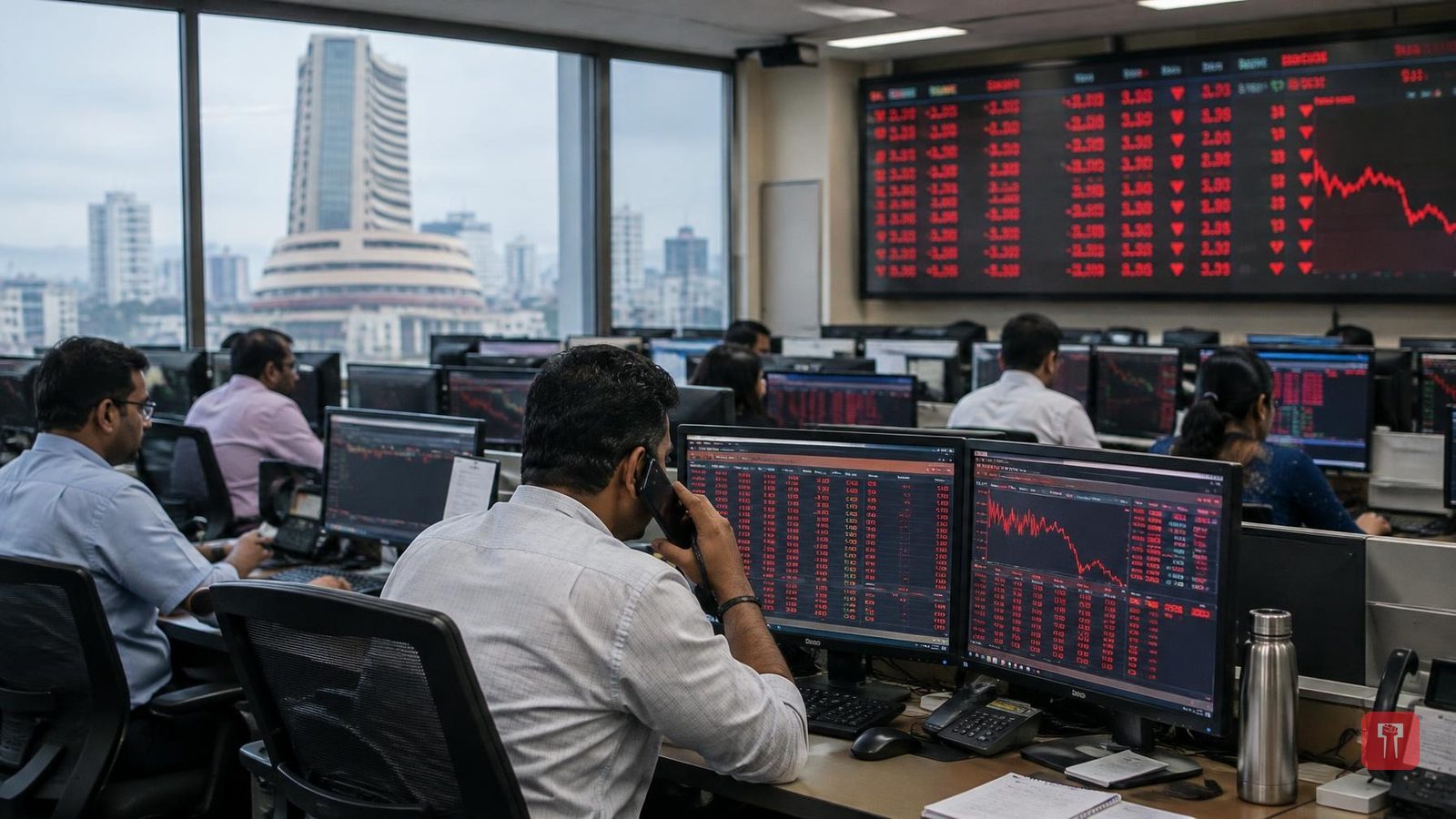 Images are not validated/verified
Investors sold heavily in the stock market on Thursday. The Sensex fell 1,200 points and the Nifty dropped to around 22,200. By afternoon, the combined market value of companies listed on the BSE had fallen by an estimated Rs 8 lakh crore.
Several factors hit the market at once after the repo rate hike: costlier crude oil, the RBI's tighter policy, selling by foreign investors, weak cues from global markets and declines in some large stocks. Investors now face not one but several worries.
The first factor is crude oil. Brent crude rose more than 3 per cent to about $103 a barrel. Tension in West Asia has raised concern over the safety of ships in the Gulf region and the Strait of Hormuz, pushing up prices. India imports a large share of its crude requirement, so higher prices raise the import bill. This can affect the rupee, inflation and companies' costs. If companies cannot pass the higher costs fully on to customers, their profits come under pressure. This is what the market fears.
The second blow came from the RBI. On Wednesday, the Reserve Bank raised the repo rate by 25 basis points to 5.50 per cent, the first increase in about four years. More significantly, the RBI changed its policy stance from "neutral" to "calibrated tightening". This suggests interest rates could stay high for a long time, which is what is unsettling the market. The RBI Governor has also indicated that there is little room for a rate cut in the near term and that the next step will depend on inflation and economic conditions. Higher interest rates make loans costlier for companies, and investors begin to prefer safe interest-bearing options over shares.
The third factor is continued withdrawal by foreign investors. On October 7, foreign institutional investors (FIIs) pulled Rs 6,121.40 crore out of the Indian stock market, the second-largest single-day FII selling in October. Domestic institutional investors (DIIs), on the other hand, bought about Rs 4,597 crore. Such heavy selling by foreign investors puts direct pressure on the market, especially when concerns such as costly oil, high returns on global bonds and India's tightening monetary policy come together.
The fourth factor is weak support from global markets. Asian markets were also weak, not just India. US markets were under pressure in the previous session, and returns on US bonds remain high. In such conditions, investors worldwide turn more cautious about putting money into risky assets. Global funds keep moving money in and out of countries, so weakness abroad affects India too. Rising risk in the US and other large markets can increase the pressure of money leaving emerging markets.
The fifth factor is the fall in several large stocks, including those of the Adani group. The decline was not limited to the index. Adani Enterprises shares fell sharply, Adani Ports also came under pressure and Adani Green Energy showed considerable weakness. This selling increased pressure on the Nifty, especially in the metal and energy sectors. Nifty Metal fell about 3 per cent, while Nifty Energy was also down about 2 per cent. The selling thus appeared to spread across several sectors.
