

Amravati farmers sow record cotton area but worry as rain falls short
Encouraged by good prices last season, Amravati district farmers expanded cotton acreage this year, but deficient and untimely rain has raised fears for crop growth and yield.
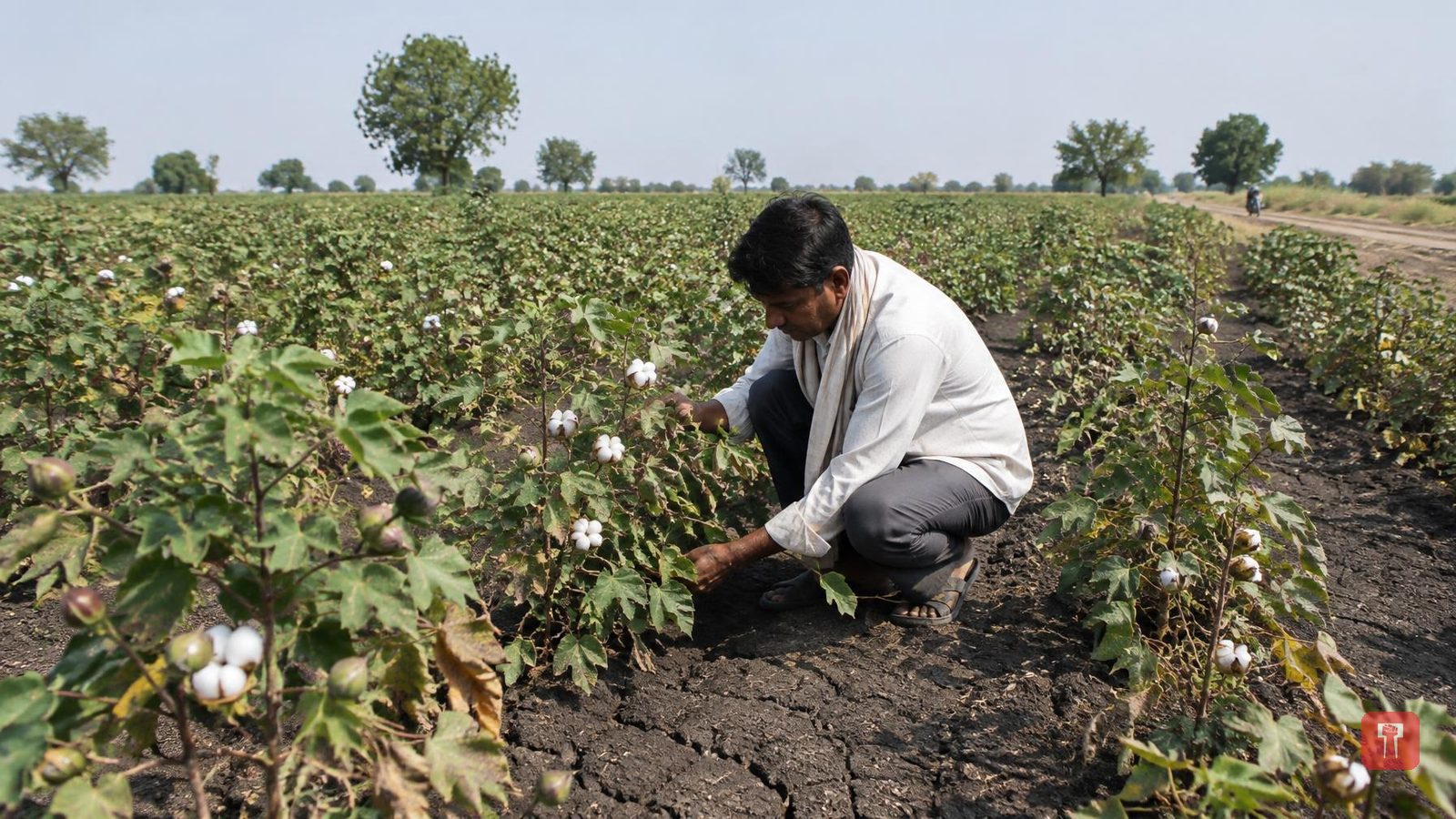 Images are not validated/verified
Cotton growers in Amravati district are visibly anxious this time, with little sign of cheer. World Cotton Day is observed on October 7, and on the occasion farmers in the district are worried about their crop. The reason is that the rain has turned its back this year.
For farmers, cotton is not just a crop. It is a white receipt for a year of toil and hope, which is why it is called "white gold". Cotton fetched a good price last year and brought farmers considerable relief. Banking on that, farmers sowed a record area under cotton this year with great expectations.
Because of the good prices last season, the area under cotton in the district increased this time. The condition of the crop looked fair at the start. But there is now a serious shortage of rain, and the water that cotton needs has been untimely and irregular. This has raised fears that the growth of the plants and the expected yield will be affected. Farmers' hopes have taken a blow.
The reach of cotton does not end at the farm. A long chain of livelihoods, from farmers to the ginning and pressing industry, transport and the textile industry, is linked to this crop. Cotton is grown in more than 75 countries across five continents and is traded across the world. It is a mainstay of the rural economy and a source of livelihood for millions of families.
The history of World Cotton Day is also interesting. The idea for the day advanced through an initiative of four "Cotton-4" countries: Benin, Burkina Faso, Chad and Mali. The World Trade Organization first observed the day on October 7, 2019. The UN General Assembly then officially declared October 7 World Cotton Day in 2021.
The day is observed so that cotton growers get economic stability, production becomes sustainable and cotton farmers in developing countries grow stronger. But the real benefit of these aims will show only when cotton growers get an assured market, fair prices, compensation in line with their costs and effective help in natural calamities.
