

Maharashtra orders 10% water cut across cities and villages from October 16
The state government has directed all urban and rural local bodies to cut water use by at least 10% from October 16, 2026, citing El Nino, deficient rain and limited storage.
 Images are not validated/verified
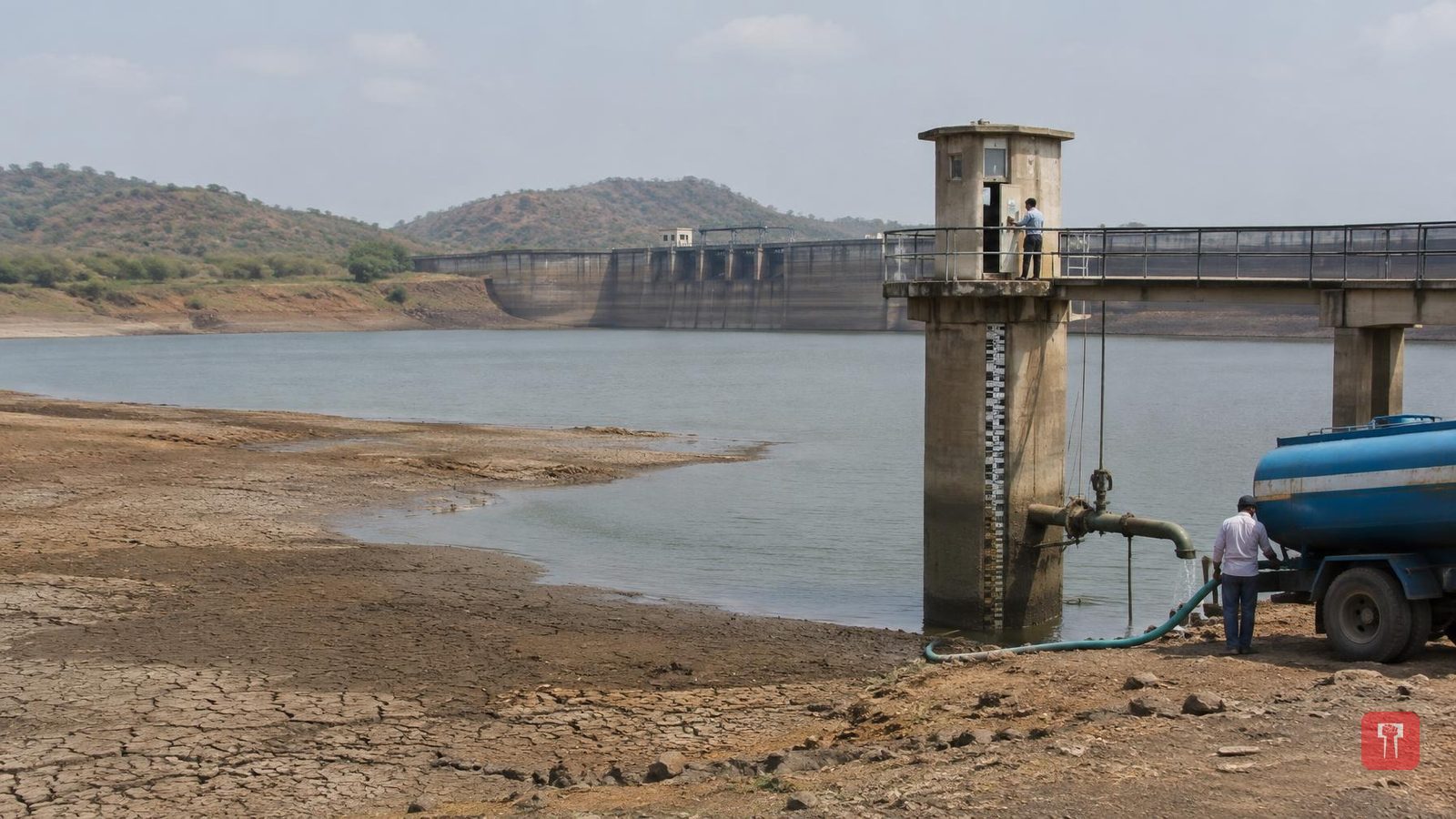
The Maharashtra government has ordered a cut of at least 10 per cent in water use across the state, in cities and villages alike, beginning October 16, 2026. The order was issued on Monday. It cites a deficient monsoon, the influence of El Nino and the limited stock held in dams and reservoirs, which now has to last well into next year.
The order covers every municipal corporation, municipal council and gram panchayat. Large cities such as Nagpur are therefore included. The plan is not a short-term measure. The Water Resources Department has worked out the available stock dam by dam and region by region, and the calculation runs up to August 31, 2027.
Rain this year fell short of expectations and was unevenly spread. Some areas received a fair amount, but many districts stayed dry. According to the latest report, 21 districts have recorded deficient rainfall, and the monsoon also withdrew early. That makes careful use of reservoir water necessary until next summer.
El Nino is a central part of the government's thinking. It raises the risk of weak rain, and higher temperatures push up evaporation, which puts further strain on whatever water is available. The question now, officials indicate, is not only how much rain fell but how the stock can be made to last the full year.
Water Resources Minister Girish Mahajan said the department has planned for a prolonged shortage and has taken the effect of El Nino into account. "Drinking water will get the highest priority," Mahajan said. He added that all local bodies have been told to put the 10 per cent cut into effect from October 16.
The order goes beyond household supply. Local administrations are to run special drives to find and quickly repair leaks and to curb wastage. Sewage treatment plants must operate at full capacity, and the treated water is to be diverted to uses that do not involve drinking, such as gardening, construction work and washing clothes. This is meant to ease the load on fresh water. Industries have been told to recycle or reuse at least 30 per cent of the water they consume, which will reduce their dependence on fresh supply.
As an emergency safeguard, the government has decided to hold back an additional 10 per cent of the water in every dam. Water for drinking will be set aside up to August 31, 2027, and the calculation will allow for evaporation losses, silt that has built up in reservoirs and water drawn out illegally. In very grave conditions, water from a dam's dead storage can be used after a technical inspection, but only in an emergency and not for routine needs.
Irrigation has been given a clear order of priority. Release of water for farms will be considered only after the needs of drinking water, livestock and fodder are met. Among crops, rabi foodgrains and fodder come first, followed by the other rabi crops. Perennial crops will get water only if some stock remains. Agriculture is expected to feel the greatest impact because of its large role in the state economy, and the need for drip, sprinkler and other water-saving methods is likely to grow. Farmers planning water-intensive crops may have to rethink.
The state is also preparing strict action against unauthorised withdrawal from dams, rivers and canals. The Water Resources Department will coordinate with the revenue and police departments to form joint teams, which will patrol sensitive areas. Illegal pumps and other equipment used to draw water will be seized.
Mahajan appealed to citizens, local bodies and government agencies to use water carefully and avoid waste. The Water Resources, Revenue, Agriculture, Industries and Urban Development departments are working together on saving and allocating water. The decision makes plain that the administration is treating the situation as a crisis that will outlast the next few months. Officials will have to keep in mind the coming summer, rising temperatures, evaporation and the long wait until the next monsoon, as Maharashtra faces what could be a difficult water year.
This story has published but the live thread has not started. Updates appear here the moment the desk files one.
