

COEP and ARAI to set up India's first ergonomics and human factors research centre in Pune
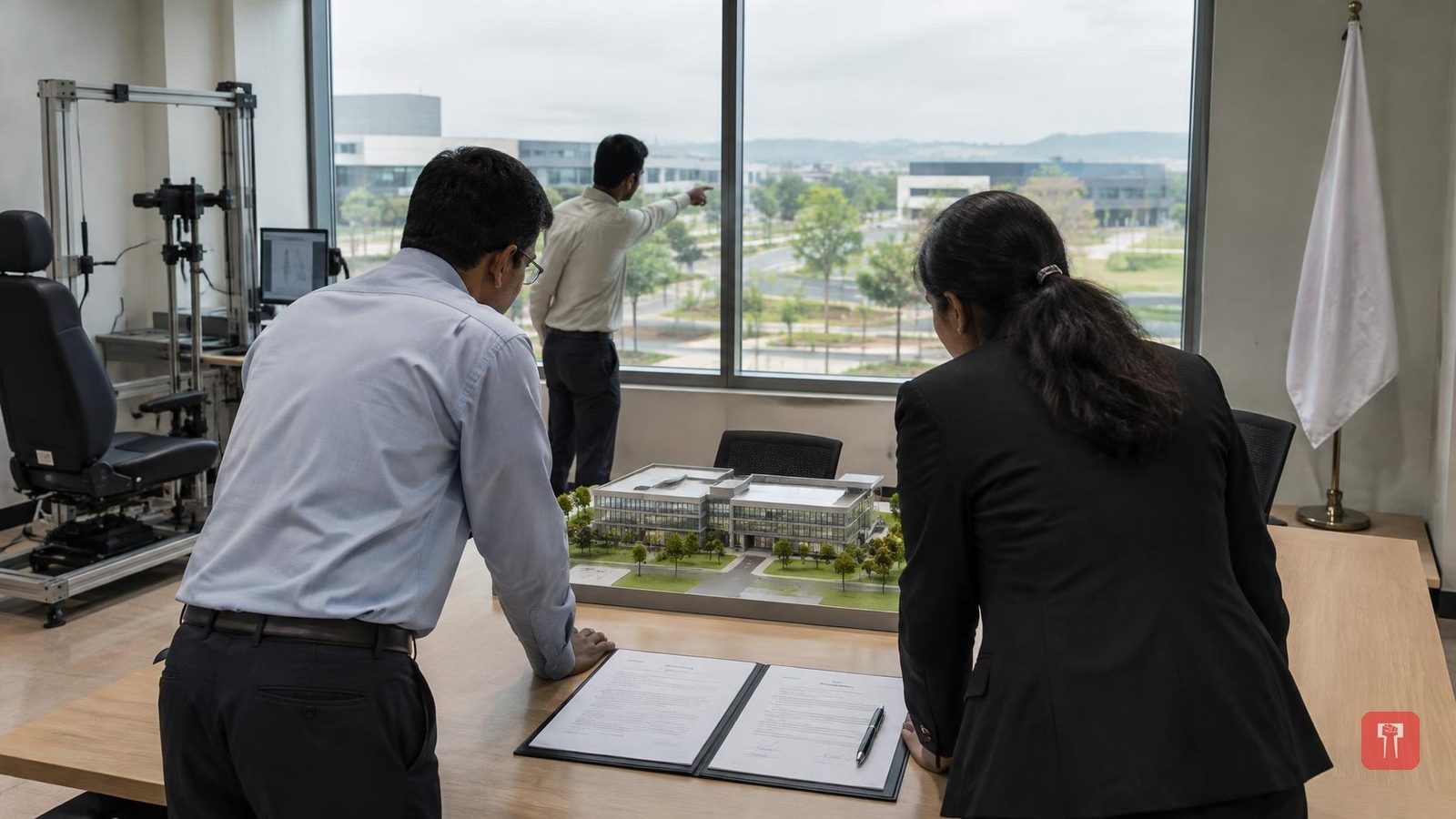
COEP Technological University and the Automotive Research Association of India (ARAI) have decided to set up a new research centre in Pune. The Advanced Ergonomics and Human Factors Research Centre (AEHFRC) will come up at COEP's Research and Innovation Park at Chikhli.
It is the country's first centre to develop engineering technology that puts the Indian person at the centre, based on Indian physical characteristics. The total combined investment will be Rs 105 crore, and the centre will stand on about 38,000 sq ft.
A memorandum of understanding was signed by the two institutions. COEP Vice-Chancellor Prof. Sunil Bhirud, Registrar Dr D. N. Sonawane, Officer on Special Duty Dr Avinash Joshi and RIIL director Dr S. P. Mahajan were present. ARAI director Dr Reji Mathai, senior deputy directors Medha Jambhale, Vijay Pankhawala and Rahul Mahajan, and deputy director Mahesh Patwardhan also attended.
The main aim of the centre is to strengthen indigenous research and development and to promote innovation in keeping with the idea of "Atmanirbhar Bharat". It was said that this would reduce the dominance of European technology in the field. To be developed as a national centre of excellence, it will focus on research, testing, certification, training, innovation and industry participation.
Automotive, defence, space research, railways, agriculture, industrial equipment, consumer products, furniture, construction and architectural environments, and textiles will benefit. Special training, certification and skill development programmes will also be run to build a skilled workforce.
ARAI has expertise in research, testing, certification, engineering and developing standards, which will be combined with COEP's academic and research capability. The expertise of faculty, researchers, students and technical experts from both institutions will be used at the centre. A framework to strengthen cooperation among industry, academia and government will also be put in place.
Developing Indian ergonomics standards, an anthropometric database, new testing methods and a usability engineering framework is ARAI's speciality. This will improve the usability, safety, comfort and productivity of products. Under the partnership, both institutions will run national and international research projects, consultancy services and sponsored research programmes. They will also pursue funding from government bodies, industry partners, CSR initiatives and other organisations.
ARAI director Dr Reji Mathai said, "As technology becomes more and more human-centric, ergonomics and human factors technology plays an important role in ensuring safety, usability and the well-being of users. ARAI is trying to create a national ecosystem that promotes research, develops indigenous capability and helps industry develop products and systems better suited to Indian users and conditions. We believe AEHFRC will play an important role in strengthening India's capability in human-centric design and innovation."
COEP Vice-Chancellor Prof. Sunil Bhirud said, "COEP Technological University is constantly working to turn research into social impact. With ARAI's cooperation, the proposed AEHFRC will be a unique platform for interdisciplinary research, innovation and industry participation in ergonomics and human factors. We believe this initiative will make an important contribution to developing Indian standards, building indigenous technology and creating a skilled workforce able to meet national and global challenges."
The initiative is in line with the Maharashtra government's vision of making the state a hub for research, innovation and advanced manufacturing. Global benchmarks, such as the in-house laboratories of the world's leading automobile makers, will be referenced to build the centre's capability. This will reduce India's dependence on European countries for ergonomics tests and facilities. Indian ergonomics guidelines, design standards, research publications and patents are expected to be developed, along with a skilled pool of engineers, designers and researchers.
