

Why grain is sown in a clay pot at Ghatasthapana and what to do with the shoots after nine days
As Shardiya Navratri begins, the practice of sowing grain in a clay pot is tied to the goddess's power of creation and to farming tradition.
 Images are not validated/verified
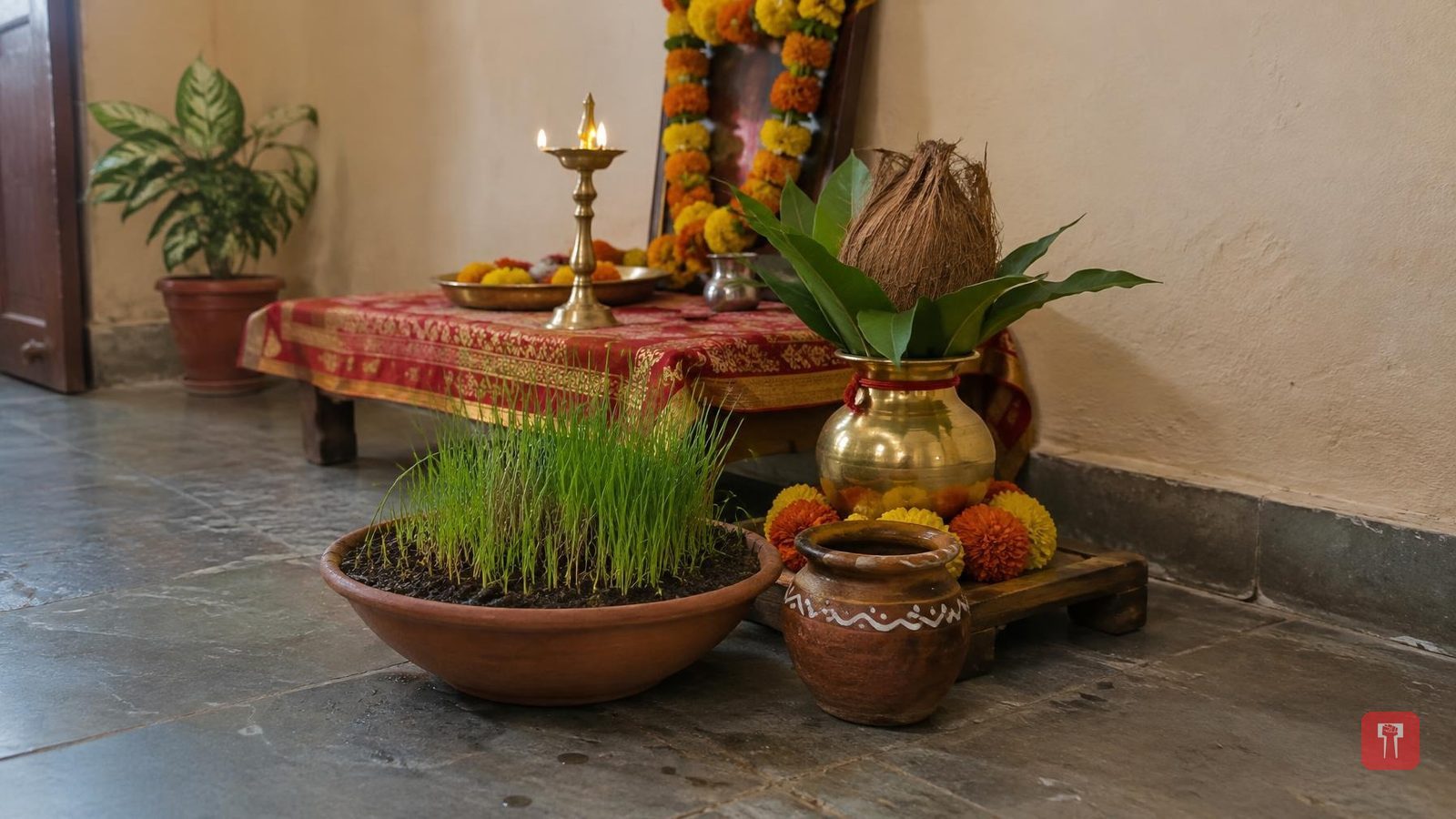
Shardiya Navratri began today, and preparations for installing the ghat (the sacred pot) are under way everywhere. Those who install a ghat will have noticed that grain is sown in a clay dish and green shoots sprout from it within nine days. Many people ask why this is done, whether it is only tradition or has some meaning behind it, and which grain should be sown.
First, how the grain is sown. A little soil is put in a clay pot, grain is spread over it and then covered with more soil. A little water is sprinkled every morning and evening. Small shoots begin to appear in two or three days and are well grown by the ninth day. In North India this is called jawara.
Two reasons are given for the practice. The first is religious. Goddess Durga is the one who gives birth and creates the universe. A shoot emerging from a seed stands for a new birth. For this reason, sowing grain in the ghat is considered worship of the goddess's power of creation. The shoots are regarded as a sign of prosperity, abundance and good days.
The second reason is linked to farming. India is an agricultural country, and in earlier times people lived off farming. The Navratri period is important for agriculture. Sowing grain in soil and watching it grow is, for a farmer, like a reminder of the farm. It is a way of expressing gratitude for the grain nature has provided.
As for which grain to sow, there is no single rule and practice differs from region to region. Barley is sown by most people. Its shoots come up quickly and look lush green, so it is considered auspicious. Many also sow wheat, which is seen as a symbol of prosperity. Some households sow rice, because rice is always needed in worship. In some places pulses such as moong, chana and sesame are also sown. Some people sow seven kinds of grain, called saptadhanya, for which any of wheat, barley, rice, chana, moong, bajra and sesame can be used. Sow whatever is easily available at home.
People judge from how much the shoots have grown in nine days. There is a belief that if the shoots are lush and grow straight, the household will have peace and happiness and the harvest will be good. This, however, is not a scientific matter. If the soil is good and the water is right, the shoots will grow well in any case.
On the last day, on Dussehra or at the end of Navratri, the shoots are pulled out and offered to the goddess. In some places people give the shoots to one another with good wishes. Some immerse them. Follow whatever custom your household has. One thing is certain: the tradition is not only religious, it also connects us to nature.
