

US researchers build two AI tools that read cancer patients' health from selfies
Researchers in the US say an ordinary phone selfie can help gauge cancer patients' health and survival chances, though the research is at an early stage.
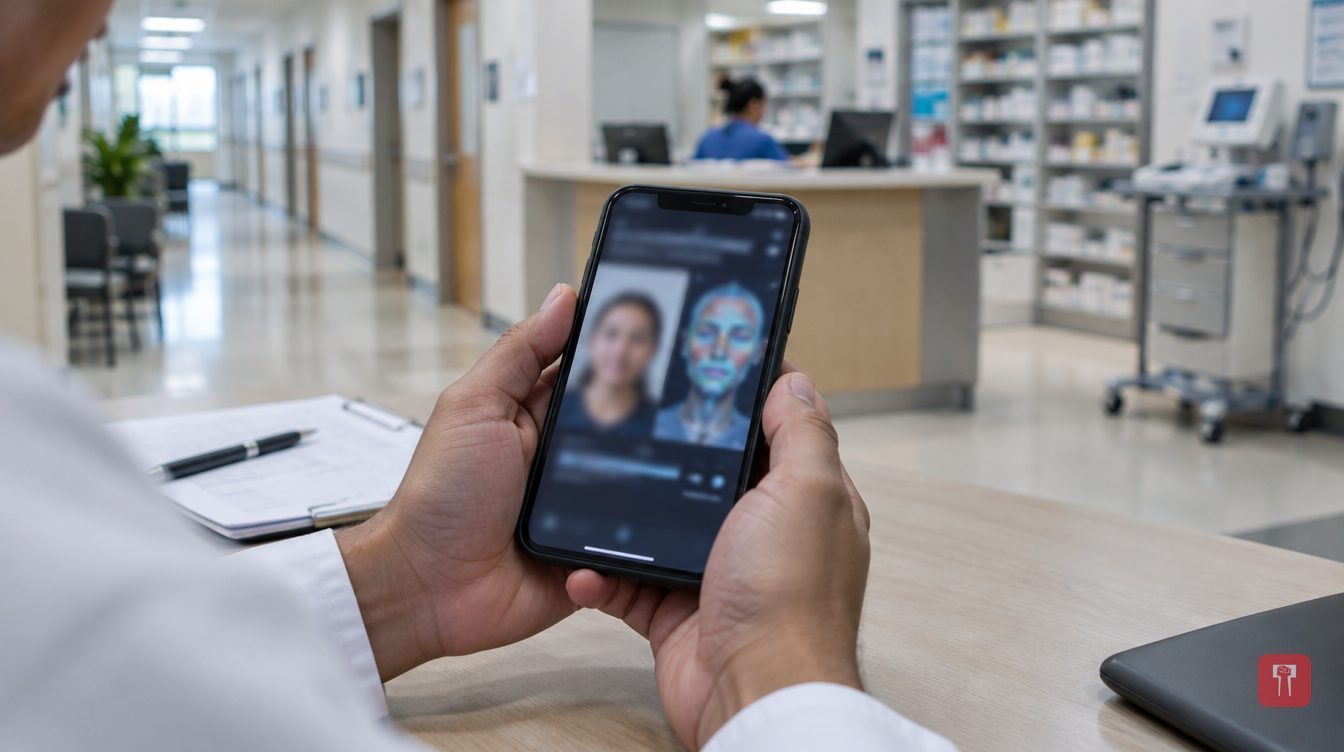 Images are not validated/verified
An ordinary selfie taken on a mobile phone can help gauge the health of cancer patients and their chances of survival, a new study claims. Researchers in the US have developed two tools based on artificial intelligence (AI). The tools analyse facial photographs to try to estimate a person's biological age and cancer-related risks. However, the research is still at an early stage, and no final conclusion about a patient's future can be drawn from this technology.
The technology was developed by researchers at Mass General Brigham in Massachusetts, US. The findings were published on October 19 in the journal The Lancet Digital Health. The AI model was trained on more than 40 million facial photographs, so that facial features of people of different ages and backgrounds can be identified.
The study created two AI tools. The tool named FAHR-FaceAge estimates a person's biological age from a facial photograph. This information can help assess the survival prospects of cancer patients. The second tool, FAHR-FaceSurvival, directly analyses facial features to try to estimate survival-related risks.
Biological age does not mean only the years completed since birth. It is an estimate of how the body's current condition and level of health compare with a person's actual age. Two people of the same age can differ in physical condition and health. The researchers believe certain features visible on the face can offer useful signals about overall health.
According to the study, the two tools focus on different parts of the face. The model that estimates biological age analyses the forehead, the area near the temples and the lines running from the sides of the nose to the mouth. The model that assesses survival-related risks in cancer patients mainly looks at features of the area under the eyes and the upper part of the nose. This analysis can give doctors additional information about a patient's condition.
In cancer treatment, a patient's age is important, but physical capacity, overall health and response to treatment matter just as much. If AI technology gives some further indication of a patient's health, it can help doctors plan treatment.
Even so, an estimate drawn from a facial photograph cannot replace the type of cancer, the stage of the disease, medical reports and treatment outcomes. How accurate the technology is among people of different ages and skin tones will also have to be tested on a large scale.
Facial photographs are sensitive information linked to a person's identity. So, before the technology is brought into medical use, patient consent, protection of personal data and the possible impact of wrong estimates will also have to be considered.
On the whole, the study could prove an important step towards the use of AI in cancer treatment. If the technology proves reliable in larger trials, doctors could use it to understand a patient's condition. But for now, the risk of cancer or how long a patient will live cannot be stated with certainty from a selfie alone. Treatment decisions should be taken only on the basis of medical tests, expert advice and scientific evidence.
