

Chandrapur rain well below average, farmers urged to sow low-water crops in rabi
Chandrapur has received 61.91 per cent of its average rainfall, and the agriculture department has asked farmers to choose crops that need less water this rabi season.
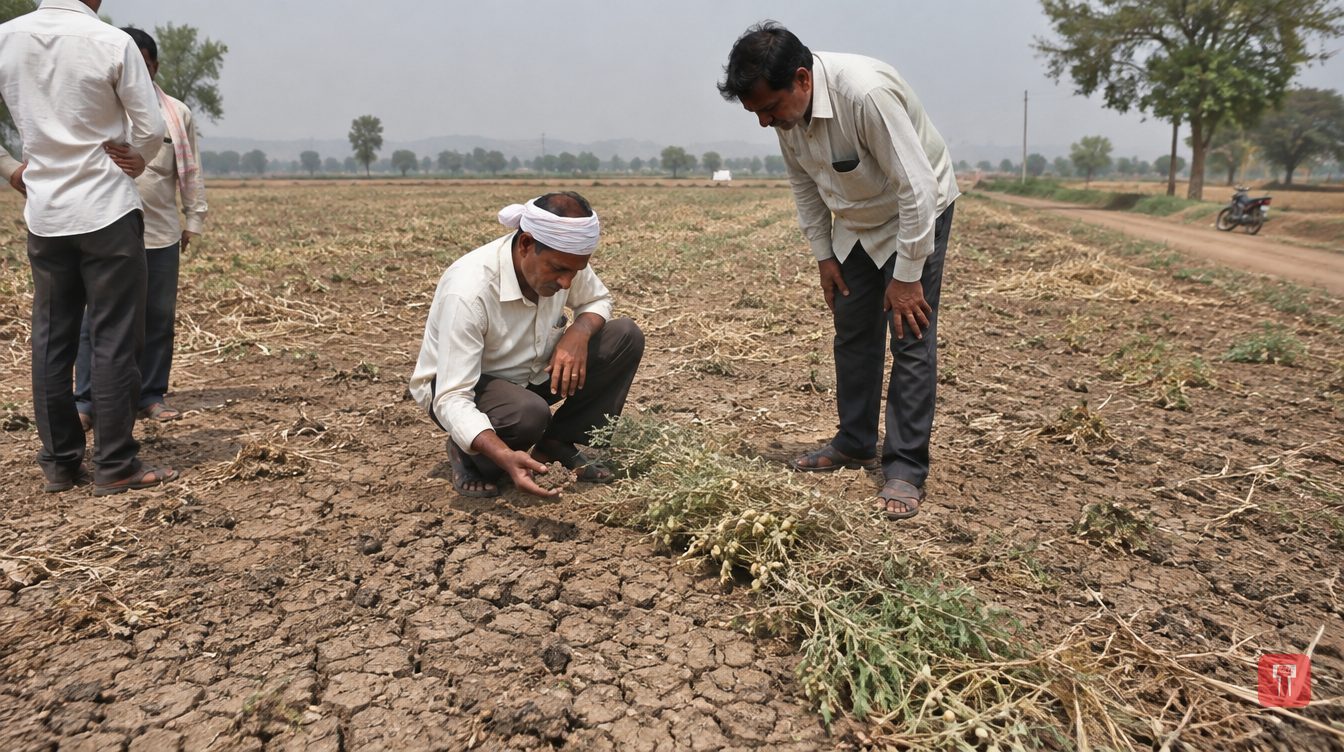 Images are not validated/verified
Rainfall in Chandrapur district has been far below average this time, creating drought-like conditions. The district should receive an average of 1,143 mm of rain a year, but only 700 mm has been recorded this year. This is 61.91 per cent of the average. Last year the district recorded 1,298 mm.
The shortfall has directly affected soil moisture and the water available for irrigation. Limits have also arisen on the water available for irrigation in the coming rabi season. It has therefore become especially important to assess water availability and choose the right crop before sowing. The agriculture department says farmers should change their cropping pattern after looking at the water available to them.
The department has appealed to farmers to give preference to crops that need comparatively little water, such as gram, safflower, rabi jowar, sunflower and linseed. According to the department, if crops that demand more water are sown in drought-like conditions, irrigation problems will arise and yields may also be affected. Farmers should plan their rabi crops keeping in mind the available water, the type of soil, moisture in the field and the local weather. Choosing crops that can withstand low water may help reduce possible losses.
Gram and linseed in particular can be grown with low to moderate water. Safflower and rabi jowar can also prove useful in unirrigated conditions. If local conditions are favourable, sunflower cultivation can also be considered.
In the 2025-26 rabi season, various crops were sown over a total of 1,22,930 hectares in the district. Of this, pulses were sown on 94,565 hectares, cereals on 25,819 hectares and oilseeds on 2,545 hectares. As rainfall is lower this year, it is necessary to look at the previous season's cropping pattern and make changes according to conditions.
The department has also said that farmers sowing water-intensive crops such as wheat and maize in rabi should keep the available water in mind. In their place, they should choose crops that need less water and suit local conditions. Before sowing, they should consult the local agriculture officer and agriculture assistants. Proper crop planning, effective use of the moisture available and water conservation can reduce possible crop losses in difficult conditions. Farmers should therefore plan the rabi season carefully.
