

AI in studies: experts urge an 80/20 rule so children think first and use AI later
AI tools are personalising learning but may dull children's thinking, so they should use their own minds for 80% of a task and AI for 20%.
 Images are not validated/verified
This is the era of the digital revolution. Artificial intelligence (AI) is rapidly changing every aspect of life, and its effect on children's studies and learning habits is clearly visible. AI tools are teaching children according to their interests and needs, answering difficult questions instantly and explaining hard subjects in simple ways. But every coin has two sides. As technology brings opportunities, the risks and challenges are growing as well.
According to Dr Kanishk Agarwal, founder and chief executive officer (CEO) of Path AI Technology, the aim of AI in education is not merely to give children quick answers. The aim is to build their ability to think for themselves, their knowledge and their sensitivity. Many people are confused over whether AI is making children smart or lazy. The big question is what will happen to their ability to think and solve problems once children start looking to AI for the answer to every question.
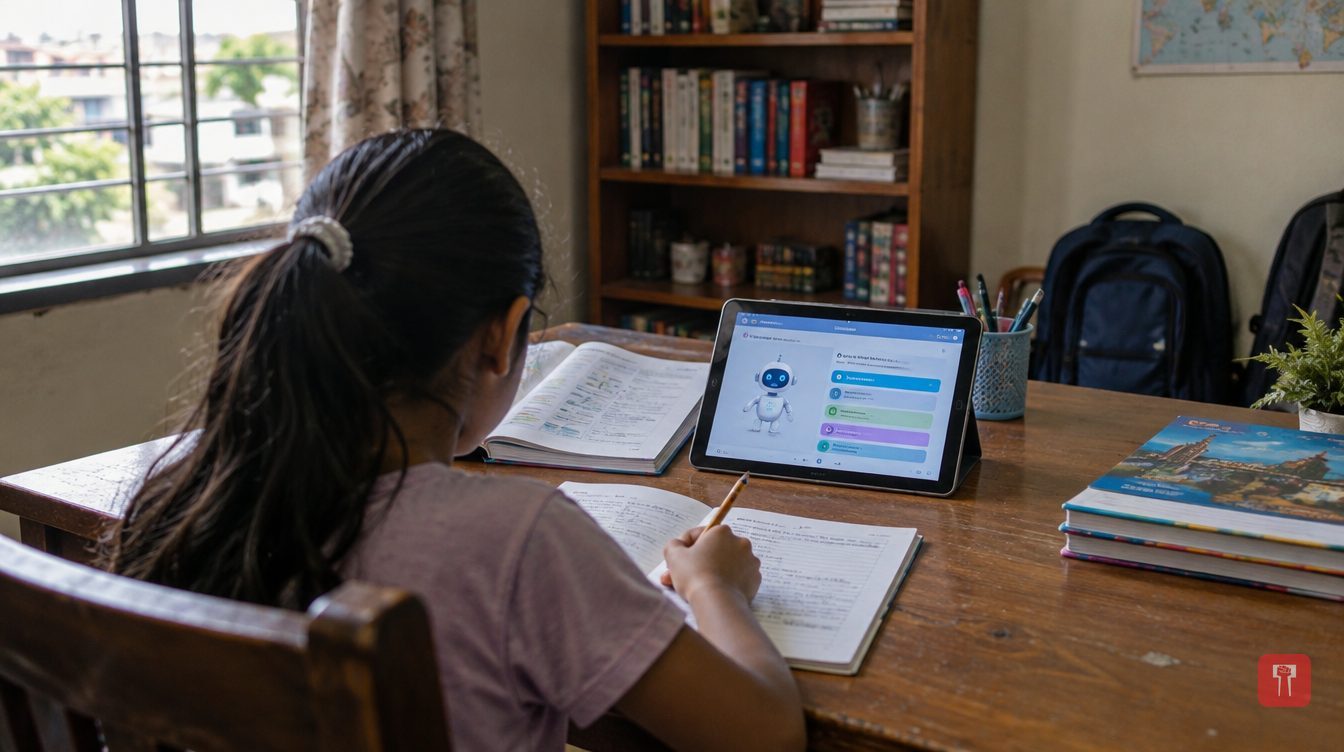
Everyone now uses AI for tasks big and small. Children are studying with AI tutors, taking help from artificial intelligence with homework and relying on it for projects too.
AI has several benefits in early education. If used properly, both children and teachers can gain. In classrooms, all children are generally taught at the same pace, which leaves some behind. AI platforms have changed this. AI understands a child's ability and learning pace and prepares study material accordingly. With AI tools, teachers can also identify each child's weak areas and teach weaker students in a special way. Through visual and interactive content, children are learning science, coding and new languages through play.
On the other hand, if children begin to depend on AI tools for everything, their mental development can suffer. As soon as they get homework or a project, children have AI produce the answers instead of thinking for themselves. This is affecting their problem-solving skills. AI is not always 100% correct. Young children cannot tell right information from wrong and begin to believe false facts. Less conversation with teachers and friends can also slow children's social and emotional development.
Staying glued to screens in the name of studying is having serious consequences. Prolonged screen time is increasing problems such as weak eyesight, headaches and sleeplessness. Caught up in the digital world, children are drifting away from outdoor games, reading books and spending real time with friends.
Parents carry a big responsibility for digital safety and privacy. Many apps save children's location, names and search history. Parents should check which apps their children are using. Children should be taught not to share their name, photo, phone number or password on any unfamiliar platform. Schools should also frame strict guidelines on the use of AI and hold awareness sessions on cyber safety.
Technology can never replace a human teacher and a child's own thinking. So apply the 80/20 rule for children. It means that for any assignment or question, the child should first use their own mind for 80% of the effort and try to solve the problem. AI help should be taken only for the remaining 20%, that is, to improve the answer, do research or get new ideas.
