

Osteoporosis often grows without symptoms; about 3,500 bone density tests done in a year
Doctors say bone density should be checked before a fracture occurs, as osteoporosis often shows no marked symptoms until a bone breaks.
 Images are not validated/verified
Osteoporosis, the disease that makes bones brittle, often progresses without any marked symptoms. By the time the patient becomes aware of it, a bone has already fractured. It is therefore important not to wait for a fracture, but to test bone density and start treatment in time, it is being said. Today is World Osteoporosis Day, and the issue of bone health has come up on the occasion.
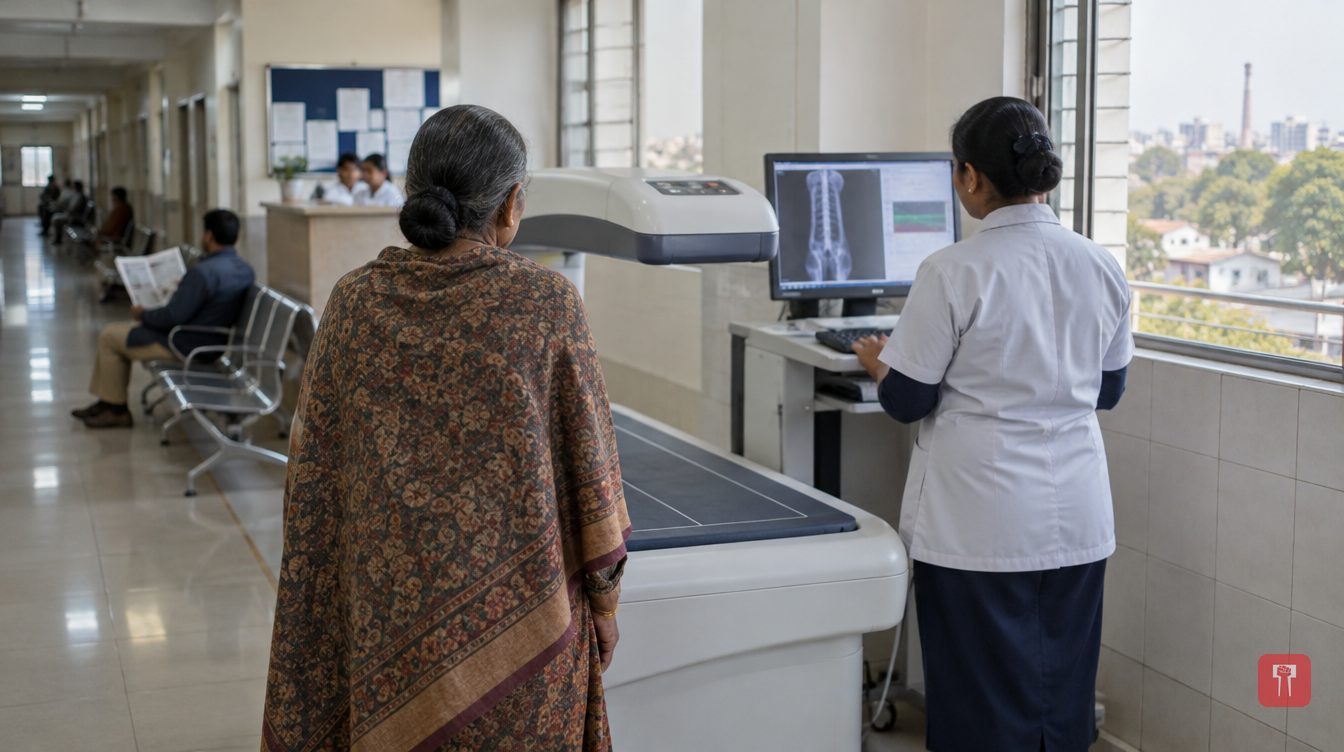
About 3,500 tests were carried out over the past year at the facility available in a government hospital. Around 70 per cent of them were women and 30 per cent were men.
In osteoporosis, bone density falls, making bones weak and brittle. As a result, even a minor fall or an ordinary movement raises the risk of a fracture. To diagnose the disease, bone density is measured with a DEXA scanning machine. In Mumbai, the facility is available at two civic hospitals, KEM and Nair. At private hospitals, a DEXA scan generally costs about Rs 4,000 to Rs 5,000.
Dr Nikhil Bhagwat, head of the endocrinology department at Nair Hospital, cited the example of a 58-year-old male patient. According to Dr Bhagwat, the patient's X-ray looked almost normal and the bone density test was not particularly poor. However, when a vertebral fracture assessment was done to look for fractures in the spine, compression fractures of 25 to 30 per cent were found in the spine. Medication, exercise and physiotherapy were then started. A scan done a year later showed improvement. Dr Bhagwat said that looking only at the bone density report is therefore not enough, and it is also important to check for hidden fractures in the spine.
With rising life expectancy and changing lifestyles, non-communicable diseases such as osteoporosis need to be taken seriously. The risk of falling bone density increases especially in women after menopause. Even so, there is still not enough awareness about the disease among people. Often, patients get the test done only after a doctor suggests it.
According to experts, women after menopause, men at risk of brittle bones and senior citizens should get their bone density tested on a doctor's advice. If the disease is diagnosed, it can be treated with medicines, injections, exercise and physiotherapy, depending on the patient's condition. Timely diagnosis and treatment help reduce the risk, because after a fracture, movement can be restricted and the consequences can be serious.
Dr Bhagwat said osteoporosis is a disease that often progresses without showing symptoms. The risk of brittle bones rises especially in women after menopause, so timely bone density testing is necessary. He said that if diagnosis and treatment happen at the right time, the risk of fracture can be reduced and the patient's quality of life maintained.
