

Two Przewalski's horse foals born in Kazakhstan steppe after nearly two centuries
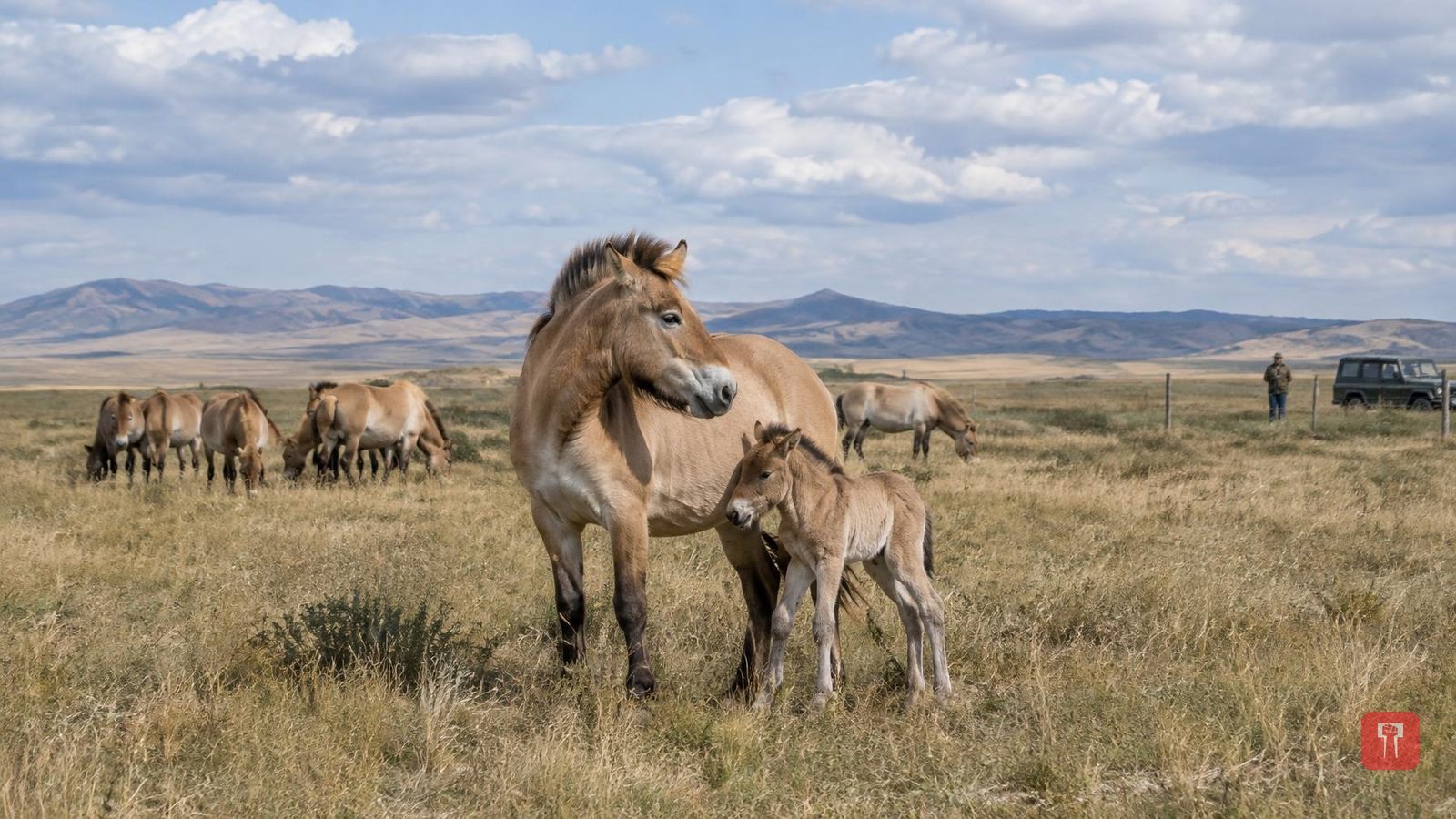
Two foals of the world's only truly wild horse have been born in the open Kazakh steppe, which experts say may be the first natural birth there in two centuries.
 Images are not validated/verified
Good news has come from the vast grasslands of Kazakhstan. Nearly two centuries later, two foals of Przewalski's horse, the world's only truly wild horse, have been born in the open air there. The breed had been considered extinct in its natural habitat because of human interference, hunting and farming. Its return is being seen as one of the biggest victories for the protection of biodiversity and has raised fresh hope among wildlife lovers across the world.
According to the UN Environment Programme (UNEP), a 7-year-old Przewalski's mare gave birth to a foal on the morning of August 22 at the Alibi Rehabilitation Centre and wildlife sanctuary in Kazakhstan. Experts say this could be the first foal born naturally on this open steppe in the past two centuries. Eight days later, a second mare, a 6-year-old named Umbra, gave birth to another male foal.
Albert Salemgareyev, a wildlife conservationist who has worked day and night on the effort, described the moment with emotion. When a colleague at the sanctuary called on the morning of August 22, he set off from Astana, the Kazakh capital, for the Alibi centre and made a difficult journey of about 12 hours. When he arrived, the foal was sitting quietly beside its mother, its tiny legs still wobbling on the ground. Albert said, "It was a deeply emotional moment for me. This is not just a horse or a foal, but a new generation in Kazakhstan and the beginning of a richer nature."
Przewalski's horses are considered the only truly wild horses left on Earth. Most of the horses seen today descend from domesticated breeds, but the genes and DNA of Przewalski's horses belong to the original wild animals that humans never domesticated. They have a small but very sturdy body, a stiff, upright mane on the neck, and a special ability to retain body heat in harsh cold.
These horses once roamed free in the thousands across the spreading grasslands of Central Asia. Their numbers began to fall sharply in the late 19th century. By the middle of the 1900s, growing human interference had begun to wipe them out. Unchecked hunting, the loss of grassland to farming and livestock grazing, and competition for fodder from domestic animals gradually finished off their herds. In 1969 they were last seen roaming free in their natural surroundings in the Gobi desert. After that they disappeared from the wild entirely and were confined to zoo enclosures.
Fortunately, the horses had been kept safe in some large zoos in Europe. There, scientists ran a carefully planned breeding programme and preserved the gene pool.
In 2024, the Kazakh government, with the help of European zoos, began a major plan to return these horses to their old land. In the first phase, 22 Przewalski's horses were flown in from Europe to the Alibi Rehabilitation Centre. They were kept under special watch so they could adapt to the climate here. The plan is to release a total of 40 horses onto the Kazakh steppe in stages by 2029.
The horses brought from Europe adapted to Kazakhstan's natural environment without alarm and within a few months gave birth to two new foals. This makes it clear that the soil and grasslands there have again become safe and suitable for this rare breed's lineage. The event shows that if humans are determined and make an honest effort guided by science, even species on the brink of extinction can be given a new life.
