

Jaishankar in Addis Ababa: India and Africa cannot be ignored in UN Security Council
External Affairs Minister S. Jaishankar said the Security Council no longer represents the modern world and called for reform that gives Africa full and fair representation.
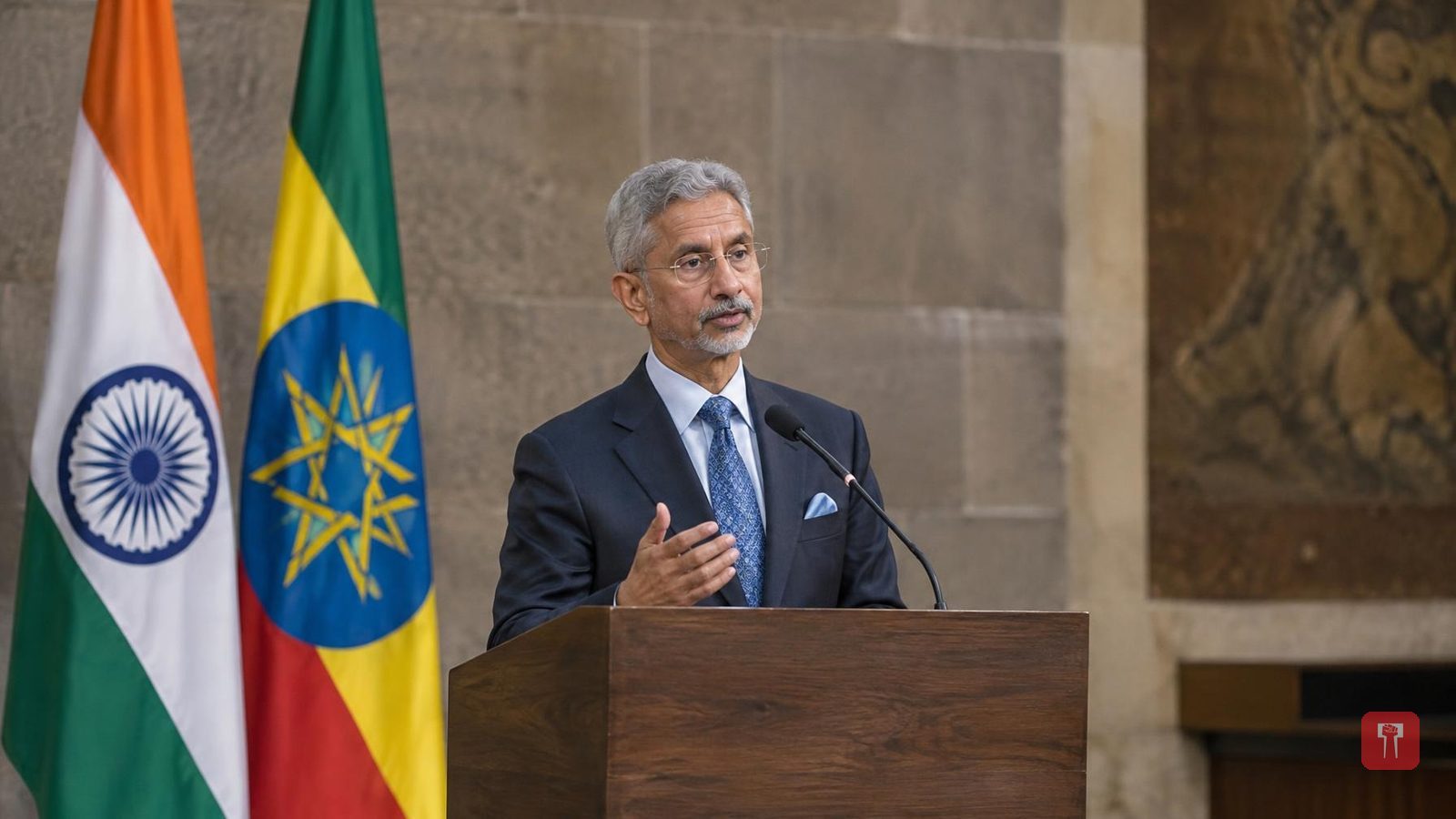 Images are not validated/verified
External Affairs Minister Dr S. Jaishankar took a firm stand on reform of the United Nations Security Council (UNSC) in Addis Ababa, the capital of Ethiopia. He was addressing a special gathering at the city's historic Adwa Memorial Museum. He said the attitude of countries that are deliberately delaying reforms stuck for years in the Security Council is not right.
According to Jaishankar, the Security Council today has failed completely to reflect the true picture of the modern world and does not represent everyone fairly. He said plainly that in the 21st century, India and the African continent being absent, or under-represented, at the table where global decisions are taken is not acceptable. India and African countries continue to bear the burden of an outdated world order, he said, and the time has come for fundamental change in multilateral institutions.
In his speech he also spoke about the present state of the United Nations. He said that over the past ten years the body has repeatedly proved helpless and ineffective in the face of global crises, wars and economic challenges. A major reason, he said, is that the world's largest population and its fastest-growing economies have not been given proper space in the Security Council.
Jaishankar also said the aim of reform is not merely to add a few chairs or seats to the existing structure. The real aim is to make global governance more democratic, accountable and truly representative. Until all continents get their due share in international institutions, the United Nations will not be able to regain its credibility and its capacity to function, he said.
He cited the G20 as an example. During India's G20 presidency in 2023, the African Union received permanent membership of the grouping, and Prime Minister Narendra Modi and Indian diplomacy played a historic role in this. Jaishankar said the justice and principle that Africa received in the G20 should apply equally to Security Council reform. The African continent must get full and fair representation in both the permanent and non-permanent categories of the United Nations, he said.
Speaking about India-Africa ties, he said this is not just the diplomacy of today but rests on a rich historical heritage going back thousands of years. Both regions fought colonialism and, after independence, faced similar economic and social challenges. Jaishankar reiterated that Africa has always been, and will remain, among the top priorities of India's foreign policy.
Looking ahead, he said India is working towards building a 'Viksit Bharat' (developed India) by the 100th anniversary of its independence. The African continent, for its part, has drawn the picture of a prosperous Africa through Agenda 2063. In his view, this shared goal will not only develop the two regions but also contribute significantly to making the world more balanced and multipolar.
During the same visit, Jaishankar also met Ethiopia's foreign minister in Addis Ababa. In a post on 9 October 2026, he wrote that the strategic partnership between India and Ethiopia rests on shared values, shared aspirations and the historic spirit of South-South solidarity. He said there were wide-ranging talks on strengthening bilateral ties, covering trade, investment, development projects, infrastructure, maritime affairs, security, technology and culture. The two sides also shared views on global developments and discussed further strengthening multilateral engagement and the India-African Union partnership.
