

Meet protein needs from kitchen foods rather than supplements, says health advisory
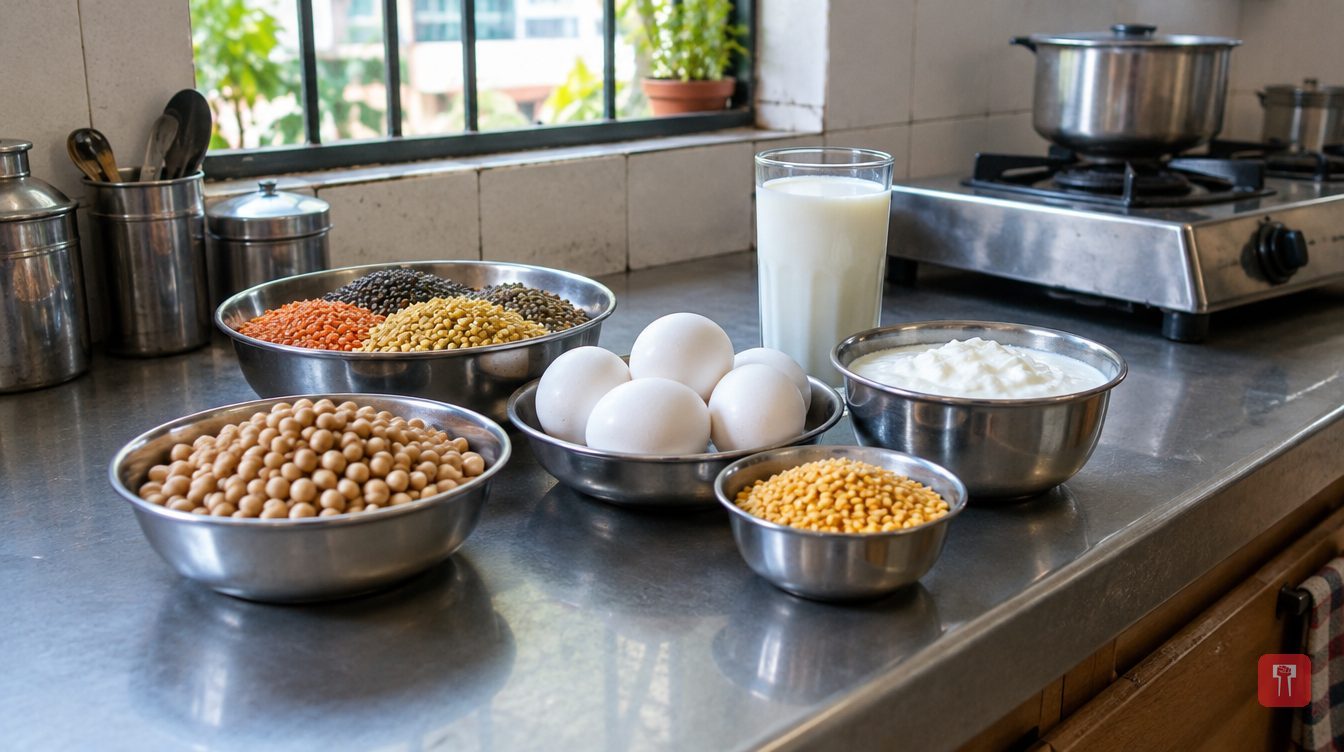
An adult needs 0.8 gram of protein per kg of body weight daily, which pulses, soyabean, eggs, dairy and grains can supply.
 Images are not validated/verified
The body needs every vitamin in the right amount. Vitamins C, A, E and D, calcium and magnesium are all important. However, many bodybuilders and gym-goers take various supplements or tablets to increase their protein. Supplements made from chemicals and harmful substances are not good for the body at all.
At every stage of life, the body needs enough protein in food to repair muscles, make enzymes and maintain health. Many people believe that protein powder or supplements raise the body's protein level. But if a variety of foods is included in the diet instead, health will improve and the body will get the protein it needs.
A person's protein requirement depends on how active the muscles are and on the state of energy balance. An average adult must get 0.8 gram of protein per kg of body weight every day. This keeps the body's protein balance steady.
If calories and protein in the diet are low, muscle protein begins to break down to make energy, hormones and enzymes. When carbohydrates and fat give the body enough energy, protein is used only to build muscle and for the body's growth.
Now to the sources of protein. Soyabean has 35 to 40 grams of protein per 100 grams, so including it in meals two or three times is advised. Pulses such as tur dal, moong, chana and matki give 18 to 25 grams of protein per 100 grams. Dry fruits and seeds provide 15 to 25 grams. One egg has 6 to 8 grams of good-quality protein.
Egg white, skimmed milk, curd or Greek yoghurt, chicken and fish also have plenty of protein. Instead of taking expensive supplements, the advice is to eat what is available in the kitchen.
Pulses are low in methionine and high in lysine, while rice is low in lysine and high in methionine. Eating rice and dal together therefore gives the body its amino acids. The amino acid missing in wheat rotis can be made up with a rajma or chhole curry.
Including pulses, legumes, eggs, milk, vegetables and grains in daily meals will make up a protein deficit and help improve health. This information is for general awareness only and makes no claim of treating any ailment. One should consult a doctor before trying any measure.
