

Bommai Golu: how South Indian homes display dolls during Navratri
The tradition, most popular in Tamil Nadu, combines devotion, art and community, with dolls arranged on tiered steps during the nine days of Sharad Navratri.
 Images are not validated/verified
Every state in India has its own language, dress, food, festivals and religious traditions, yet the faith and devotion behind them are often alike. Navratri is a good example. In Maharashtra, it brings ghatasthapana, the jagar of the goddess, gondhal and bhondla. Gujarat is alive with garba and dandiya, while West Bengal celebrates Durga Puja on a grand scale.
In South India, Bommai Golu, observed during Navratri, draws attention for its distinctive display of dolls. The tradition is especially popular in Tamil Nadu. In homes, it brings together devotion, art, creativity and social gatherings.
The name explains the festival. In Tamil, bommai means a doll or replica, and golu means an arranged display. Arranging dolls and figurines in a set manner is Bommai Golu.
The festival is observed mainly during the nine days of Sharad Navratri. Besides Tamil Nadu, many families in Andhra Pradesh, Telangana and Karnataka follow versions of the tradition. In some places it is also called Kolu, Golu or Bommala Koluvu.
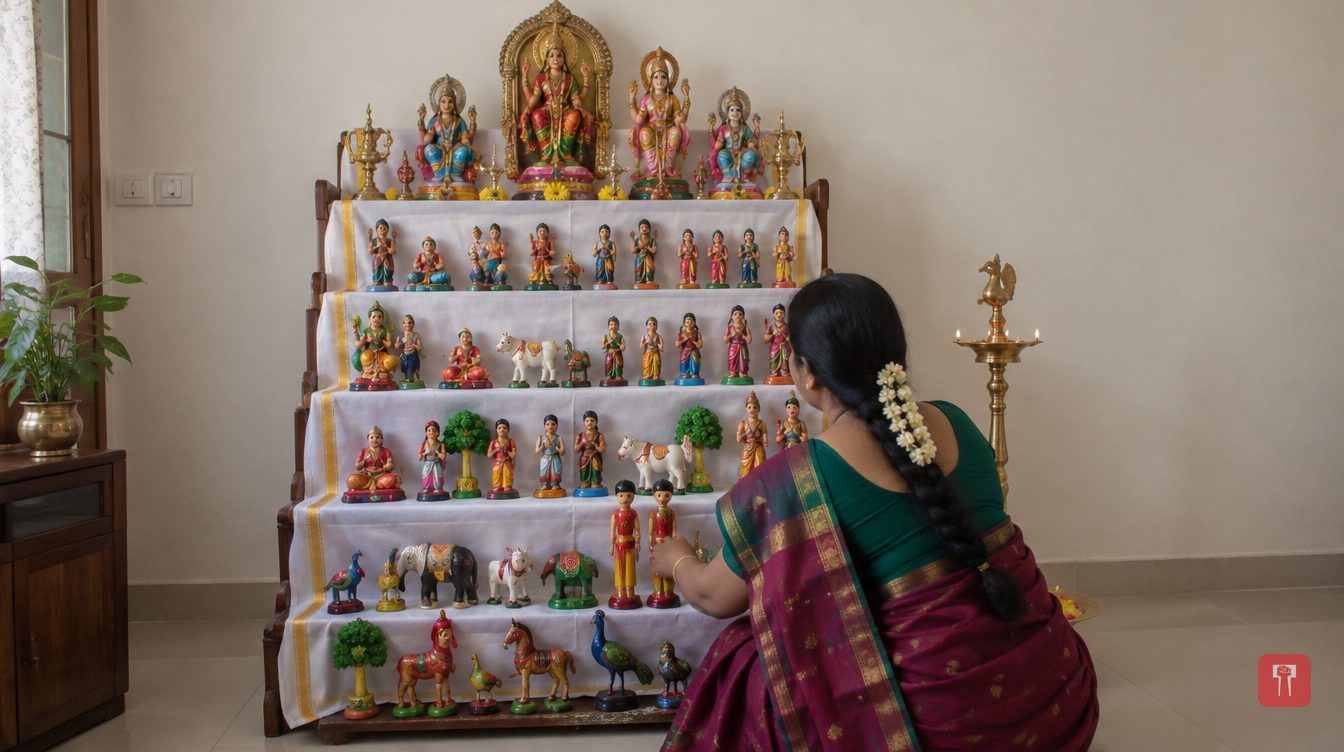
A tiered structure of wood or metal is set up in a clean part of the house. A clean cloth is spread over it and dolls and figurines of various kinds are placed on it. Along with religious devotion, artistic beauty and imagination are valued in the display. Every household's golu can be different. Some homes have old figurines kept safe for generations, while others add new dolls every year.
Navratri is a festival of worship of Adishakti. During these days, Goddess Durga, Mahalakshmi and Mahasaraswati are worshipped with devotion. In Bommai Golu too, worship of the goddess is at the centre. According to folk tradition, gods and goddesses, sages, mythological characters, animals, birds and scenes of human life are arranged on the steps. According to some popular religious beliefs, divine power carries special significance during Navratri, so placing figures in the home and worshipping them is considered auspicious. Different regions have different stories about the origin of the tradition and its religious meaning.
The steps are the most important feature of the golu. They are usually built in odd numbers such as three, five, seven, nine or eleven. The number can vary, however, with the space in the house, the available figurines and the family's tradition. White or coloured cloth is spread over the steps, and figurines are placed according to theme and height. In some homes the steps are made of wood, while elsewhere ready-made metal or other frames are used. Each level is given a distinct look, so that the whole display resembles a handsome work of art.
What goes on each step depends on the family's tradition. Some homes favour religious and mythological themes, others scenes of social life. The figurines include Goddess Durga, Mahalakshmi, Mahasaraswati, Ganapati, Lord Vishnu, Lord Shiva, Sri Rama, Sri Krishna and other deities. In some families, a place of honour is given to the figure of the family deity. Episodes involving Rama, Sita, Lakshmana, Hanuman and Ravana from the Ramayana, and scenes of Krishna, Arjuna and other key characters from the Mahabharata, are also created. This gives children a chance to learn the stories of the epics. Some displays also include figures or pictures of saints, sages, religious teachers and devotees.
Village life and traditional occupations also appear. Dolls of a farmer, potter, weaver, shopkeeper, milkman and vegetable seller are placed. A market, a village fair or a traditional wedding is sometimes depicted. Replicas of cows, elephants, horses, deer, peacocks and many kinds of birds show the diversity of nature, and small scenes of gardens, fields, ponds and village surroundings are also made. Today many families also arrange golu on themes such as science, environmental protection, cleanliness, education, space research and social awareness.
Wooden dolls called marapachi bommai have special importance in Bommai Golu. They are traditionally made of wood and in many places come as a husband-and-wife pair. They are painted or dressed in traditional clothes. In some families, it is a custom to give a newly married couple a pair of marapachi dolls at the wedding. These dolls are later placed in the Navratri golu and become a family heirloom passed from one generation to the next.
Preparations for the golu begin in many homes before Navratri. A clean, open space in the house is chosen, the steps are set up and cloth is spread over them. While placing figurines, their size, theme and harmony with the scene are considered. Special space is kept for figures of gods and goddesses. After that, scenes from mythology, social life, nature and other themes are arranged.
Once the arrangement is complete, the goddess is worshipped. For nine days, members of the household perform worship regularly. Some families sing bhajans, recite stotras and sing songs of the goddess. In many families the golu is concluded on the tenth day, Vijayadashami.
From figures of gods and goddesses to scenes of everyday life, every display tells its own story. Old dolls hold memories of ancestors, while new displays reflect the imagination of the next generation. Navratri is not only a festival of worship of the goddess but also a celebration of the arts and folk life of Indian culture, and Bommai Golu is a fine example of it. Preserving such traditions is not merely following customs of the past, but carrying the art, knowledge, faith and shared values of cultural heritage to the next generation.
