

How India celebrates Dussehra: effigy burning, weapon worship and Durga immersion across states
Dussehra, or Vijayadashami, marks the victory of truth over falsehood and good over evil, but each state observes it in its own way.
 Images are not validated/verified
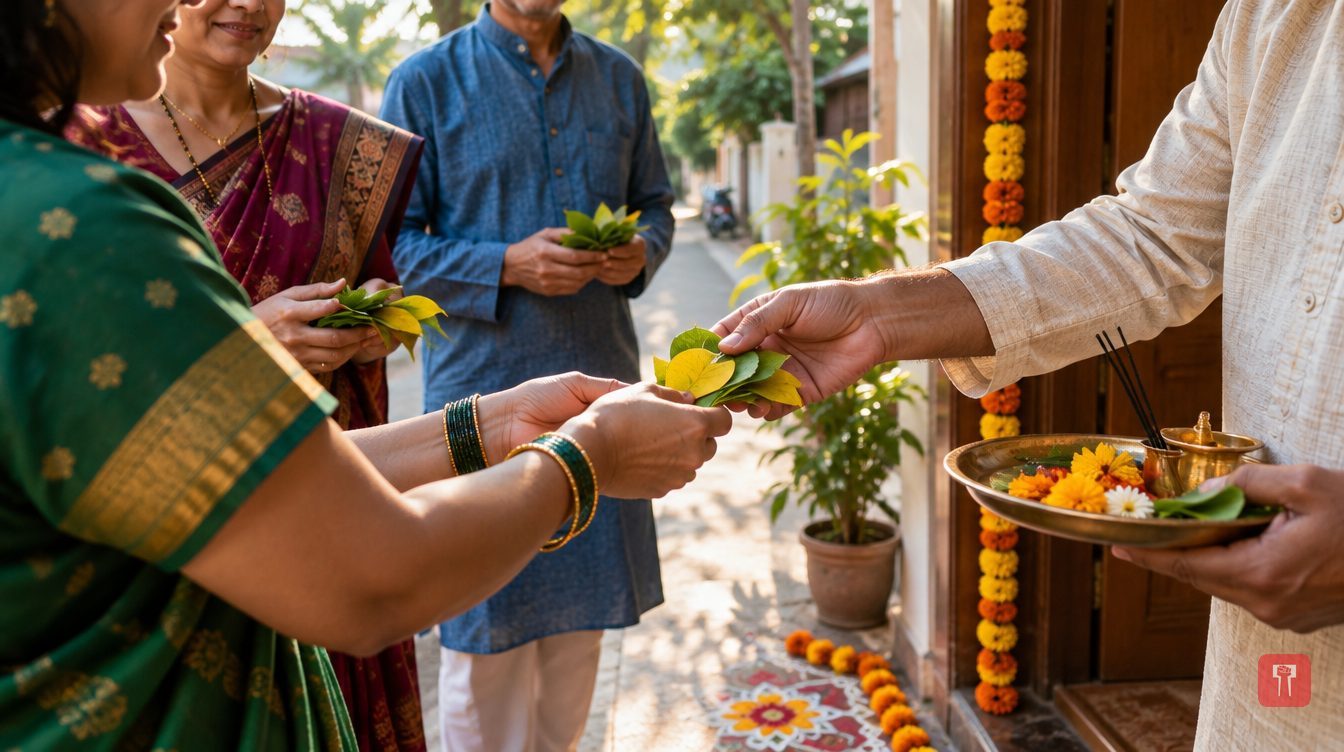
Dussehra, or Vijayadashami, is celebrated with great enthusiasm across the country as a symbol of the victory of truth over falsehood and good over evil. The way it is observed differs from state to state. In some places weapons are worshipped, in others apta leaves are distributed, and elsewhere an effigy of Ravana is burnt.
In Maharashtra, there is a strong tradition of distributing apta leaves, known as "sona" (gold). Elders and youngsters hand each other apta leaves, calling them "sona", and in this way exchange good wishes and show respect. In the afternoon, people cross the boundary of the village or home in the Seemollanghan ritual and worship the shami (or apta) tree. The day is also marked by the worship of books, weapons, tools and vehicles. In Kolhapur, a large procession is taken out at the historic Dasara Chowk.
In north India, including Uttar Pradesh, Delhi, Punjab and other states, Ramlila is staged and effigies of Ravana are burnt. This symbolises Lord Ram's victory over Ravana. In Punjab and some other areas, Kanjak puja is held at the end of Navratri, in which young girls (kanyas) are worshipped and fed.
In Karnataka, the Dasara celebrations of Mysuru and Kodagu are special. Mysuru Dasara is famous across the world. A grand, royal procession (Jumbo Savari) is taken out, with the idol of Goddess Chamundeshwari placed in a golden howdah on an elephant. In Kodagu (Madikeri), there is a 100-year-old tradition of the "Karaga" folk dance, in which Draupadi is honoured.
In West Bengal, the day of Dussehra is "Vijaya Dashami" for the Bengali community. Idols of Goddess Durga are immersed in water on this day, and Sindoor Khela is played. In the Kullu valley of Himachal Pradesh, a large seven-day international festival is held at the Dhalpur ground, featuring a grand procession of Lord Raghunath.
In Bastar in Chhattisgarh, the festival lasts a full two and a half months. In keeping with tribal culture, Goddess Danteshwari is given special worship and a chariot procession is taken out.
South India, including Tamil Nadu, Andhra Pradesh and Telangana, has its own traditions as well. In Tamil Nadu, the "Golu" festival is celebrated by decorating dolls beautifully at home. Goddess Lakshmi is worshipped for the first three days, then Saraswati for three days and Durga for the next three, and gifts are exchanged. In Andhra Pradesh, a boat festival is held on the Krishna river.
