

265 of Maharashtra's 358 talukas declared drought-hit; Marathwada loses 80% of crops
The state declared 265 talukas drought-affected on September 26 after the monsoon, the fourth weakest since 2001, left Marathwada's kharif crop largely destroyed.
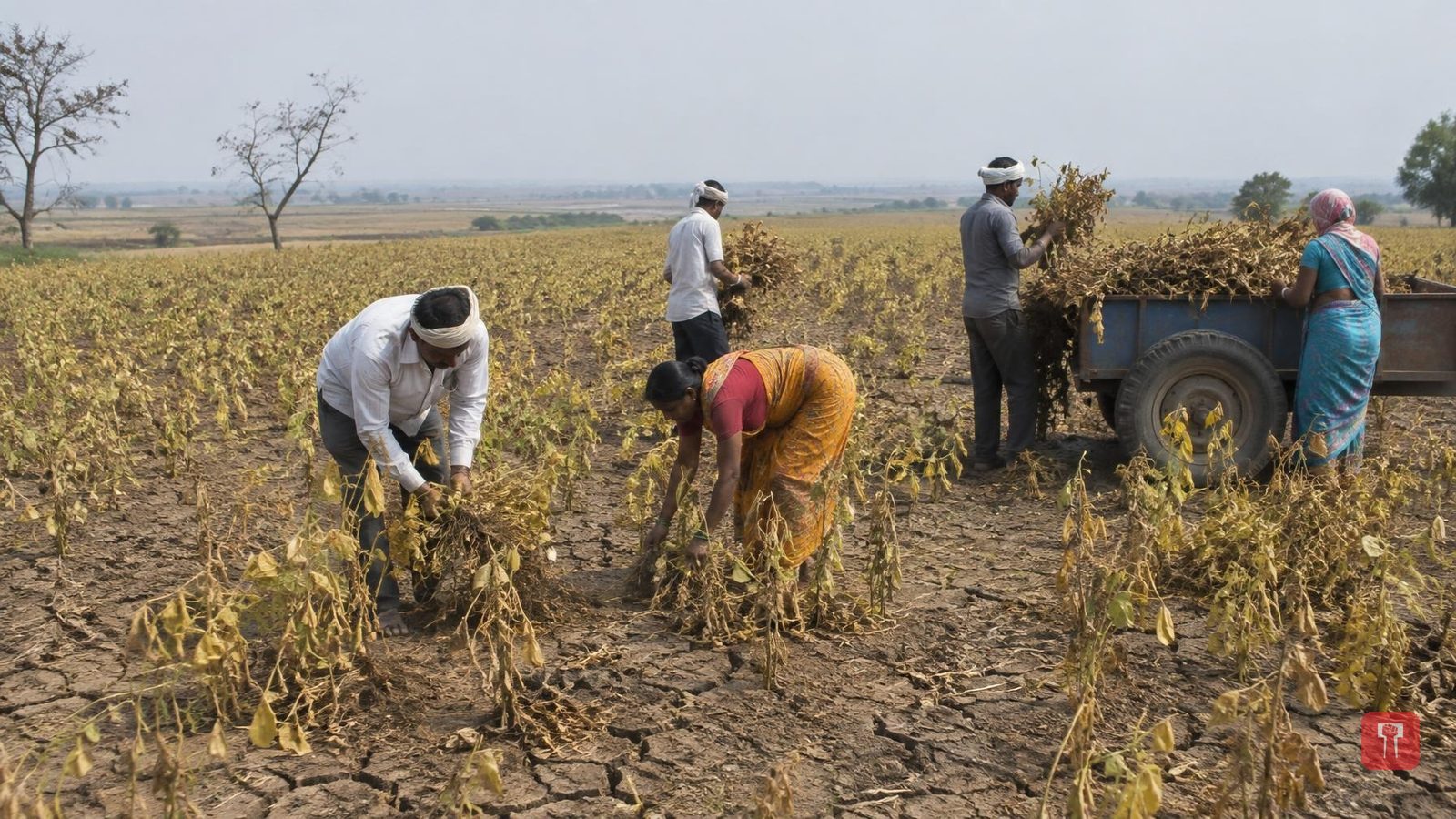
The monsoon officially withdrew from Mumbai on October 3, 2026, leaving behind parched land and distressed farmers. According to India Meteorological Department data, this was the fourth weakest monsoon since 2001.
Rainfall across the country was 12.6 per cent below average, and 51 per cent of the country's area faced drought or drought-like conditions. The situation was uneven: some places recorded their lowest rainfall in 17 years, while others saw record rain.
The season began poorly. June rainfall was 35 per cent below average nationwide. There was a sharp shortage of low-pressure systems over the Bay of Bengal, which strengthen the monsoon, so moisture-laden winds from the sea could not reach the interior on time.
July brought some relief, with rainfall reaching the average. But August and September, the two crucial months, again saw the rain fail. Over the four months from June to September, the country received only 759.4 mm of rain against a normal of 868.6 mm, a deficit of about 109 mm.
States such as Odisha received record rain from Bay of Bengal low-pressure systems, bringing relief to farmers there. Maharashtra, Karnataka and a few other states, however, remained largely without it.
For Maharashtra the monsoon proved a curse, and Marathwada is the worst hit. Districts such as Latur, Beed, Parbhani and Dharashiv were due 679.5 mm of rain between June and September but received only 424.5 mm.
The kharif season has been ruined. Soyabean plants turned yellow and dried up, cotton growth stalled, and tur and other pulse seedlings burnt in the soil. About 80 per cent of the crop in the fields of Marathwada's farmers has been completely lost.
Farmers who had hoped to earn something from these crops must now spend more to uproot the dried plants and clear their fields. Some are selling jewellery and others are borrowing to pay for it. The entire cost from ploughing to harvest has been lost, and farmers are caught in a debt trap.
The impact is not limited to crops. Drinking water and groundwater have also been badly affected. The 158 large and small reservoirs in Latur district now hold only 12.5 per cent of their capacity. Villagers watching the falling water recall the severe famine of 1972. Women in villages have to walk miles for drinking water, and the shortage of water and fodder for livestock threatens to unsettle the village economy.
In view of the situation, the state government on September 26 declared 265 of the state's 358 talukas drought-hit, about 74 per cent of the area. The administration has been ordered to carry out panchnamas of the damage. Preparations are under way to start tanker water supply and fodder camps for livestock. Farmers still fear that the aid will fall far short of the losses.
The drought will directly affect foodgrain production and the country's food security. A steep fall in the yield of pulses, soyabean and coarse grains raises the prospect of a grain shortage in the market in the coming days. Prices from vegetables to pulses are expected to rise, burdening the common man.
Farmers now face the question of the next crop. Where will those already broken by losses find money for rabi seed, fertiliser, labour and irrigation? Debt-ridden farmers will now turn to banks and moneylenders. The monsoon has gone, leaving dry fields, empty wells and despondent farmers. If firm steps are not taken in time, the drought will confront Maharashtra not just as an economic crisis but as a human one.
This story has published but the live thread has not started. Updates appear here the moment the desk files one.
