

World Bank report: AI is cutting entry-level white-collar jobs in India and South Asia
The World Bank's World Development Report 2026 finds generative AI has sharply reduced listings for automatable jobs, hitting juniors and new hires hardest.
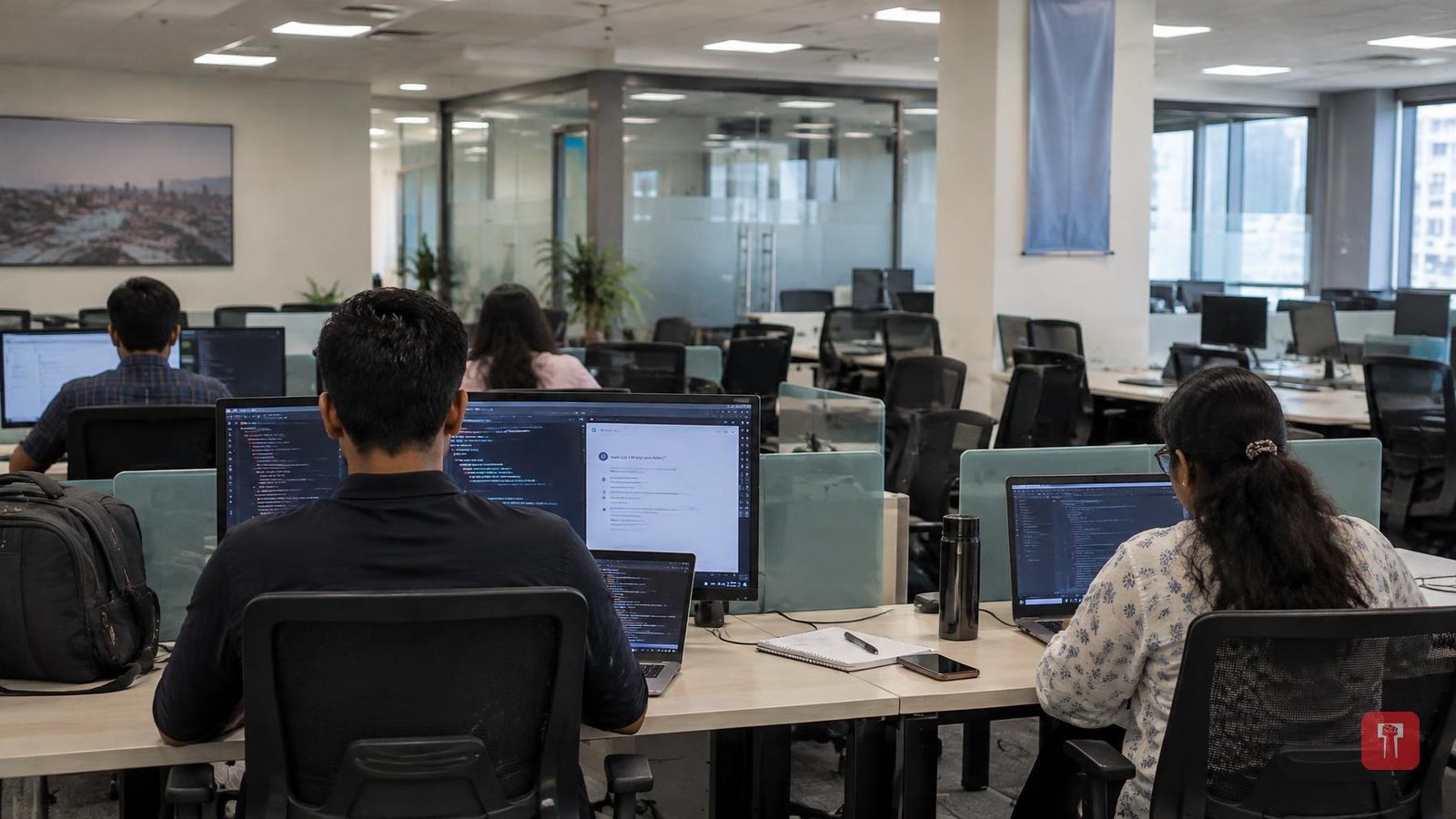 Images are not validated/verified
Even as the use of AI and generative AI grows rapidly around the world, a worrying signal has come from the jobs market. A new World Bank report says generative AI is causing deep cuts in white-collar posts across South Asia, including India, especially in entry-level jobs. While demand for professionals with AI skills is soaring, many traditional entry-level jobs are slowly shrinking.
The World Bank's World Development Report 2026 states plainly that after the arrival of generative AI, advertisements in India for jobs that can easily be automated with the help of computers have fallen considerably. According to the report, the worst affected are juniors and new employees working at the entry level.
On the numbers, job postings by companies across South Asia fell 1.6 per cent after the launch of ChatGPT in November 2022.
The impact has been greatest on companies directly linked to large multinational corporations (MNCs) and global supply chains. According to the report, in sectors where AI can easily replace humans, the number of jobs posted each month has fallen sharply, by around 20 per cent. In IT and knowledge-based services in particular, AI has begun handling entry-level work. Many older junior roles are on the verge of disappearing altogether.
According to Gaurav Nayyar, who led the World Bank team, the impact of AI is not entirely negative. While some older jobs are going, AI is also opening up entirely new fields and work opportunities. Demand for new, advanced posts such as "prompt engineers" and "AI ethics specialists" is rising very fast in companies. In other words, the market is not closing altogether; the nature of jobs is changing.
Experts have warned that students and young people should broaden their knowledge rather than specialise in one narrow or particular task. For instance, coding was once considered a highly prized skill on which one could build a career independently. But AI has now taken control of coding first, and coding work is being done easily through automation. Relying only on learning to code is therefore no longer safe.
To deal with this change, Indian IT companies and major institutions of higher education will have to change their strategy. Experts say students should now be taught STEM, that is science, technology, engineering and mathematics, on a large scale. Young people's scientific ability and basic understanding of engineering must be strengthened so that they can easily adapt to the demands of the market.
