

When to take off the garland offered to a deity, and whether it can hang at the door
Scriptural tradition says the previous day's garland should come off before the next puja and should not be reused as a door toran, but be disposed of with respect.
 Images are not validated/verified
Worship of deities is considered sacred and important in Hinduism. Flowers, garlands, leaves, tulsi, bael leaves and naivedya are offered to the deity with devotion. Many people wonder what to do with these items once the puja ends, how long they should be kept near the deity and whether they can be used again.
In particular, people ask when a garland of flowers put on a deity should be removed, whether it can be offered again the next day, whether it can be put up at the door, and how nirmalya should be disposed of properly. These questions need to be seen with cleanliness and the environment in mind, along with religious sentiment. What the scriptures say on the matter follows.
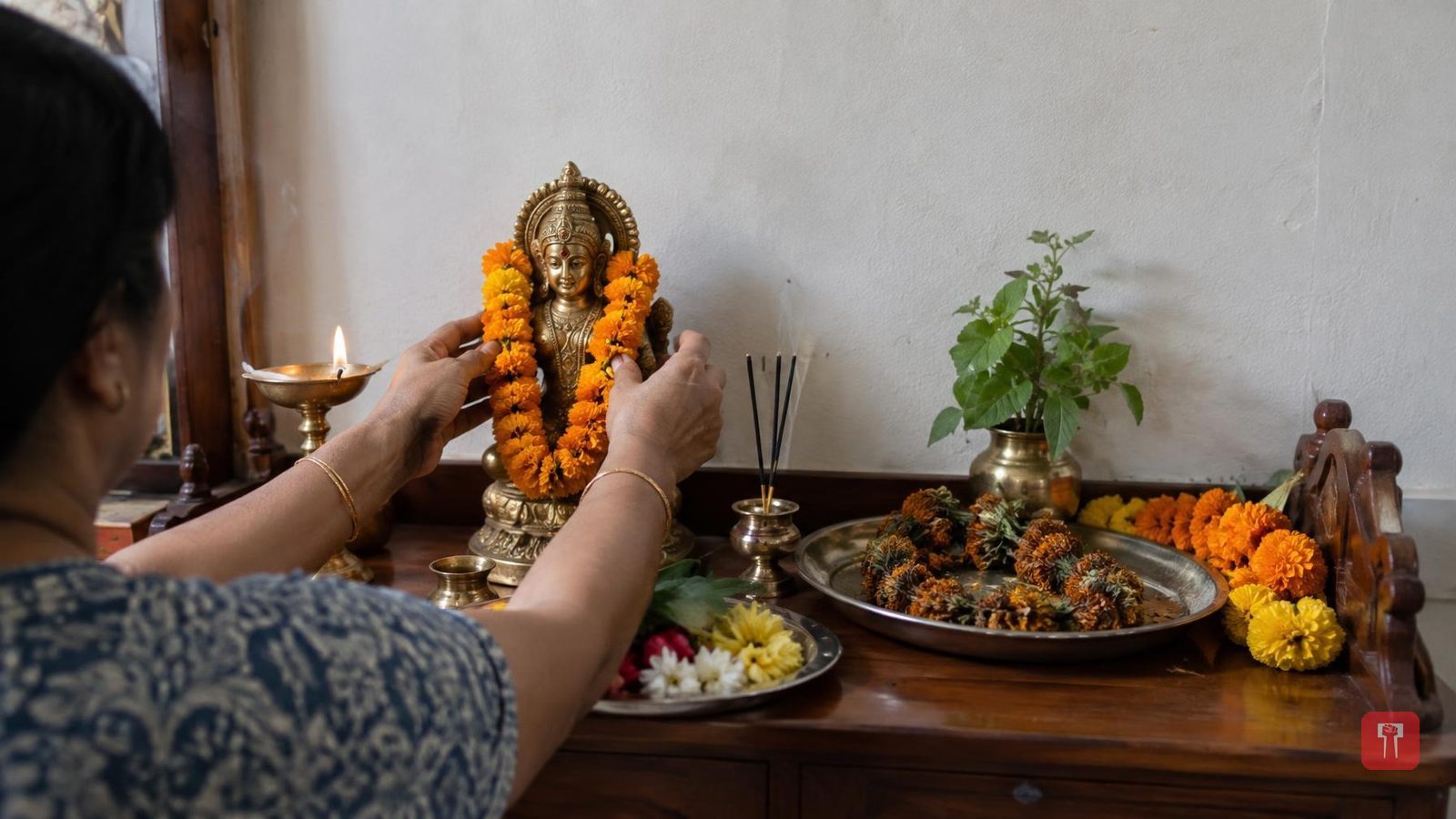
The first question is when to remove the garland. If a garland of fresh flowers has been offered to the deity in the daily puja at home, it need not be kept on the deity at all times. It is generally considered proper to remove the previous day's garland before starting the next day's puja. Even if the garland still looks fresh, it becomes nirmalya once offered to the deity. This is why there is a tradition of offering fresh flowers or a new garland in each new puja.
If the garland dries up earlier, there is no need to wait. Because of hot weather, summer days or conditions in the home, some flowers wilt within a single day. In that case there is no need to keep the garland until the next day. If the flowers look dry, wilted or spoiled, the garland should be removed earlier. Keeping the place of worship clean is itself a part of devotion.
It is generally not the practice to offer a garland that has been removed to the deity again. Importance is given to offering fresh and pure material in worship. But this does not mean the garland is of no use once removed. It should be treated as nirmalya, handled with respect, and used or disposed of in the proper way.
Many households also ask whether a deity's garland can be put up at the main door. The answer is that a garland removed from the deity should not be put up again at the main door as a toran. There are two important reasons.
The first is religious. Flowers and garlands offered to the deity are considered nirmalya. The tradition is to dispose of them with respect rather than reuse them for decoration. The second is cleanliness. A garland hung at the door is exposed to dust, pollution and contact with people passing by. It is therefore better not to reuse puja nirmalya in this way. For the main door, a separate toran of fresh flowers, mango leaves or other traditional decoration should be used.
So what should be done with nirmalya? Flowers, garlands, leaves and other such items offered to the deity are nirmalya. Instead of throwing them in the garbage or on the road, they should be disposed of with as much respect as possible and in a way that does not harm the environment.
There is also a difference between nirmalya and prasad. Not everything offered to the deity is handled in the same way. Naivedya is taken as prasad, while flowers, garlands and leaves offered to the deity are called nirmalya after the puja ends. It is therefore not right to treat nirmalya as garbage and throw it anywhere. Likewise, it is not right to harm the environment in the name of nirmalya. A good balance between devotion and protecting the environment is the need of the times.
When removing the garland, do not think of it merely as an old garland, but as nirmalya offered with devotion. Disposing of it with full respect and without harming the environment is true devotion. Offering freshness to the deity and returning cleanliness to nature give worship greater meaning. If devotion, scriptural tradition and today's environmental awareness come together well, the sanctity of worship can be preserved in a larger sense.
