

Barley not sprouted three days into Navratri? Five remedies to try
Devotees who see no shoots three days after sowing barley at the Navratri kalash are advised not to panic and to try five simple fixes.
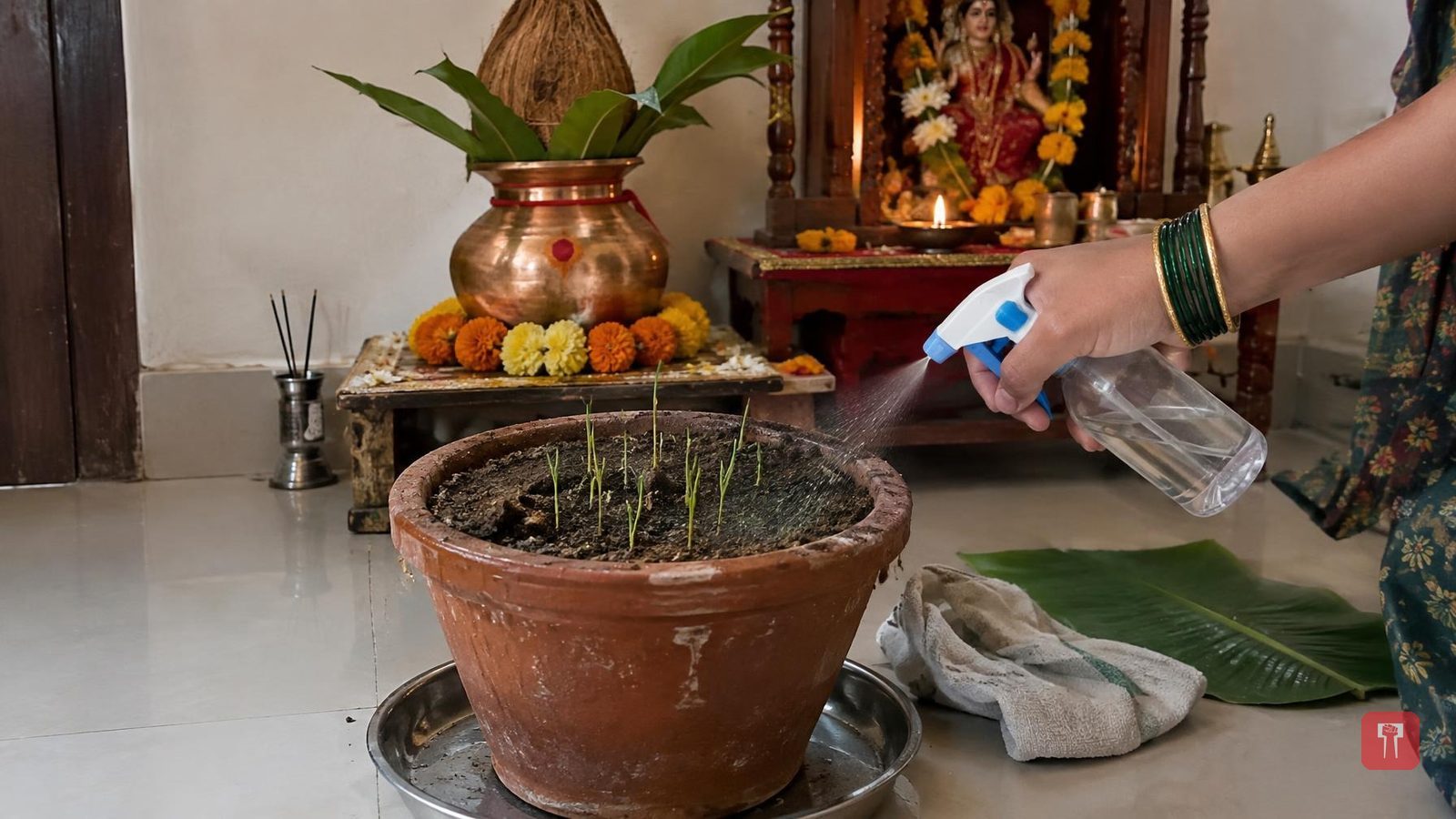
After the kalash is installed during Navratri, the barley (jau, also called jav) sown in soil before it is considered the most important element. If it grows lush and green, it is said to bring prosperity to the home. It is also believed that good growth is a sign that the goddess is pleased. But sometimes barley is sown and no shoots appear even after three days, and people panic.
They wonder whether it is inauspicious and whether money trouble will follow. The truth is that there is no reason to worry. With a little care, the barley will sprout again. If nothing has come up even after the third day of Navratri, try these remedies at once.
First, understand the causes. The first is too much water. People keep pouring water repeatedly and the seed rots. The second is old seed. Barley bought from a shop that is very old does not germinate. The third is the soil. If the soil is very hard, or the vessel has no hole, water stays logged and the barley spoils.
First remedy: do not add too much water. Do not pour water from a mug two or three times a day. Sprinkle a little by hand. The soil should stay moist, not turn to mud. Too much water rots the seed.
Second remedy: place a damp cloth or a banana leaf over the soil. This keeps the soil warm and helps the seed sprout sooner. Lift the cloth each day to check whether a shoot has come. Once a shoot is visible, remove the cloth.
Third remedy: keep sprinkling a little water every day. Do not let the soil dry out completely. Sprinkle a little in the morning and evening, ideally with a spray bottle. This keeps the soil moist without harming the seed.
Fourth remedy: sow fresh seed. If the seed seems spoiled or old, press new seed into the same soil. Do not remove the old seed; add the new seed there. New shoots should appear in two to three days.
Fifth remedy: change the vessel and the soil. Sometimes the vessel is faulty or the soil has pebbles. If so, take another new vessel, fill it with sieved, soft soil and sow the barley again. Before doing this, ask an elder of the family or a guru. Do not move the kalash needlessly.
On what the growth of the barley indicates, grandmothers used to say that how it grows reveals the household's future. If it looks tall, straight and green, it is believed everything will go well at home, work will succeed and the household will be at peace. If it turns yellow or pale, people are told to take a little care, as it can mean slight money trouble or more hard work. If it stays very short or grows sparsely, it is believed there will be obstacles in work.
But these are all guesses. Keep faith in the goddess. If the barley does not sprout, do not panic and worship sincerely. If you follow the remedies above, the barley will certainly turn green by the end of Navratri and you will also receive the goddess's blessings.
