

Vidarbha steel traders body opposes new UPI merchant charge, seeks rollback
The Steel and Hardware Chamber of Vidarbha has asked the finance ministry to withdraw the new UPI merchant charge, calling it a breach of the free-payment promise made to traders
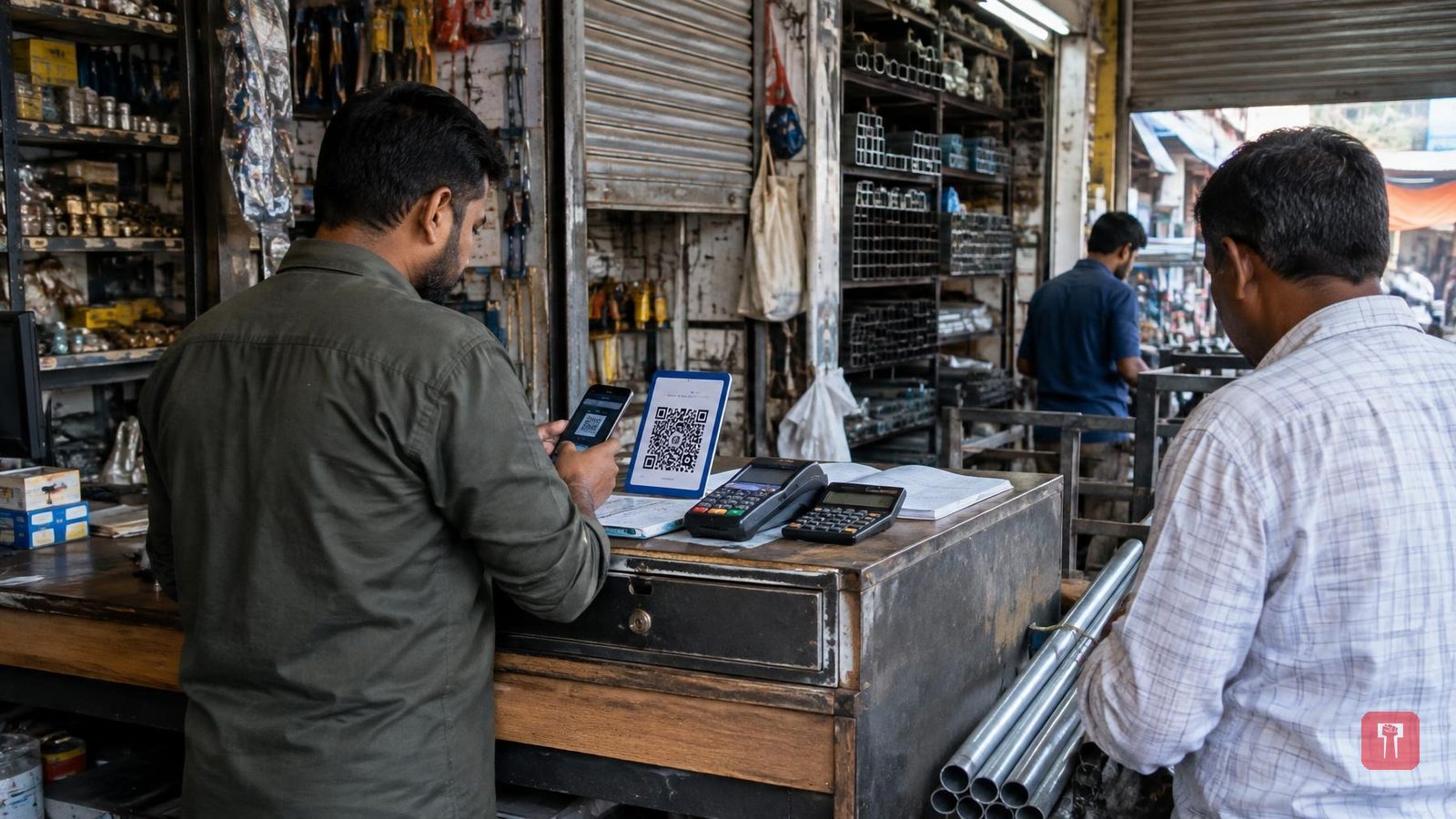
The Steel and Hardware Chamber of Vidarbha (SHCV) has submitted a memorandum to the Union finance minister demanding withdrawal of the 0.40 percent Merchant Discount Rate (MDR) imposed on UPI person-to-merchant transactions above Rs 2,000. The charge is separate from GST and capped at a maximum of Rs 300. The MDR was introduced through NPCI circular number 237/2026-27 dated 15.09.2026 and will come into effect from 15.10.2026. A copy of the memorandum has also been sent to the Prime Minister's Office for intervention.
The chamber says the RBI's Payment System Vision documents have consistently stated that reducing costs is the main objective. The business community and the public were told that UPI was being promoted as a free, real-time payment system. According to the chamber, imposing the MDR now reverses the very reasoning that was used to persuade traders to move away from cash and cards to UPI.
The memorandum states that the government itself pushed for UPI adoption, making it mandatory in several cases. Under Section 269SU of the Income Tax Act, businesses with turnover above Rs 50 crore are required to accept UPI. Under CGST rules, large businesses must display a dynamic QR code on invoices, and SEBI has made UPI mandatory for IPO applications. Chamber members also found that post offices were refusing cash for speed post bookings and insisting on UPI instead. Since this shift was made on the assurance that UPI would remain cheap, the chamber says imposing a new cost now is wrong.
SHCV holds that Section 10A of the Payment and Settlement Systems Act, which bars charges on specified digital payment modes, applies by its text only to businesses covered under Section 269SU. The chamber says this provision was part of a larger legal package meant to remove cost barriers to digital payments, and that in the same spirit, zero-MDR was in practice extended to traders of every size. Small and medium traders, it says, changed their payment systems on the expectation that this would continue.
On the structure of the charge, the chamber says the Rs 300 cap affects businesses of different sizes unequally. Since the MDR is capped at Rs 300 per transaction, this creates a break-even point of Rs 75,000 (0.40 percent of Rs 75,000 is Rs 300). Traders with transactions roughly between Rs 2,000 and Rs 75,000 have to pay the full, uncapped 0.40 percent (plus applicable GST) on every transaction. These are typically small and medium traders, including many of the chamber's own members. Above Rs 75,000, the effective rate as a proportion of transaction value gradually falls, since the charge remains capped at Rs 300 regardless of transaction size. The chamber says this structure places a far heavier burden on medium-sized businesses than on large ones.
President Sanjay K. Agrawal said: "The gazette notification is dated 14 September. The steering committee met on 15 September and approved the proposal at that very meeting, and the NPCI circular was also issued the same day. A decision that ends, for the first time since 2016, the free character of UPI for the entire trading community was settled within a single day of the gazette notification. It is fair to ask whether the committee was given time to deliberate or was simply handed a decision that had already been made. A matter of this magnitude called for a longer and more consultative process, and we record our strong objection to decisions taken in this one-sided manner."
Secretary Mukul P. Agrawal said: "Our demand is that the MDR be withdrawn completely and zero-MDR restored, and that the RBI and member banks meet the cost of running and upgrading UPI from the substantial savings they already gain on cash handling and currency management. As an alternative, we have demanded that the MDR rate and its conditions remain unchanged for ten years from 15 October 2026. The circular only says the MDR will be reviewed 'from time to time', so any future review should involve genuine and time-bound consultation with trade and consumer organisations."
This story has published but the live thread has not started. Updates appear here the moment the desk files one.
