

Virginia highway stretches built with recycled plastic hold up well in tests
Six Virginia highway sections built with recycled plastic and reclaimed asphalt have performed well in early checks, though researchers say long-term monitoring is needed.
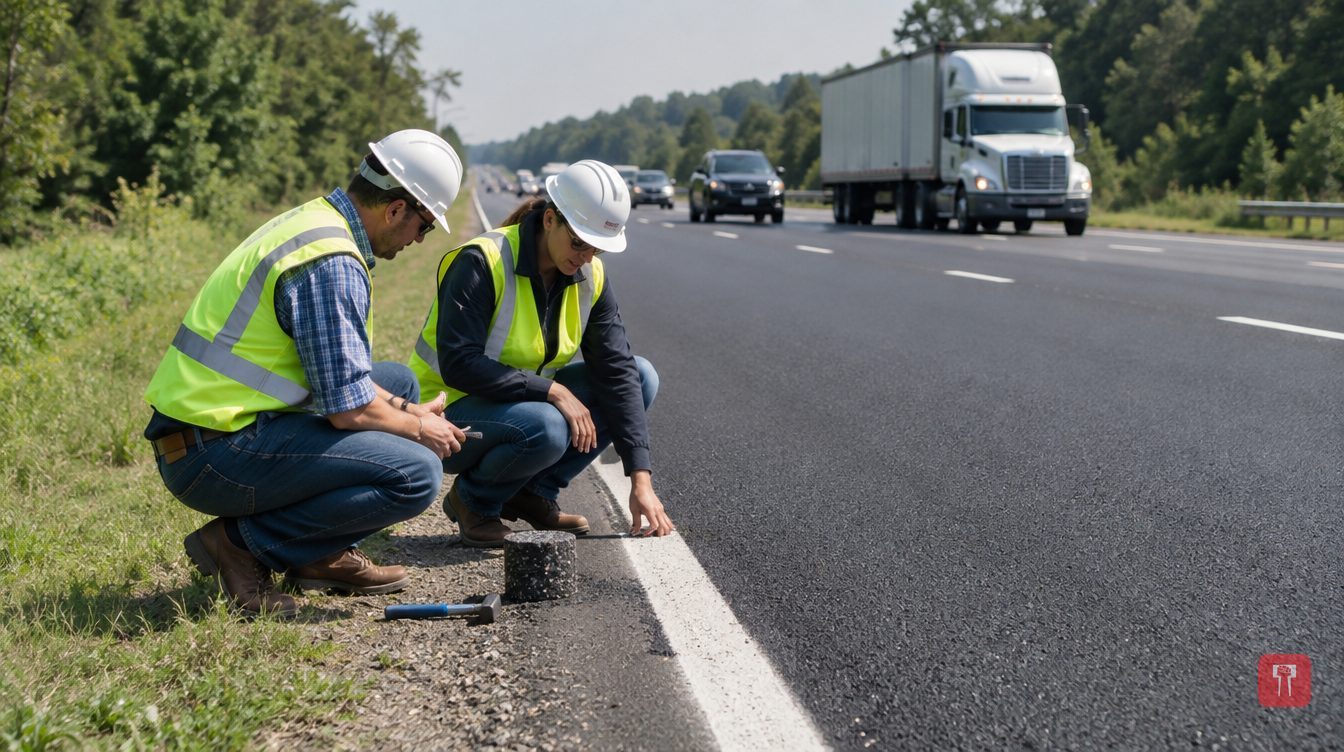 Images are not validated/verified
The world generates thousands of tonnes of plastic waste every day, and it is proving very harmful to nature and the environment. What to do with this waste has become a major question for scientists and environmental experts. Engineers in the US state of Virginia have now found one answer. It not only reuses plastic waste but also adds considerably to the strength and life of roads.
Roads on six major state highways in Virginia were built using a mixture of recycled plastic and asphalt from old roads. The roads have been found to be in very good condition during testing.
Engineers ran the test project in 2022 and 2023 on six different highway sections in the state. Plastic waste and Reclaimed Asphalt Pavement (RAP), the asphalt taken from old roads, were mixed in varying proportions and laid as the top layer of the road. When experts inspected the roads some time after they were opened to traffic, they found their condition better than that of roads built by the conventional method.
The main aim of the test was to see how the new technology and material perform in extremely harsh weather and daily heavy vehicle traffic. In some sections, up to 40 per cent reclaimed asphalt was used. Usually, when a road deteriorates or is repaired, the old road is dug up and the material is thrown away or stored somewhere.
Researchers at the Virginia Transportation Research Council (VTRC), however, specially processed this old asphalt and included it in the new mix. When plastic is mixed into asphalt at a particular temperature, it works as a binding agent, that is, an element that holds the mix together. This reduces water seepage into the road, lowers the chance of potholes and greatly increases the road's load-bearing capacity.
According to the report released by the Virginia Transportation Research Council, the initial inspection found the surface of all six sections in very good condition and free of potholes. The plastic roads have performed well on surface cracking, wear and the ruts formed by the weight of vehicles.
The researchers have nevertheless made clear that the results are for now based on preliminary assessment. Several more years of continuous monitoring will be needed to see how the road holds up over a long period in different weather, such as intense heat, heavy snowfall and torrential rain. Even so, this early success has raised fresh hope among road development authorities and civil engineers around the world.
The technique of building roads from plastic waste has a twofold benefit. First, plastic bottles, bags and other waste that collect in the sea or in landfills and cause pollution find a safe place for a long time in the form of a road. Second, less natural asphalt (bitumen) is needed to build the road, which reduces dependence on crude oil and also cuts the overall cost of road building considerably.
Experiments with plastic roads are under way at some places in developing countries such as India as well. But the way highway-grade roads have been successfully built in Virginia by mixing old roads and plastic is becoming a model for highway authorities around the world. If the experiment proves fully successful, roads around the world will in future become more durable, stronger and more environment-friendly, the source says without doubt.

Comments
No comments yet. Be the first.