

Kim Yo Jong warns South Korea, says loudspeakers to be installed along border
Kim Yo Jong, sister of North Korean leader Kim Jong Un, said Seoul would face a "terrible and painful" situation if it interfered, as military tension rises.
 Images are not validated/verified
Kim Yo Jong, sister of North Korean supreme leader Kim Jong Un and a powerful senior official, has issued a direct warning to South Korea. She said that if South Korea tried to interfere in North Korea's internal affairs or in its border fortifications, it would have to face a "terrible and painful" situation. The stance has raised military tension between the two countries.
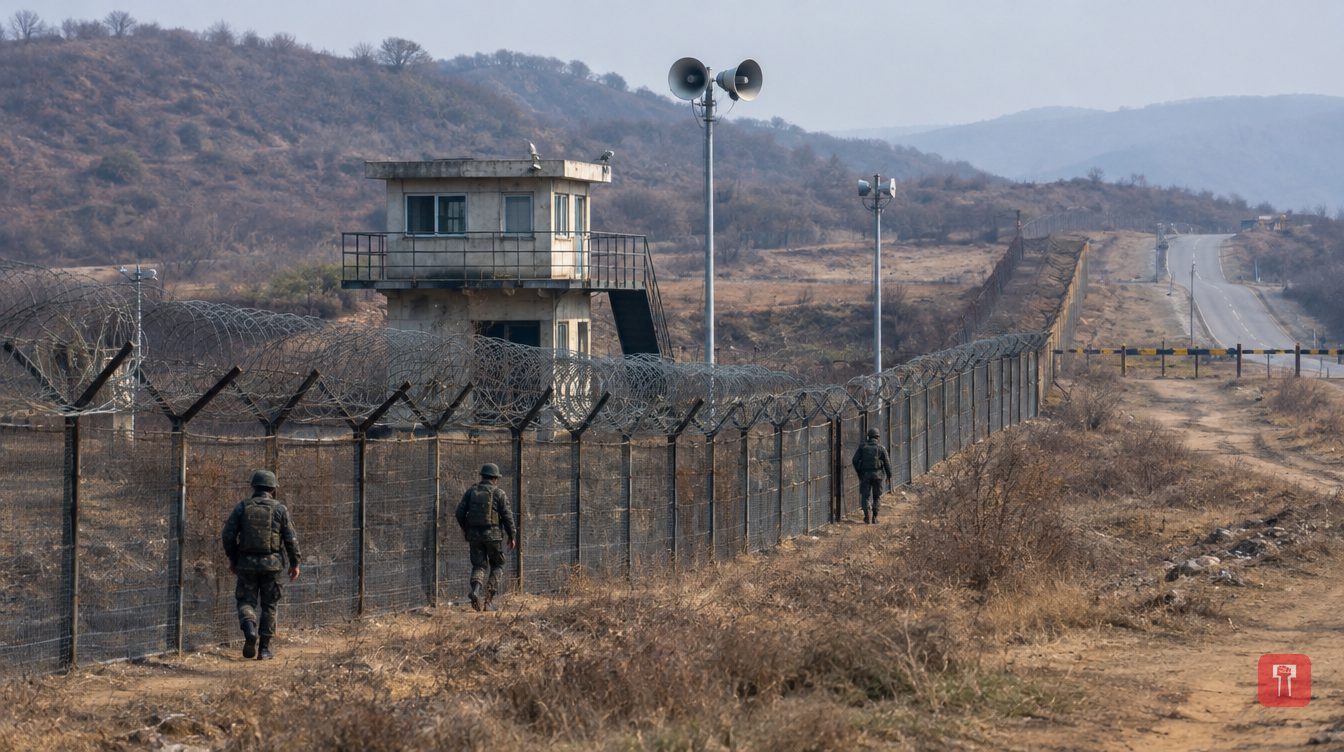
Kim Yo Jong recently visited the armed border dividing the two countries and security checkpoints with senior North Korean military officials. She reviewed the military construction and security arrangements under way there. Speaking after the inspection, she said North Korea would soon install giant loudspeakers along its entire border, through which propaganda and messages against South Korea would be broadcast. Kim Jong Un has already declared South Korea the country's "biggest enemy".
The situation on the border is delicate at present. North Korea's army is rapidly deploying new military units and building permanent fortifications and fences. South Korean soldiers, for their part, are carrying out warning broadcasts from several areas near the border. It has also emerged that they are firing warning shots in the air to stop North Korean soldiers.
Kim Yo Jong expressed strong anger. She said South Korea's provocative acts and interference in internal matters were creating instability on the border. She also said that if Seoul did not immediately curb these actions by its soldiers, North Korea would give an extremely harsh and armed response. North Korea has made clear that it will establish the border not as a mere temporary line but as a permanent and impregnable military frontier.
After the Korean War of 1950 to 1953, no formal peace treaty was signed between the two countries. Only an Armistice Agreement was concluded. Under that agreement, a demilitarised zone (DMZ) was created between the two countries. In practice, it is still regarded as the most heavily armed and guarded border in the world.
Since taking office, South Korean President Lee Jae-myung had begun efforts to ease the old hostility with North Korea and open the path to dialogue. But the recent actions and threats of the Kim administration have badly damaged those efforts. In the past few months, North Korea has laid thousands of new landmines on its side, put up fences and closed roads.
The real spark for the conflict came last month. Two South Korean soldiers were seriously injured in a mysterious landmine explosion near the border. South Korea's defence ministry investigated and accused Pyongyang of having planted new landmines there, with North Korean soldiers either illegally crossing the border or violating the agreement. North Korea has denied all the allegations and said it was a South Korean plot.
South Korea's foreign ministry announced at an official press conference on Thursday that the blast was caused by North Korean landmines and was a direct violation of the 1953 Armistice Agreement. Seoul will therefore take the matter to the UN Security Council. South Korea will send a letter to the United Nations strongly condemning North Korea's act. It will also demand an official apology from Pyongyang and international pressure to keep regional tension from rising.
The tension is not confined to the two countries. North Korea is believed to have indirect backing from Russia and China, while the United States stands firmly behind South Korea. Kim Yo Jong is regarded as a key North Korean policymaker on Washington and Seoul, so her threat is also seen as an indirect challenge to the United States.
International political analysts have expressed fear that a sudden small clash or a misstep on the border could turn into a major regional war. In the coming days, the security situation in the Asia-Pacific region is clearly set to become more complex and worrying.

Comments
No comments yet. Be the first.