

Israeli jets sent towards Iran border recalled at last moment, signs of US pressure
A dozen Israeli fighter jets that flew via Syria and Iraq towards the Iranian border were ordered back, with signs pointing to US pressure.
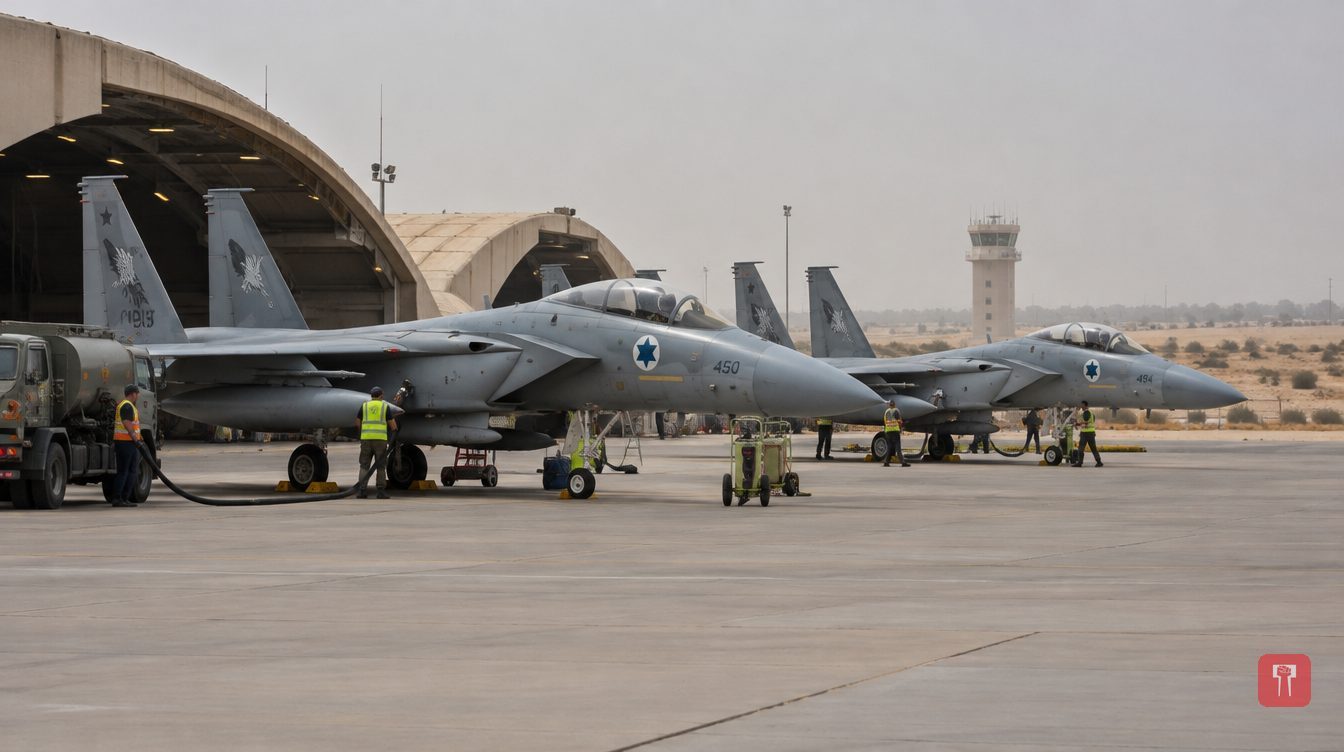 Images are not validated/verified
Tension in the Middle East has again reached a highly explosive point. With elections due soon in Israel, a decision by Prime Minister Benjamin Netanyahu has left the world holding its breath. Deep differences have surfaced in Israel's political circles and within the Israel Defense Forces (IDF) over whether to launch a direct war with Iran or to focus on the coming elections. At this delicate moment, Netanyahu abruptly recalled about a dozen fighter jets deployed near the Iranian border, prompting a range of discussions internationally.
According to the information available, these fighter jets of the Israeli air force travelled about 1,300 km via Syria and Iraq and reached the vicinity of the Iranian border. The aircraft were ready to face any possible retaliation by Iran. But at the very last moment, Israel's senior leadership ordered them to return. The military later described the mission as a "routine exercise", but there are clear political and military indications that the decision was taken under US pressure.
The diplomatic role of the United States has been significant in these events. On the day the Israeli jets flew near the Iranian border, US Defence Secretary Pete Hegseth held a secret meeting with Prime Minister Netanyahu at Ovda airport. It is said that during and after the meeting, US President Donald Trump intervened directly and clearly advised Netanyahu against any hasty military strike on Iran.
The United States would not at all welcome a new war breaking out in the Middle East at this time. Amid this tension, the US has begun a review of its diplomatic and military security in Saudi Arabia. In view of the threat of a possible regional war and possible attacks by Yemen's Houthi rebels, the US State Department has ordered non-essential staff and their families in Saudi Arabia to return home immediately.
The main reason for Netanyahu's aggressive stance is believed to be the growing pace of Iran's nuclear programme. At a meeting with Trump earlier this month, Netanyahu cited reports from Israeli intelligence agencies. Israeli intelligence agencies have received indications that Iran is again rapidly advancing its stalled nuclear programme and has come very close to making an atom bomb.
According to Netanyahu, Iran's leadership and security agencies are now taking dangerous decisions, disregarding all safety rules. He says that preventing Iran from becoming self-reliant in nuclear science and weapons is a question of Israel's very existence. Netanyahu put before the IDF, Mossad and other security agencies the view that overthrowing Iran's regime or striking its nuclear sites directly is the only way.
Israel's coming elections and domestic politics are complicating the whole equation. On one side, Netanyahu and his cabinet want to cement an image as a patriotic and aggressive leader by taking tough action against Iran. On the other, experienced IDF officers think it dangerous to go to war without US cooperation and proper preparation.
The next three to four days are considered highly decisive for the Middle East and the future of Israel. The spark of a major war has been averted for now through US mediation, but international analysts doubt how long this calm will last, given the tension on the Iranian border and the nuclear programme issue.

Comments
No comments yet. Be the first.