

Turkey prepares to send troops to back Saudi Arabia as Yemen fighting with Houthis continues
Turkish President Recep Tayyip Erdogan is readying troops and military aid for Saudi Arabia as government forces fight Iran-backed Houthi rebels in Yemen.
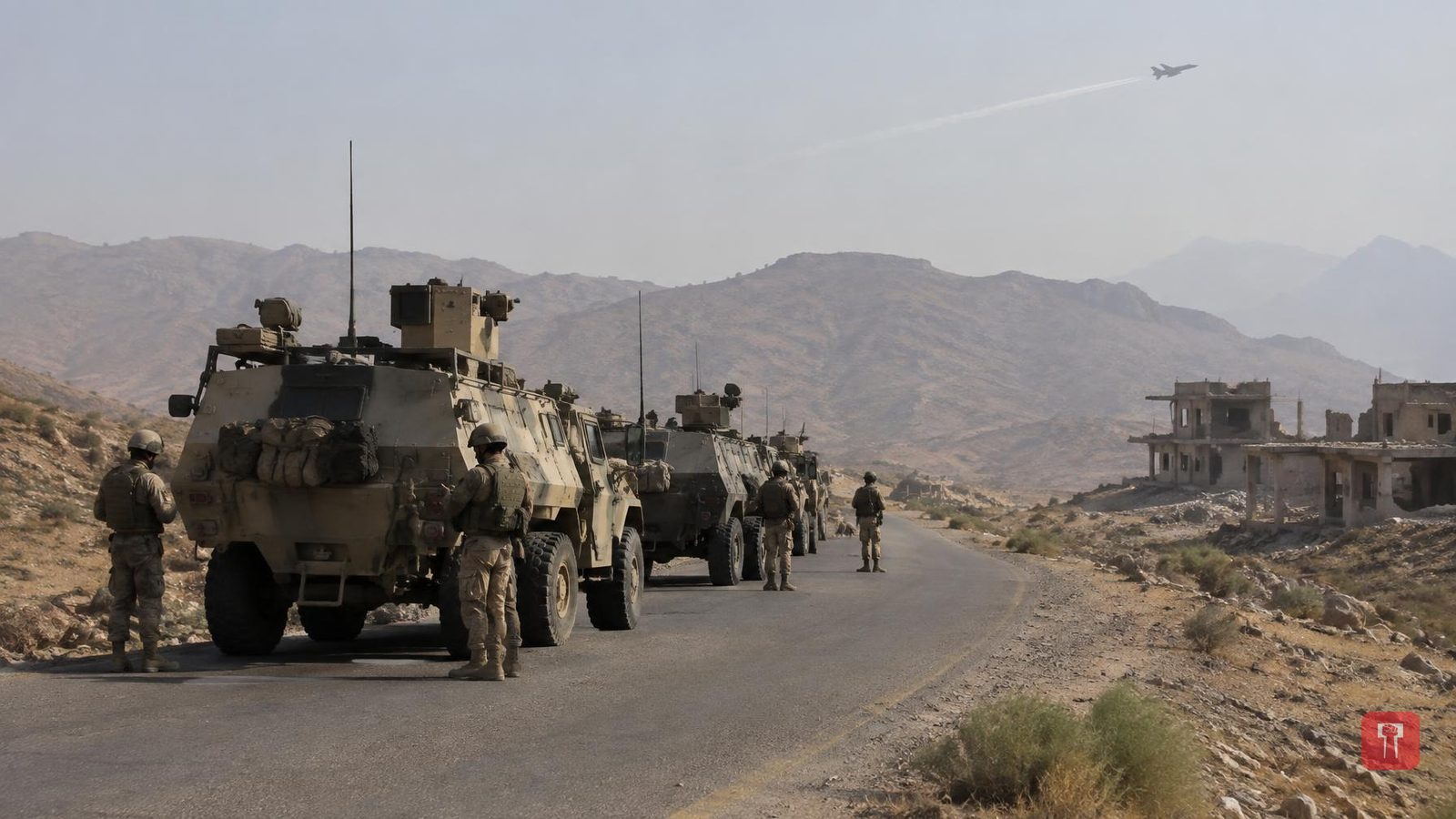 Images are not validated/verified
West Asian politics appears to be taking a major turn. Turkey and Saudi Arabia have had a political and historical rivalry stretching back nearly two centuries, but the two countries now stand on the same military platform. To counter the growing security threat from Iran-backed Houthi rebels in Yemen, Turkish President Recep Tayyip Erdogan is preparing to send substantial military assistance and troops to Saudi Arabia. The decision could change the security equation across Asia and the Middle East.
According to the information available, Turkey will deploy additional combat troops, emergency response teams and advanced technical defence equipment in Saudi Arabia over the next few weeks. At a recent key meeting held under the Mecca defence agreement, both Turkey and Pakistan formally agreed to send their forces to protect Saudi Arabia's borders and sovereignty. A senior Turkish official said the government in Ankara is committed to providing every kind of technical and military support for the mission.
Turkey's decision comes as Saudi-backed government forces in Yemen have launched a major military offensive against the Houthi rebels. The main aim of the operation is to retake a key area the Houthis recently seized and to loosen their hold in the region. Heavy firing and attacks are currently under way from both sides in Yemen. More than 270 government soldiers and Houthi fighters have been killed in the fighting so far. The Saudi air force is providing Yemeni troops with air cover and support throughout the battle.
The military developments have a 200-year-old history behind them. The Ottoman caliphate, whose heir Turkey now comes forward to defend Saudi Arabia, once tried to wipe out the Saudi dynasty entirely. When Saud bin Abdulaziz took control of the Hejaz province in the early 18th century, war broke out between the Ottoman empire and the Emirate of Diriyah. The Ottoman army retook the Hejaz in 1813, but the conflict between the two states did not end.
After Saud bin Abdulaziz died in 1814, his son Abdullah bin Saud Al Saud took the throne. He faced a heavy assault by a combined Ottoman force led by the Egyptian ruler Muhammad Ali Pasha and his son Ibrahim Pasha. After the holy cities of Mecca and Medina were lost in 1815, the Saudi army had to retreat. The Ottoman forces nevertheless kept advancing and besieged the Saudi capital, Diriyah, for several months.
On September 9, 1818, after bitter fighting, King Abdullah surrendered. The Ottomans executed several members of the House of Saud, while King Abdullah and his children were taken prisoner and carried to Istanbul by way of Egypt. The Egyptian ruler had pleaded for clemency for them, but the then Ottoman caliph, Mahmud II, rejected it. In May 1819, King Abdullah and his supporters were publicly beheaded in front of Istanbul's famous Hagia Sophia.
According to some historical documents, King Abdullah was subjected to severe mental torment before his execution. The king, who had imposed a complete ban on music in his kingdom because of his strict religious rules, was forced to listen to music moments before his death. That event brought the first Saudi state to a complete end. That same history is now at a new turn, as Turkey, the heir to the Ottoman empire, sends its soldiers to defend the same Saudi dynasty 200 years later.
