

Russia puts Soviet-era Pechora S-125 missile system on mobile launchers; India's upgrade in focus
Russia is rebuilding the S-125 Pechora surface-to-air system on mobile chassis, a move seen as significant for India, which has upgraded its own Pechoras.
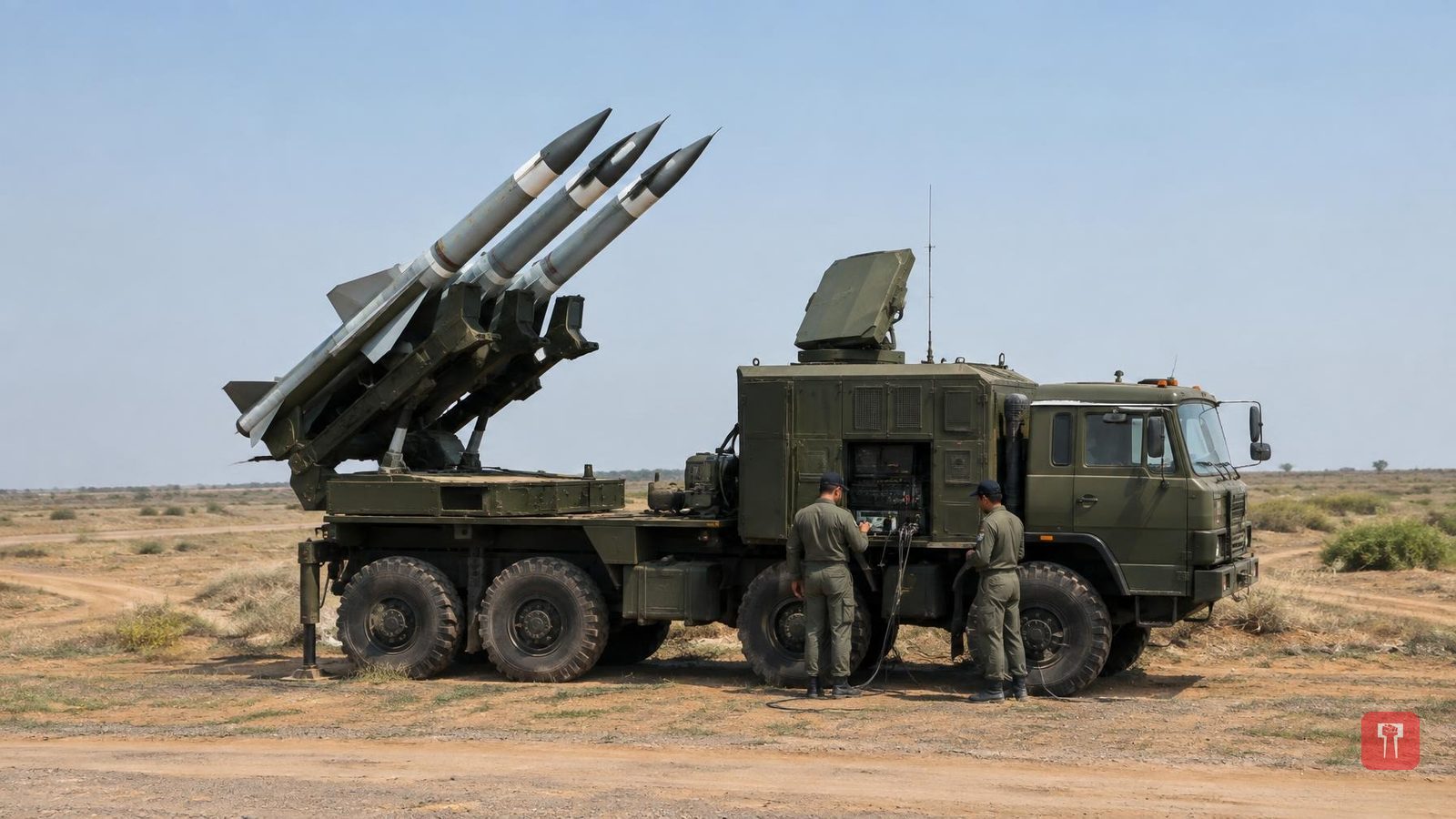 Images are not validated/verified
Russia is preparing a new, mobile version of its Soviet-era S-125 Pechora, a surface-to-air missile system. The first batch of the upgraded Pechora is to join the Russian Army soon. The decision is said to pose a direct challenge to the dominance of the American F-35 stealth fighter. It is being seen as important not only for international security but also for India's national security and air defence.
The Pechora has an interesting history. It is the system that shot down a US Air Force F-117 Nighthawk stealth fighter-bomber over Serbia on March 27, 1999, during the Kosovo war. The F-117 was the world's first operational stealth aircraft and was considered nearly impossible to spot on radar. At that time the Pechora was a stationary system, yet it hit a stealth aircraft and surprised the world. Its power and effect are now said to increase manifold as it returns in a mobile version.
The S-125 Pechora is a static, low- to medium-range air defence system originally built in the Soviet era in 1961. It was inducted into the Indian Air Force in the 1970s. Its usual range is 30 to 35.4 km. It can strike accurately at targets flying as low as 20 metres and enemy aircraft at altitudes of 20 to 25 km. It is designed to bring down fighter aircraft approaching at low and medium altitudes, cruise missiles and modern stealth drones. Its 4R90 Yatagan radar can detect enemy flights about 100 km away. The system can work in electronic warfare and heavy jamming conditions, and can operate on its own or as part of a nationwide air defence network.
The Indian Air Force has relied on the Pechora for a long time. India decided a few years ago to fully modernise and digitise this nearly 50-year-old Soviet system. Under this, the Ministry of Defence gave Bengaluru-based private defence firm Alpha Design Technologies Limited (ADTL) a contract of about Rs 591.3 crore to modernise 16 Pechora systems.
In this indigenous upgrade, the old analogue arrangement of vacuum tubes and transistors was removed entirely. It was replaced with modern semiconductor digital chips and higher-capacity processors. The updated system was successfully tested at the Pokhran field firing range in Rajasthan. Digitisation sharply reduced the response time, making it possible to destroy sudden incoming enemy missiles within seconds.
India did not just change the chips. The missile guidance and tracking radar have also been fully digitised. New transmitters have been fitted, which make tracking enemy stealth aircraft and small drones more accurate. The operator cabin has been given modern visual displays, digital controllers and an automatic health monitoring system. Indigenous software-defined radio (SDR), a thermal imaging fire control system and a missile launch detector have also been added, and the system has been linked directly to the Air Force's Integrated Air Command and Control System (IACCS) network.
The question now is why the Russian mobile chassis upgrade is seen as a game-changer for India. A major drawback of static air defence systems is that enemy satellites and surveillance aircraft can easily locate them. India's two main rivals, China and Pakistan, keep constant watch on the Indian borders from the air and by satellite. Once the location of a static Pechora is known, they could bypass it or strike it first.
Russia is now mounting the system on heavy military vehicles, the MZKT-8021-021, MZKT-8022-021 and MZKT-80211-021 chassis, to make it fully mobile. If India adopts the Russian chassis upgrade, or deploys its own digitised Pechora on mobile vehicles using indigenous technology, the system could be moved from one place to another within minutes. China already has fifth-generation stealth fighters such as the J-20, and Pakistan is also said likely to receive stealth-capable aircraft from China. Against this backdrop, a mobile Pechora S-125 that can accurately detect stealth aircraft and keep changing position is being seen as a near-impenetrable protective shield on India's border.
