

Longest total solar eclipse of the century on August 2, 2027, with darkness lasting 6 min 23 sec
The eclipse will be seen as total across Spain, North Africa and parts of the Middle East, and only as a partial eclipse in India.
 Images are not validated/verified
A rare astronomical event is set to take place. The biggest total solar eclipse of this century will be seen on August 2, 2027. Daytime will turn as dark as night, and the Sun will vanish completely for 6 minutes 23 seconds.
According to the National Solar Observatory, it will be the longest total solar eclipse visible from land since 1991. No longer or bigger solar eclipse will be seen anywhere on Earth until 2114. Scientists say such a coincidence will occur again only after 88 years, in 2114. For this reason, astronomers and science enthusiasts regard it as a highly significant event.
The main path of totality will pass over a particular part of the world. It will begin in Spain and move on towards Gibraltar, Morocco, Algeria, Tunisia and Libya. The Libyan city of Benghazi and the Egyptian city of Luxor lie directly under this path, so the effect and duration of the eclipse will be greatest in Luxor.
The sight will also be visible from parts of Saudi Arabia, Yemen and Somalia, and from areas of the Atlantic and Indian oceans. Regions outside this main path will see the eclipse only as a partial one. Astronomy enthusiasts around the world have already begun advance bookings at tourist destinations along the path to witness the event.
Indians will naturally wonder whether the eclipse will be visible here. According to the information available, the total solar eclipse of August 2, 2027 will not be fully visible in India. Only a partial eclipse will be seen in the country. In India, the eclipse may be seen at around 3.50 pm. Its effect in the southern states will be slightly greater than in the north.
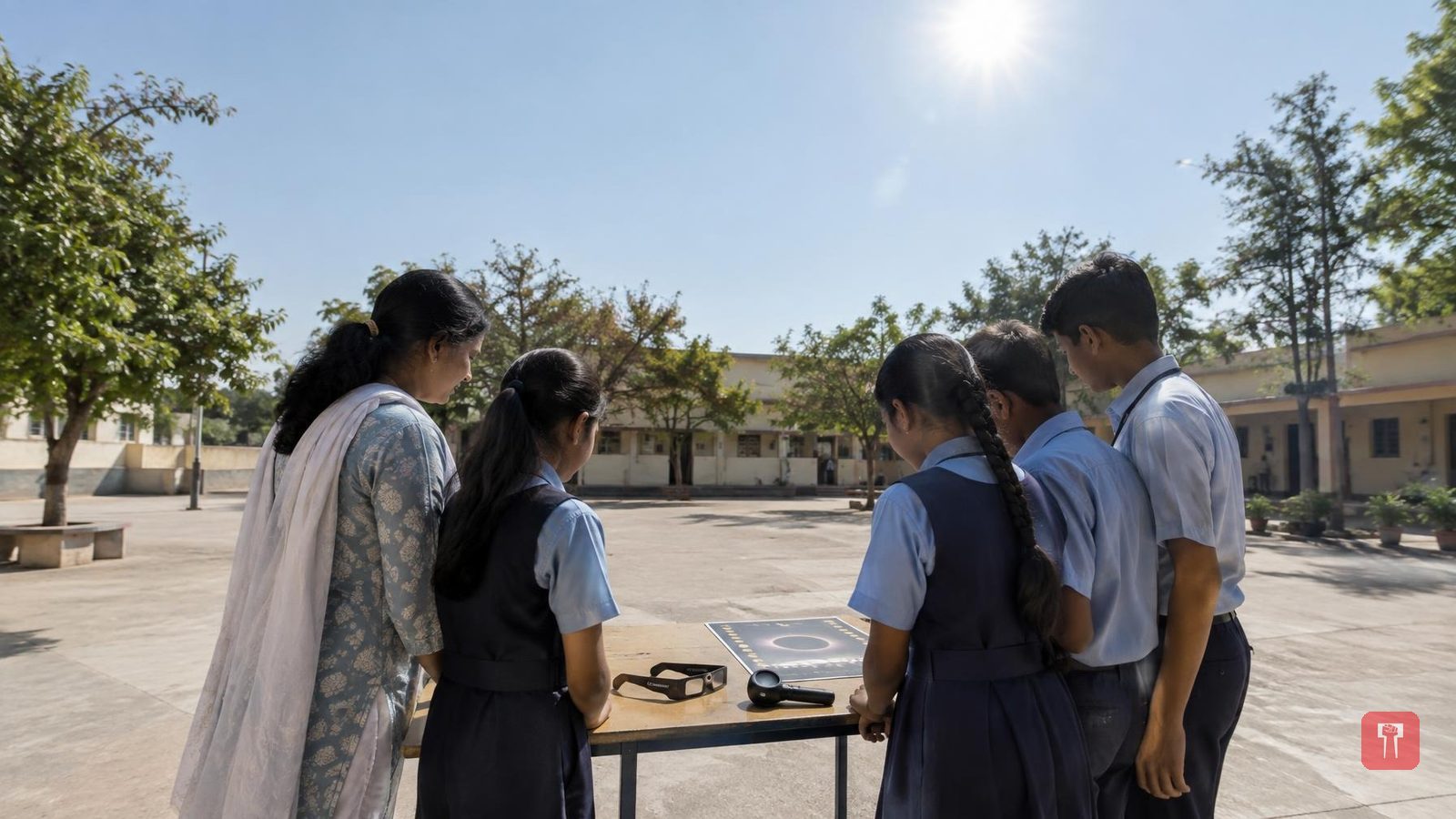
While watching a solar eclipse, it is very important to take care of health, especially the eyes. Except for the very brief moments of totality, looking at the Sun with the naked eye can be extremely dangerous. Do not use ordinary sunglasses or home-made filters. To watch the eclipse safely, use only certified solar viewers or special solar eclipse glasses.
Anticipation for this historic astronomical event has reached a peak. Scientists and the general public alike now have their eyes on it.
