

Pakistan under pressure over Saudi aid as public anger meets Mecca pact obligations
Pakistan's government and army face public pressure at home and obligations under the Mecca agreement with Saudi Arabia and Turkey as the Saudi-Yemen conflict continues.
 Images are not validated/verified
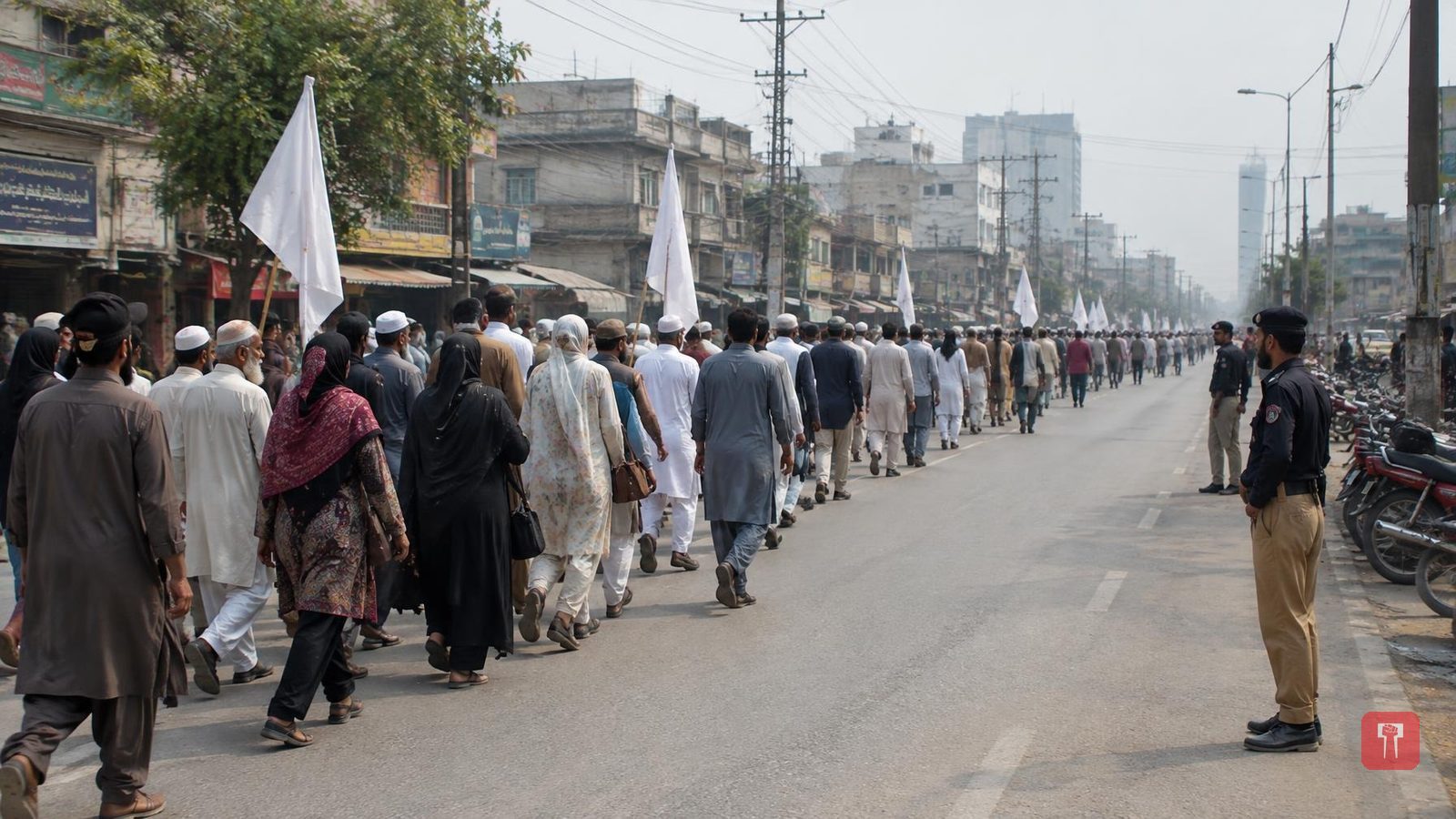
The political and social climate in Pakistan is tense. The government is already under pressure to release Imran Khan from jail, and his party has organised a large long march across the country. Meanwhile, the conflict in the Middle East shows no sign of ending, with Saudi Arabia and Yemen continuing to attack each other.
Turkey, Saudi Arabia and Pakistan recently signed the Mecca agreement. Under it, if any one of the three countries is attacked, the other two will come to its military aid.
The Houthis in Yemen have attacked Saudi Arabia and have also expanded their control over Yemen. As a result, Saudi Arabia and the Saudi-friendly government in Yemen are in distress. Pakistan, which earlier did not dare to fight the Houthis directly, has now begun talking of fighting them. However, Pakistan has not yet made clear on which fronts it will fight.
It is also being alleged that the United States is behind all this. The US has taken on the responsibility of defending Gulf countries such as Saudi Arabia. But after a heavy blow in the Iran-US war, its military strength in the Gulf has weakened for now and its costs have risen. Because of pressure from the American public, it also cannot openly help Saudi Arabia against the Houthis. It is therefore understood that Pakistan, described as an army for hire for the world, is now being sent to Saudi Arabia's aid.
The reasons for public pressure in Pakistan are as follows. It has a large Shia Muslim population, and Iran is a country with a Shia majority. Shia culture and religious practices in the two countries show considerable similarities. Iran and Pakistan are neighbours and share a border of more than 900 km. Much of Pakistan's illegal petrol trade runs on cheap oil coming from Iran, and the poor there carry on this trade.
When Iran's supreme leader Khamenei was killed in the US-Iran war, a large march against the US and Israel was held in Pakistan and tension built up. Although Pakistan has no direct link with Yemen, Iran's support for the Houthis means that the Pakistani public also sympathises with them.
On the question of whether the government will listen, the analysis says that in Pakistan the army runs the government, decisions are made as the army chief says, and democracy exists only in name. Imran Khan's party is building a large movement for democracy. On the other hand, the analysis says, army chief Munir is content to serve the US, Dubai and Israel, so he must do whatever the US says. His money and power in Pakistan are sustained through this. The coming period is therefore one of transition for Pakistan.
With growing public pressure on one side and the Mecca agreement on the other, the Pakistani government and army are under pressure. They want to keep political relations with Saudi Arabia and the US good. Since the agreement has given them global publicity, it is not easy to back out of it, because Pakistan depends heavily on other countries for many things.
