

Sant Eknath produced a corrected text of the Dnyaneshwari by comparing handwritten copies
Centuries after Sant Dnyaneshwar composed the work, Sant Eknath of Paithan studied surviving manuscripts and settled a pure text, tradition says in 1584.
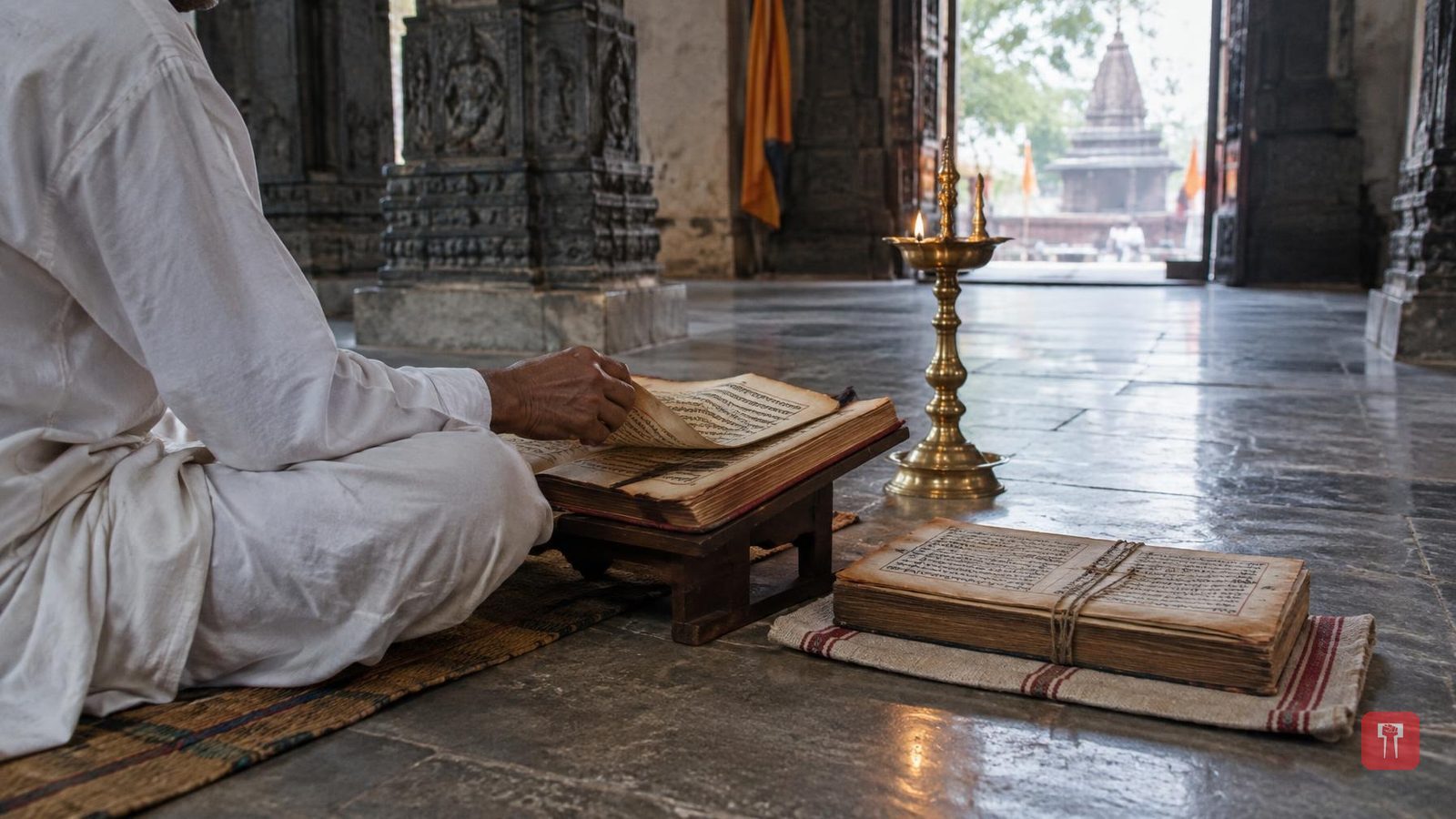 Images are not validated/verified
In Marathi saint literature, the Dnyaneshwari is regarded as more than a religious text. It is a precious heritage of the Marathi language and the saint tradition. Sant Dnyaneshwar Maharaj composed it to bring the meaning of the Bhagavad Gita to the common Marathi-speaking person. The great task of delivering the work to later generations in its pure form was undertaken by Sant Eknath Maharaj.
Sant Dnyaneshwar Maharaj completed the Dnyaneshwari at Nevase in Shake 1212, around 1290 CE. The work is also called Bhavarthadeepika. The philosophy of the Gita did not remain confined to Sanskrit. He took it to ordinary people in the ovi metre of Marathi, which made the profound spiritual ideas of the Gita easier to understand in their mother tongue. Dnyaneshwar himself composed the Dnyaneshwari, but Sant Eknath Maharaj made an important contribution by preserving and purifying it later.
For hundreds of years after Dnyaneshwar, handwritten copies of the Dnyaneshwari continued to be made. With no printing facilities then, the text was copied by hand. In making one copy from another, scribes could err in writing words, alter the ovis, or at places unknowingly add matter. This left room for faulty readings. Over time, variant readings crept into the different handwritten copies, and the need arose to preserve the original form of this priceless work.
About 250 years after Sant Dnyaneshwar, Sant Eknath Maharaj of Paithan gave special attention to the Dnyaneshwari. He studied the available manuscripts, examined the variant readings and established a pure copy of the work. According to tradition, this was completed in Shake 1506, or 1584 CE. His major contribution was to compare the different copies, remove readings that seemed wrong or later additions, and settle the text that matched the original intent. The work was therefore not driven by religious sentiment alone; it reflected a spirit of scholarly inquiry, careful testing of the text and preservation of literature.
For this reason Sant Eknath Maharaj is also called the first editor of Marathi literature. Today, when several copies of an old text are examined and variant readings studied to fix an authenticated text, the process is called textual editing. Within the limits of the means available in his time, Sant Eknath Maharaj did just such important work. His place in the history of preserving the Dnyaneshwari is therefore highly valued.
Besides purifying the Dnyaneshwari, another important work of Sant Eknath Maharaj connected with Sant Dnyaneshwar took place at Alandi: restoring Dnyaneshwar Maharaj's samadhi site. According to tradition, Sant Eknath Maharaj went to Alandi and cleaned and renovated the place of Dnyaneshwar Maharaj's Sanjeevan Samadhi. He also promoted the religious traditions linked to Dnyaneshwar Maharaj's memory. This gave fresh energy to the stream of Dnyaneshwar devotion in the Warkari sampradaya.
Tradition holds that Sant Eknath Maharaj completed the purification of the Dnyaneshwari on Bhadrapada Vadya Shashthi. The day is therefore regarded as one of special remembrance for Warkaris and devotees of the Dnyaneshwari. It recalls not only the purification of one text but also stands as a symbol of one saint protecting the knowledge tradition of another.
In relation to the Dnyaneshwari, the work of Sant Dnyaneshwar and Sant Eknath can be seen as complementary. Dnyaneshwar composed the Dnyaneshwari and Eknath safeguarded its pure text. Dnyaneshwar opened the doors of knowledge to all by bringing the philosophy of the Sanskrit Bhagavad Gita into Marathi ovis. Eknath preserved that priceless treasure so it would not decay with time. In a way, Dnyaneshwar lit the lamp of knowledge and Eknath carried its flame to future generations.
