

Rashtrasant Tukdoji Maharaj remembered on 58th death anniversary for khanjiri bhajans and village reform
 Images are not validated/verified
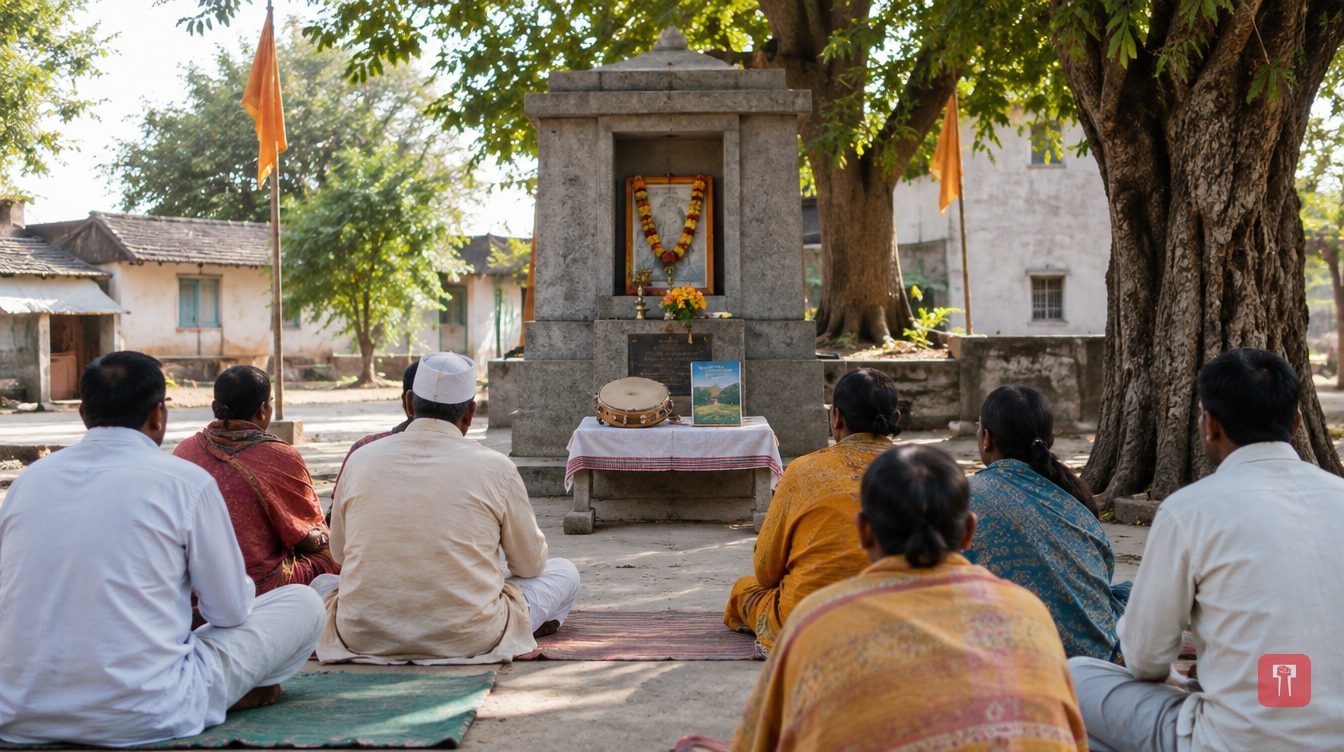
Tukdoji Maharaj, the saint and social reformer who wrote the Gramgeeta, is remembered on his 58th death anniversary, observed on October 30 according to the Hindu calendar.
The 58th death anniversary of Rashtrasant Tukdoji Maharaj is observed on October 30, according to the Hindu calendar. He was a leading saint of Maharashtra's sant tradition, a social reformer, a patriot and an influential thinker on village development. By joining spirituality with social work, he tried to change the lives of ordinary people.
Through bhajans, kirtans, village cleanliness, education, de-addiction and national unity, he awakened society. His whole life was devoted to the ideas of service to the nation, humanity and social equality.
Tukdoji Maharaj was born on April 29, 1909, in Yavali village of Amravati district. His real name was Manik Bandoji Ingle. From childhood he had a liking for spirituality, bhajans and contemplation. The ideas of the sant tradition influenced his life, and in time he joined social service to his spiritual practice.
For him, spirituality was not merely devotion to God. It was a means of bringing positive change to people's lives. He made effective use of his thoughts and his voice to remove superstition, caste discrimination, ignorance and harmful customs from society.
The khanjiri bhajan was the hallmark of his work. His bhajans, sung to the beat of the khanjiri, reflected the realities of society along with spirituality. His language was simple, flowing and easily understood by ordinary people. This is why his ideas reached common people in villages. He held that every person should contribute to the development of the village and the country along with their own progress. His bhajans inspired many people to take up social work.
The most important work of his thought is the Gramgeeta. Its central message is that the development of village life is essential for the all-round development of India. He believed that India is a country of villages, so the nation's progress cannot be complete unless villages move forward. He expected villages to be clean, organised, educated, self-reliant and free of addiction.
He made a special appeal to young people to turn towards service to the nation and society. He promoted the values of respecting hard work, working for the good of all and helping the weaker sections of society.
Besides being a seeker in spirituality, he was also a fierce patriot. During the freedom struggle he awakened national consciousness among people through his bhajans and speeches. He explained to people the importance of freedom, self-respect and social responsibility. There are references saying that, in view of his work for the nation, the country's first President, Dr Rajendra Prasad, conferred on him the title of Rashtrasant. The title gave national recognition to his work of educating society.
His work was not limited to India. In 1955 he represented India at the World Religion and World Peace Conference held in Japan. This gave him the opportunity to carry the message of Indian spirituality, peace and human welfare to the world.
Rashtrasant Tukdoji Maharaj attained mahanirvana on October 11, 1968, at Gurukunj Ashram, Mozari, in Amravati district. Even so, the influence of his ideas and work remains. Through the Gramgeeta, his bhajans and the inspiration of his social service, his legacy is reaching coming generations.
Reach readers on the ward they actually live in.
Advertise with Prime Time 24Reach readers on the ward they actually live in.
Advertise with Prime Time 24Reach readers on the ward they actually live in.
Advertise with Prime Time 24
Comments
No comments yet. Be the first.