

Relatives of two KEM Hospital patients scramble for blood and red cells for days
Two cases at Mumbai's KEM Hospital in Parel have raised concern over the availability and timely supply of blood components.
 Images are not validated/verified
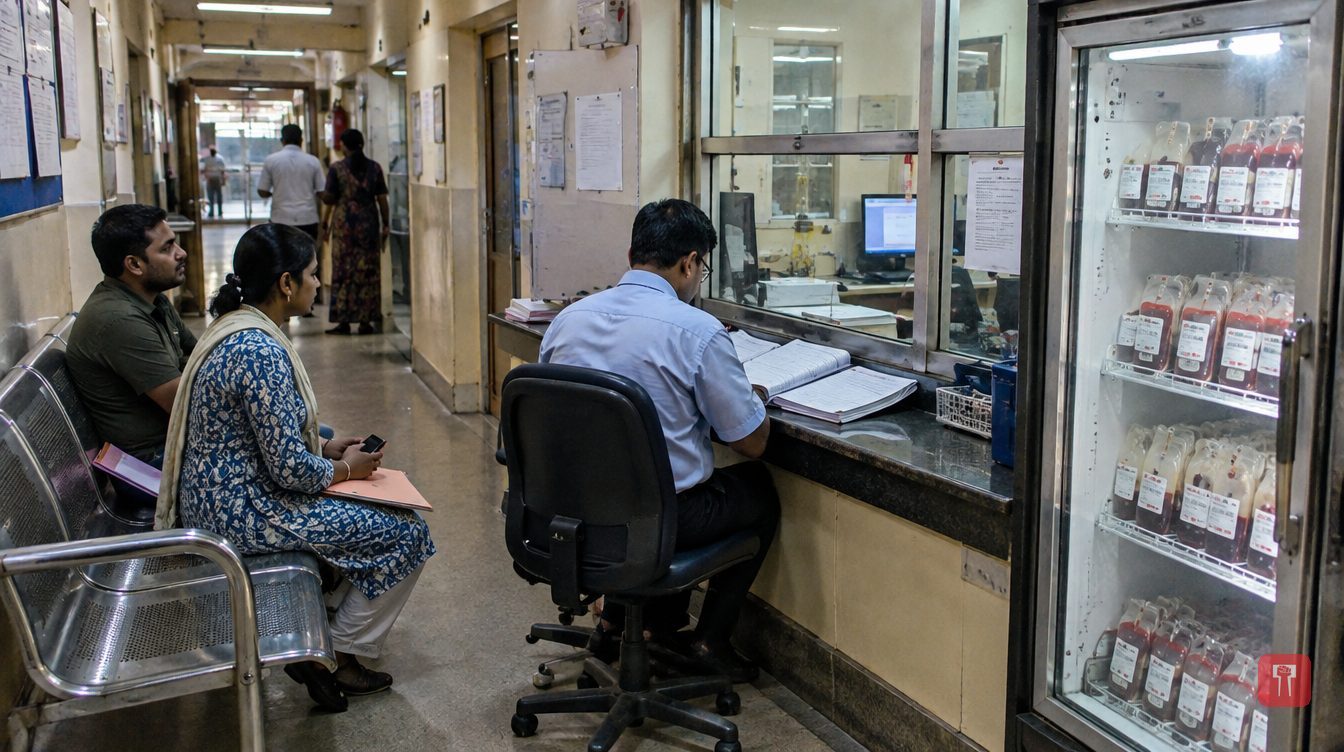
Two cases have emerged from KEM Hospital in Parel, Mumbai, in which patients' relatives had to run around considerably to arrange blood and red blood cells for treatment. Concern is being voiced over the availability and timely supply of blood components after the two incidents.
The first case is that of a woman undergoing treatment at KEM Hospital. She needs six units of B positive packed red blood cells (PRBC). According to her husband, he has been making enquiries at various places for the past three days. He said the required red cells have not been found so far. The case shows how much relatives have to run around to arrange the blood components needed for treatment in a critical condition.
The second case is that of an elderly patient battling a serious illness. Two units of A positive blood were needed for the surgery. The patient's son said the effort to arrange blood went on for three straight days. Two units were finally arranged on the fourth day. One unit was given by the hospital's blood bank, while the son arranged the other on his own.
The surgery was then carried out, and the need for blood has been met for now. Relatives of both patients said they had to make an all-out effort to obtain blood or blood components.
Getting the necessary blood components on time is very important during treatment in hospital. But if relatives have to wander for several days for this, it raises the question of strain on patient care. The State Blood Transfusion Council was contacted in the meantime, but no response was received.
The two cases do not make clear how large the overall blood shortage in Mumbai is. Even so, they do bring out the seriousness of the difficulties patients face in arranging blood components. Official figures on the city's blood stock, availability by blood group and the supply position at blood banks would help in understanding the scale of the problem.
