

Opposition readies impeachment notices against CEC Gyanesh Kumar before special Parliament session
Several opposition parties plan to give notices in the Lok Sabha and Rajya Sabha before the proposed special session, after two earlier notices were rejected.
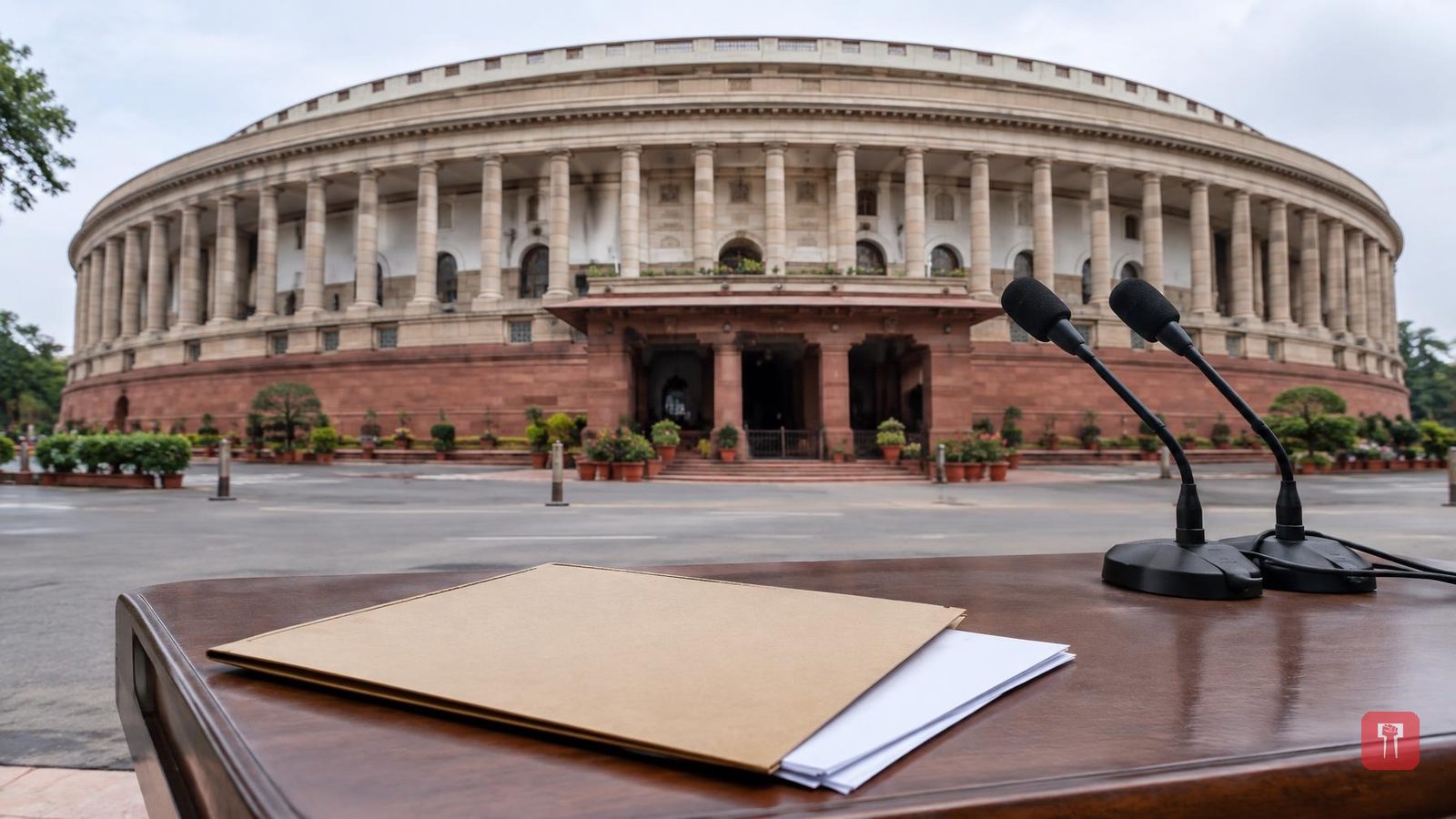
Chief Election Commissioner Gyanesh Kumar has been in the news of late. The discussion has intensified after his differences with the two other Election Commissioners and the emergence of irregularities in the SIR. All parties in the INDIA bloc have taken a hard line against him.
On Monday, the Congress and other major opposition parties held strong protests against him in several big cities of the state and demanded his resignation. The opposition parties have now begun preparing to seek his impeachment. Several of them plan to come together and give notices in the Lok Sabha and the Rajya Sabha before the proposed special session of Parliament.
Kumar's tenure ends on January 26, 2029. He would be the first Chief Election Commissioner against whom not one or two but three impeachment motions are to be brought. Although more than two years of his tenure remain, two motions have already been rejected, the third is pending and a fourth is being prepared.
The first notice was filed in March 2026. Notices seeking impeachment were given in both Houses of Parliament in March this year, and both were rejected at the level of the Chairman and the Speaker. On March 12, 2026, a motion signed by 63 opposition MPs was moved in the Rajya Sabha. Twenty-five days later, on April 6, Chairman C. P. Radhakrishnan rejected it. A second notice, signed by 73 MPs and levelling nine charges against Kumar, was then given in the Rajya Sabha on April 24. That motion is still pending.
On March 12 itself, a notice signed by 130 MPs was also given in the Lok Sabha. It too failed, as Lok Sabha Speaker Om Birla rejected it. Under the rules, an election commissioner's tenure is six years or up to the age of 65, whichever comes first. Kumar, an IAS officer of the Kerala cadre, took charge as the country's 26th Chief Election Commissioner on February 19, 2025.
Kumar will retire at 65 on January 26, 2029. His tenure will therefore end during the 19th Lok Sabha election, and the new Chief Election Commissioner who succeeds him will announce the Lok Sabha polls.
In the Government of India, Kumar has served as Joint Secretary in the Ministry of Defence, Joint Secretary and Additional Secretary in the Ministry of Home Affairs, Secretary in the Ministry of Parliamentary Affairs and Secretary in the Ministry of Cooperation. After he retired on January 31, 2024, he was appointed Election Commissioner of India on March 15, 2024.
Impeachment proceedings are governed by Article 324(5) of the Constitution. Under it, the Chief Election Commissioner can be removed from office in the same manner as Supreme Court judges. The other two election commissioners can be removed only by the President, on the recommendation of the Chief Election Commissioner. To remove the Chief Election Commissioner, a notice is first given to the Lok Sabha Speaker or the Rajya Sabha Chairman. The motion requires the signatures of 100 Lok Sabha MPs or 50 Rajya Sabha MPs.
The Speaker and the Chairman then decide whether to admit the notice. If it is admitted, a three-member committee is formed to examine the charges. If notices are given in the Lok Sabha and Rajya Sabha on the same day, the committee is formed only after both Houses admit them. Otherwise, the committee is formed in the House in which the motion first arrives.
The committee comprises the Chief Justice of India or a Supreme Court judge, a High Court chief justice and an eminent jurist. If the charges are found to be true, the committee places its detailed report before the House and it is discussed. During the discussion, members can, if needed, call the accused commissioner to the door of the House. A formal vote follows. If the motion is passed by a two-thirds majority in both Houses, the President gives the final approval. No Chief Election Commissioner of India has been removed from office through this process so far.
This story has published but the live thread has not started. Updates appear here the moment the desk files one.
