

Navratri begins with Ghatasthapana and worship of Goddess Shailputri; saffron marks day one
Navratri starts on October 11, with the kalash installed on Pratipada and Goddess Shailputri worshipped; saffron is the colour of the day.
 Images are not validated/verified
Navratri, a major festival devoted to Goddess Durga, sees the nine forms of the goddess worshipped over nine days. This year the festival begins on October 11. On the first day, Pratipada, the Ghatasthapana ritual is performed and Goddess Shailputri is worshipped. This time, the saffron colour has also been given special importance on the first day.
Before Navratri begins, the ghat and especially the household shrine should be cleaned. Cleaning the place of worship before Ghatasthapana is also said to be necessary.
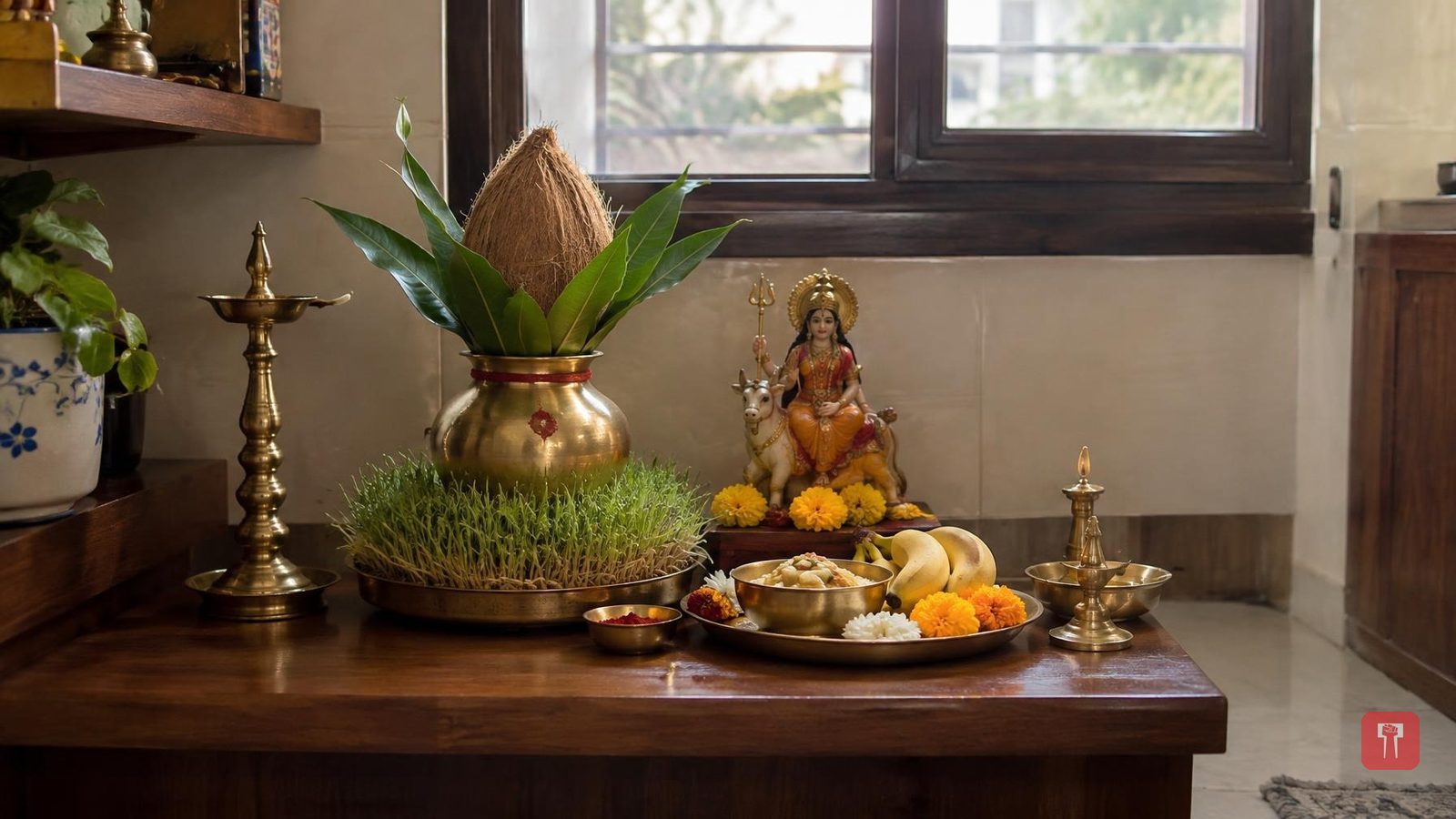
The installation of the kalash is considered the main ritual on the first day. The kalash is filled with water, and mango or other available leaves and a coconut are placed in it. In many families there is also a tradition of sowing grain beneath the kalash. This year the muhurat for Ghatasthapana begins at 6.08 am and lasts until 10.03 am.
On the first day of Navratri, the Shailputri form of Goddess Durga is worshipped. Flowers, akshata and naivedya are offered to the goddess and an aarti is performed. It is customary on this day to offer Goddess Shailputri a simple, sattvik naivedya prepared according to the family's tradition.
The religious belief that cow's ghee is offered to Goddess Shailputri is found everywhere. Therefore, on the first day, a dish made with ghee, such as sheera, kheer or another sweet, should be kept as naivedya. According to some traditions, bananas or other fruits are also offered along with ghee.
Saffron holds special significance on the first day of Navratri this year. The colour is regarded as a symbol of enthusiasm, energy, patience, sacrifice and positivity. In Indian religious tradition, saffron or bhagwa is associated with spiritual practice, spirituality and renunciation. Wearing saffron clothes on this day and offering the goddess saffron flowers or garments is considered auspicious. As the colour is linked to the radiance of the sun and the energy of fire, it is regarded as a symbol of new beginnings. During Navratri, it also conveys a sense of positive energy in the mind along with devotion.
Articles on subjects such as religion, astrology, Vastu and Feng Shui are meant for readers' information. Expert advice should be sought before trying any practice related to them.
