

In Greater Noida's Bisrakh, Ravana is revered and his effigy is not burnt on Dussehra
Villagers in Bisrakh regard Ravana as an ancestor, worship him at a temple and skip the effigy burning that marks Dussehra elsewhere in the country.
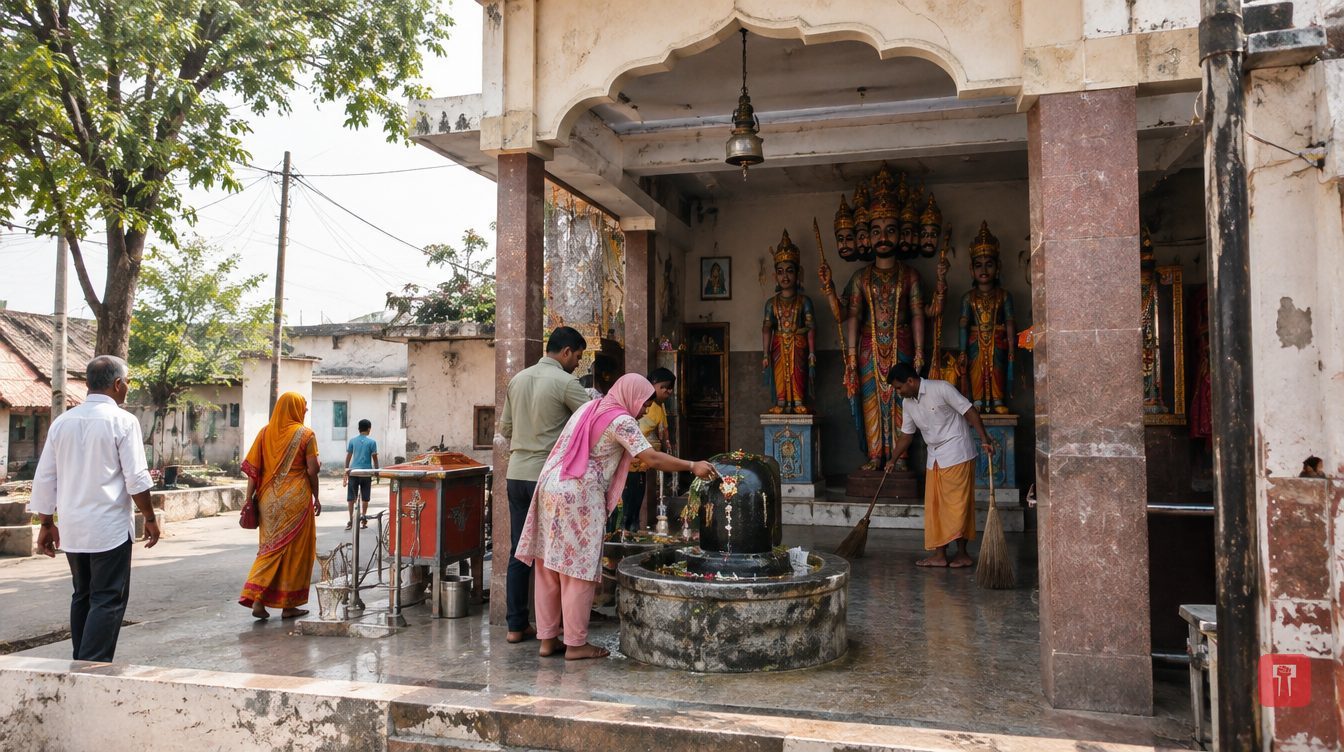 Images are not validated/verified
Dussehra is a few days away. The festival will be celebrated across the country on October 20. On this day, effigies of Ravana are usually burnt in many places, as the victory of good over evil is considered the core purpose of the festival. But there is a village in Uttar Pradesh where this sight is not seen.
The village is Bisrakh in Greater Noida, Uttar Pradesh. It has a temple of Ravana, and he is still worshipped here. The village's name is also linked to Ravana's father. Bisrakh is named after Ravana's father, the sage Vishwarava. The village was originally known as Visheshwar, which was later changed to Bisrakh for convenience.
According to available information, the Shiv Purana mentions a village called Visheshwar. The Shiv Purana says that the sage Vishwarava installed a Shivling here. Ravana and his father were both great devotees of Shiva.
The Ravana temple has a priest. He cleans the temple every day and dresses the idol of Ravana in clothes. People come here to pay their respects to Ravana.
According to available information, the people of Bisrakh regard Ravana as their ancestor. This is why Ravana Dahan is not held here and his effigy is not burnt in the village. On Dussehra, people visit the Ravana temple, offer prayers and take part in the havan and yajna.
Several statues of Ravana have been installed in the temple. An ancient Ashtabhumi Shivling is kept inside, on which people offer water. The tradition of the Ravana temple and this ancient Shivling is considered special in the village.
