

IIT Bombay develops low-cost one-drop blood test for anaemia and sickle cell
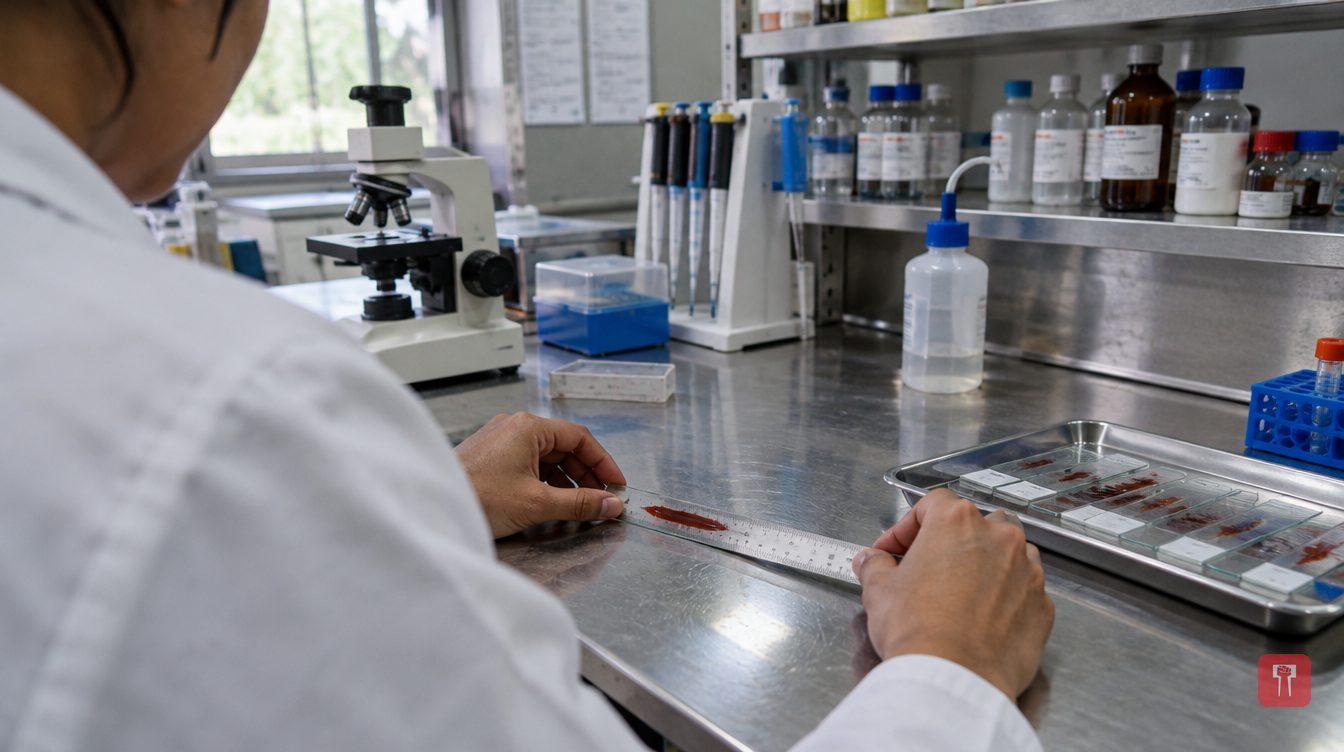 Images are not validated/verified
Researchers at IIT Bombay have built an inexpensive technique that can detect anaemia and sickle cell disease from a single drop of blood, without a fully equipped pathology lab.
Researchers at IIT Bombay have developed an inexpensive technique that can identify two conditions, anaemia and sickle cell disease, from just one drop of blood. It will not need a fully equipped pathology laboratory, and is therefore expected to open a new route to testing for patients in remote areas and tribal communities.
In the method, a drop of blood is spread in a controlled manner on a glass strip. The length of the resulting smear is measured. This length varies with the amount of red cells in the blood, the thickness of the plasma and the flexibility of the cells. The researchers have used this difference for testing. The study was led by Prof Mahesh Tirumkudulu of the Department of Chemical Engineering at IIT Bombay. The team worked on the viscosity of blood.
For the sickle cell test, the change that occurs after oxygen is reduced in the blood was measured. An inexpensive chemical, sodium metabisulphite, was used for this. Tests were conducted on 394 people from tribal areas of Maharashtra and central India. A clear difference was seen between healthy people, carriers of sickle cell and patients suffering from the disease. The method correctly identified about 95 per cent of the patients.
For anaemia, blood samples from 516 people were examined. A relationship was found between the amount of haemoglobin and the viscosity of the blood. The method correctly identified 95.1 per cent of those with severe anaemia, while 86 per cent of those who did not have the condition were correctly identified. Haemoglobin was estimated with an accuracy of about +/-0.8 gram per decilitre.
The technique could also help assess the effect of hydroxyurea, a drug used in the treatment of sickle cell disease. The researchers found that in patients undergoing treatment, the viscosity of the blood changed as expected. This could show how the treatment is working in a patient.
Dr Mehrukh Mir is the first author of the research. The paper has been published in the journal Lab on a Chip. The technology has been licensed for commercial use to a startup called Rheohm Private Limited. The researchers are working with the relevant institutions on real-world use and the required government approvals.
Reach readers on the ward they actually live in.
Advertise with Prime Time 24Reach readers on the ward they actually live in.
Advertise with Prime Time 24Reach readers on the ward they actually live in.
Advertise with Prime Time 24
Comments
No comments yet. Be the first.