

Congress's Abhijit Wanjari wins Nagpur graduates' seat by 3,271 votes, BJP's Kohale loses
 Images are not validated/verified
Second-preference votes from independent Nitesh Karale turned a roughly 4,000-vote deficit into victory for Wanjari after a count lasting about 45 hours.
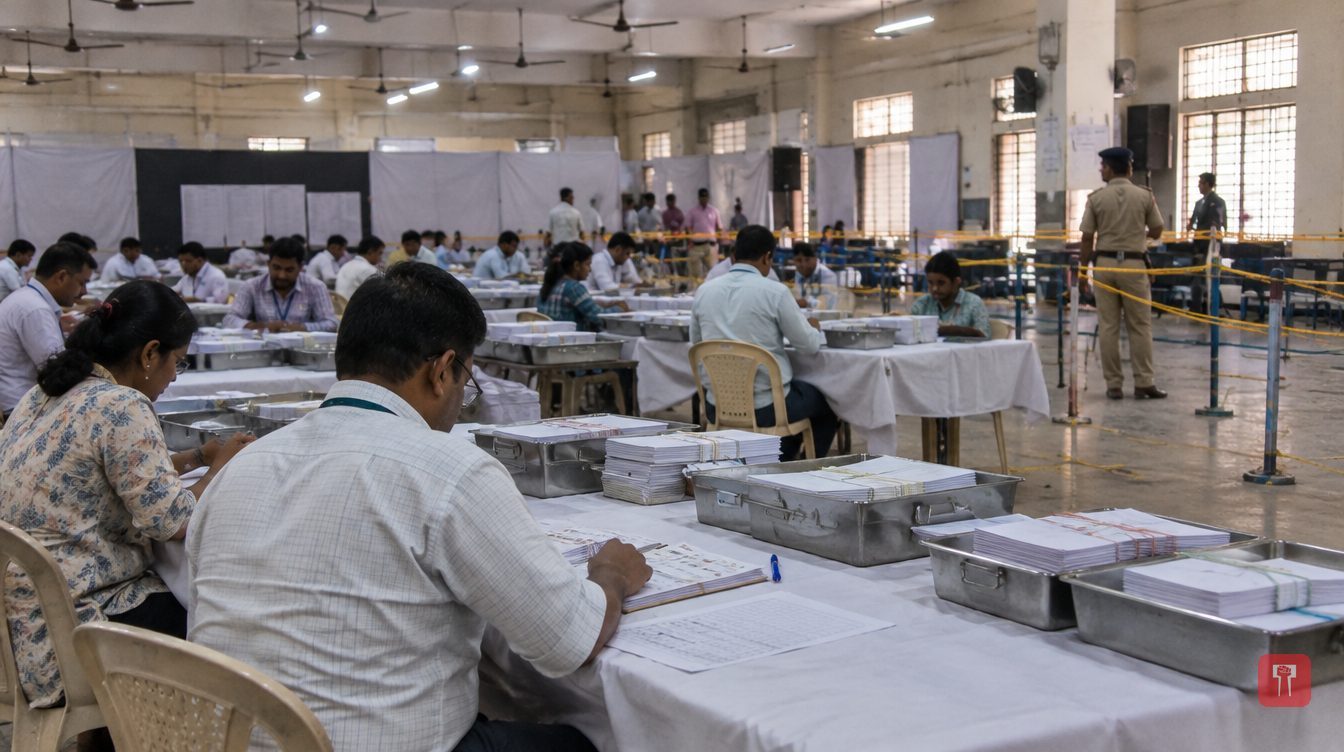
Congress candidate Abhijit Wanjari defeated the BJP's Sudhakar Kohale in a close contest in the Nagpur graduates' constituency. Counting began at 8 am on Tuesday and ran for about 45 hours. Late at night, Wanjari was declared the winner by 3,271 votes.
Wanjari led after the first round of counting, on Tuesday. By early Wednesday, when the second round was complete, the BJP's Kohale had built a lead of about 4,000 votes and held it for a long time. After Wednesday evening, however, the picture changed abruptly, and Wanjari overtook Kohale on the strength of second-preference votes.
Wanjari received a total of 67,231 first and second-preference votes. His rival, Kohale of the Bharatiya Janata Party (BJP), got 63,960. Independent candidate Nitesh Karale polled 25,909 votes in all.
The defeat in Nagpur is being seen as a major setback for the BJP. The BJP's early survey had estimated that Karale would get around 15,000 votes. He did better, securing 25,909. Kohale himself said it was beyond comprehension that Karale had received so many votes.
No political party had any idea who would benefit if the result had to be decided on second-preference votes. That proved decisive. Kohale was ahead after the first two rounds, but when the counting of Karale's second-preference votes began on Wednesday evening, the whole picture changed. Most of Karale's second-preference votes went to Congress's Wanjari. As a result, Wanjari, who had been trailing by 4,000 votes, moved ahead within an hour or two and finally won by 3,271 votes.
In this election, Congress's estimate proved correct. Turnout for the graduates' election was 60 per cent in Nagpur, while Chandrapur, Gondia and Gadchiroli areas recorded more than 71 per cent. As Congress is dominant in these areas, the party was confident that this polling would carry it to victory. After Wanjari's win, the party's estimate appears to have been exactly right.
Karale's second-preference votes made up a large part of Wanjari's win, but Wanjari had also received a large number of first-preference votes in the first round, when he also took the lead.
Reach readers on the ward they actually live in.
Advertise with Prime Time 24Reach readers on the ward they actually live in.
Advertise with Prime Time 24Reach readers on the ward they actually live in.
Advertise with Prime Time 24
Comments
No comments yet. Be the first.