

Do not ignore changes inside the mouth, betel nut, paan and gutkha can raise cancer risk, doctor warns
 Images are not validated/verified
A Mumbai head and neck cancer surgeon says habitual chewing of betel nut, paan or gutkha can cause pre-cancerous changes in the mouth that need early checks.
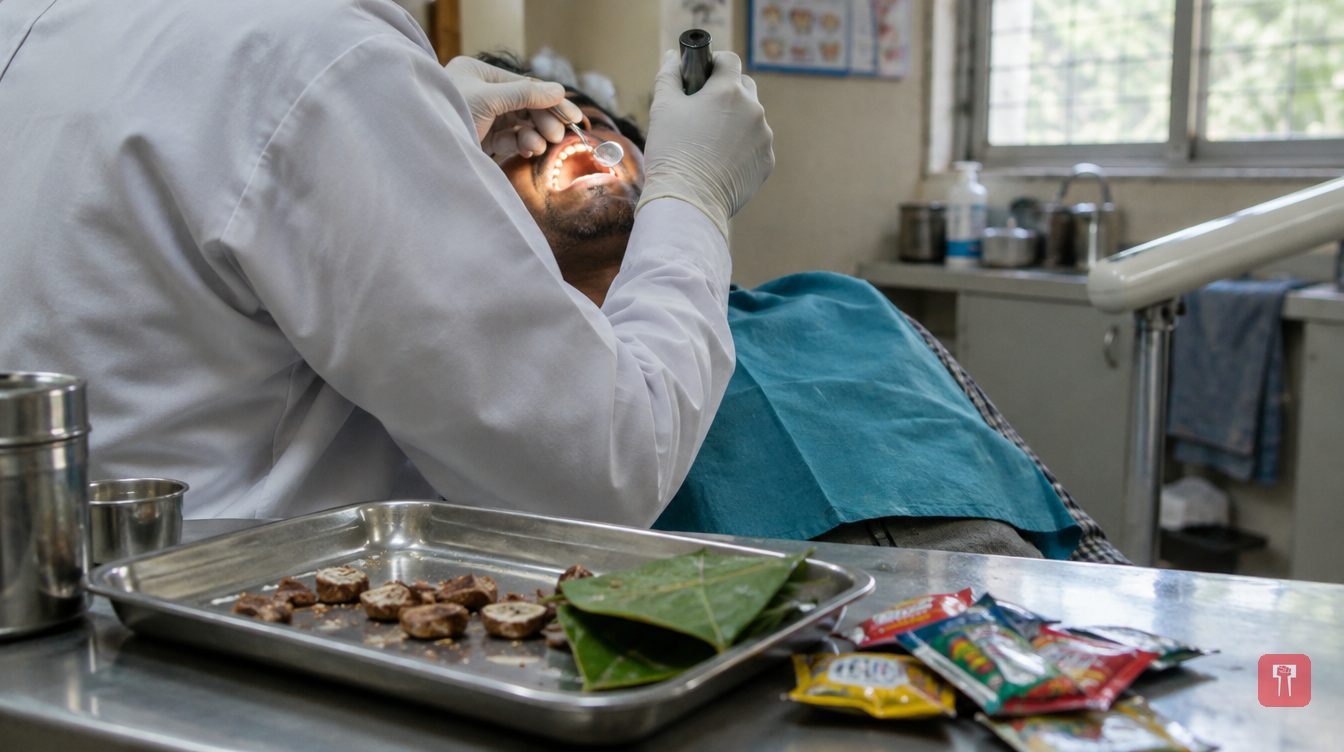
Many people consider the habit of chewing betel nut, paan or gutkha harmless. Dr Amit Chakraborty, a head and neck cancer surgeon at SSO Cancer Hospital in Mumbai, has explained the risks in detail. According to him, these habits can slowly damage the lining of the mouth.
Dr Chakraborty said symptoms such as a burning sensation in the mouth, white or red patches and difficulty in opening the mouth can appear in the early stages. If these changes are not attended to in time, the risk of oral cancer can rise later. A doctor should therefore be consulted if such symptoms appear.
On betel nut, the doctor said chewing it daily irritates the delicate skin inside the mouth and exposes it to substances that cause abnormal changes in cells. If tobacco is added, the cancer risk rises further, since tobacco contains many chemicals that can cause cancer.
Dr Chakraborty said many people think that if no sore or lump is visible in the mouth, there will be no serious problem. But continued chewing of betel nut, paan or gutkha can change the inner lining even before clear signs of cancer appear. Some of these changes can raise the risk of cancer later. Such a condition is called a pre-cancerous condition, or a disorder that increases the risk of cancer.
One important disorder linked to betel nut is oral submucous fibrosis. According to the doctor, the tissue inside the cheeks gradually hardens and loses its elasticity, and fibrous bands begin to form inside. Early symptoms can include a burning sensation on eating spicy food, a pulling feeling inside the cheeks, or being unable to open the mouth fully. Over time, the ability to open the mouth can reduce further. Dr Chakraborty said these symptoms should not be dismissed as the usual discomfort caused by betel nut.
A white patch inside the mouth can be a sign of leukoplakia. According to the doctor, it is diagnosed only when examination makes clear that the patch has not been caused by anything else. Some white patches can show abnormal changes in cells. Red patches inside the mouth, known as erythroplakia, are also significant. Dr Chakraborty said some such patches are more likely to show pre-cancerous changes, so they must be examined immediately.
The doctor said symptoms such as sores in the mouth, white or red patches, persistent burning, unexplained bleeding, a feeling of a lump or difficulty in opening the mouth should not be brushed aside as ordinary. People who have the habit of chewing betel nut, paan or gutkha have been advised to be especially alert. If any unusual change inside the mouth lasts more than two weeks, a doctor should be consulted. If a suspicious area is found, further tests or a biopsy may be advised. According to Dr Chakraborty, if diagnosis is made in time, it becomes possible to monitor the area, carry out the necessary tests and begin the right treatment.
Dr Chakraborty also said that merely quitting tobacco does not remove the risk of oral cancer entirely. If the betel nut habit continues, the tissues inside the mouth can be damaged. It is therefore essential to stop betel nut, paan and gutkha and to stay away from tobacco. He said people at risk of oral cancer should not wait for pain or a clear lump to appear.
Reach readers on the ward they actually live in.
Advertise with Prime Time 24Reach readers on the ward they actually live in.
Advertise with Prime Time 24Reach readers on the ward they actually live in.
Advertise with Prime Time 24
Comments
No comments yet. Be the first.