

Congress's Abhijit Wanjari wins Nagpur graduates' seat, handing BJP defeat in its stronghold
 Images are not validated/verified
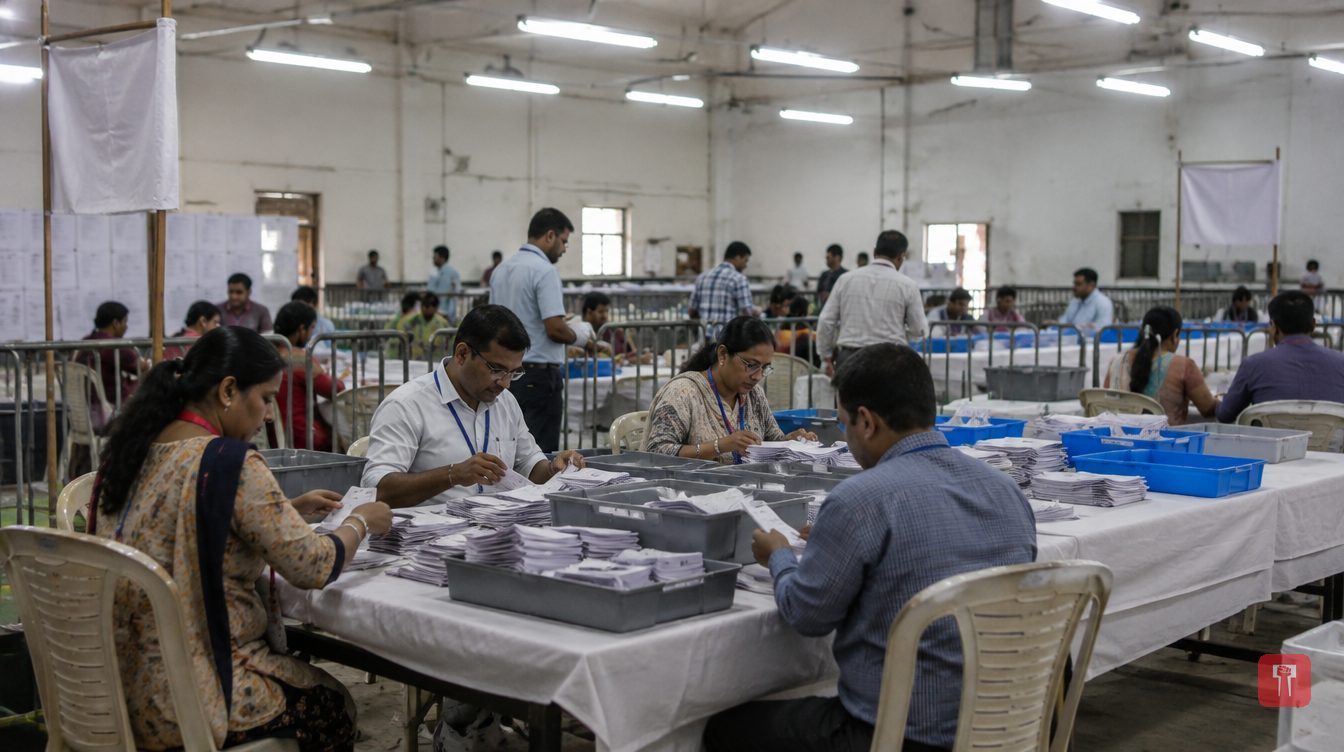
Congress candidate Abhijit Wanjari won the Nagpur division graduates' constituency election, a setback for the BJP, which had fielded Sudhakar Kohale.
Congress candidate Abhijit Wanjari has won the election to the Nagpur division graduates' constituency. The loss of a stronghold like Nagpur is a major setback for the BJP. The party had put its full strategy and meticulous planning behind Sudhakar Kohale, yet the actual voting arithmetic did not go its way.
Chief Minister Devendra Fadnavis, Union Minister Nitin Gadkari and Revenue Minister Chandrashekhar Bawankule had campaigned with full vigour. The result was nonetheless the reverse. In Nagpur, the talk now is whether the factor of independent candidate Nitesh Karale worked, or whether the Congress turned the contest around.
It is being said that the BJP lost the most ground in the booths it trusted. The BJP and the Sangh are considered to have a strong hold in Nagpur, but votes were split in these very booths. Discontent there is said to have cost the party dearly, and the thinking that "these votes are our own anyway" proved harmful. There is also talk that voters were taken for granted and that the basic demands, problems and difficulties of graduates were ignored.
Senior leaders came and held campaign programmes for a day each. The chief minister, the revenue minister and the Union minister all took part. But after the defeat, there is strong talk that party workers on the ground were complacent or overconfident. It is said that instead of going from booth to booth, workers took the attitude that the votes here were their own and would not go anywhere. This proved costly.
The Sangh Parivar, the network of workers and being in power were all in the BJP's favour, yet the party could not work its magic. With the machinery behind it, there was confidence of victory, and the rival candidate's capability was ignored. For this reason, despite deep contact in the Nagpur division, the BJP had to see defeat in its stronghold.
The arithmetic of preference order also mattered. The BJP appealed to voters to give Kohale their first preference. But an election count is not limited to first preferences. Second and third preferences also count, and the result turns on them. The Congress read this correctly, and Karale, a teacher known as "Karale Master", read it too, but the BJP fell short here. Its excessive emphasis on first preferences cost it dearly.
Nitesh Karale campaigned with full force in this election. He made his presence felt in the contest but could not win himself. Even after being expelled from the party, he did not leave the field and secured 25,000 votes. It is being said that the BJP suffered heavily from his factor. The second and third preferences on his ballots turned the arithmetic.
The Congress did exactly these things. It ran its campaign machinery, planned meticulously and gave importance to second preferences along with first preferences. As a result, the Congress candidate benefited from second preferences in many places. Aggressive Congress leaders of eastern Vidarbha and their machinery also proved useful, and the Karale Master factor too turned out to be of use.
Reach readers on the ward they actually live in.
Advertise with Prime Time 24Reach readers on the ward they actually live in.
Advertise with Prime Time 24Reach readers on the ward they actually live in.
Advertise with Prime Time 24
Comments
No comments yet. Be the first.